Set on the banks of the Perfume River, the city of Huế is an essential stop for any traveler wanting to dive into Vietnam’s rich history and culture.
Huế is known as Vietnam’s gastronomic capital and for its historic past — it was also the country’s imperial capital, a legacy that survives in the majestic tombs of its emperors and its imposing citadel.
Much of the charm of visiting Hue lies precisely in discovering its past as Vietnam’s capital between 1802 and 1945 under the Nguyen dynasty — although, to be honest, a large part of its heritage was lost, mainly to the war with the United States.
Even so, the city preserves many sights that are well worth a visit, such as its spectacular imperial tombs or the Thien Mu Pagoda.
If you’re traveling through central Vietnam and wondering about the best things to do in Hue — or whether it deserves a spot on your itinerary — read on: in this guide we cover what to do in Huế and the essential places to visit so you can judge for yourself.
In this post
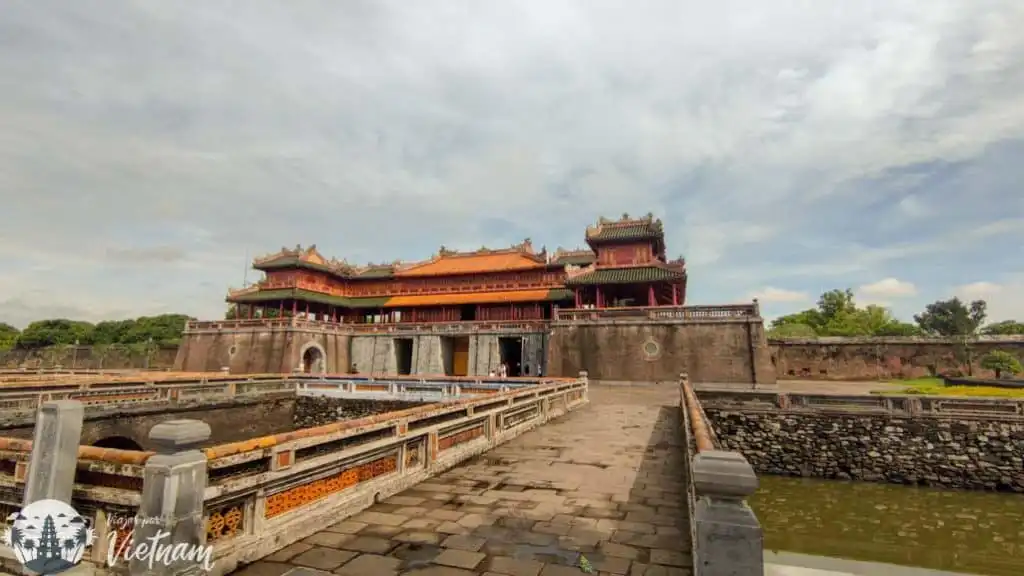
Visit the Imperial Citadel of Hue
The Imperial Citadel of Hue is an enormous complex of buildings that housed the Vietnamese royal family throughout Hue’s time as imperial capital.
Its splendor grew so great that it was once compared to imperial cities like Beijing’s famous Forbidden City.
While many buildings aren’t in ideal condition, walking among its walls and moats, or admiring the carved gates and royal pavilions where the royal family’s life unfolded, is a wonderful way to travel back to Vietnam’s imperial past.
To get the most out of its history and inner workings, we recommend visiting with a guided tour — it won’t leave you indifferent.
Explore the imperial tombs
One of the best things to do in Hue is undoubtedly visiting one of the imperial tombs. These mausoleums were built to hold the remains of Vietnam’s emperors.
In total, there are 7 imperial tombs you can visit around Hue:
- The tomb of Emperor Khai Dinh
- The tomb of Emperor Minh Mang
- The tomb of Emperor Tu Duc
- The tomb of Emperor Gia Long
- The tomb of Emperor Thieu Tri
- The tomb of Emperor Dong Khanh
- The tomb of Emperor Duc Duc
Most travelers usually pick from the 3 most impressive: the tomb of Tu Duc, the tomb of Minh Mang and the tomb of Khai Dinh.
Here’s a quick rundown of the main ones.
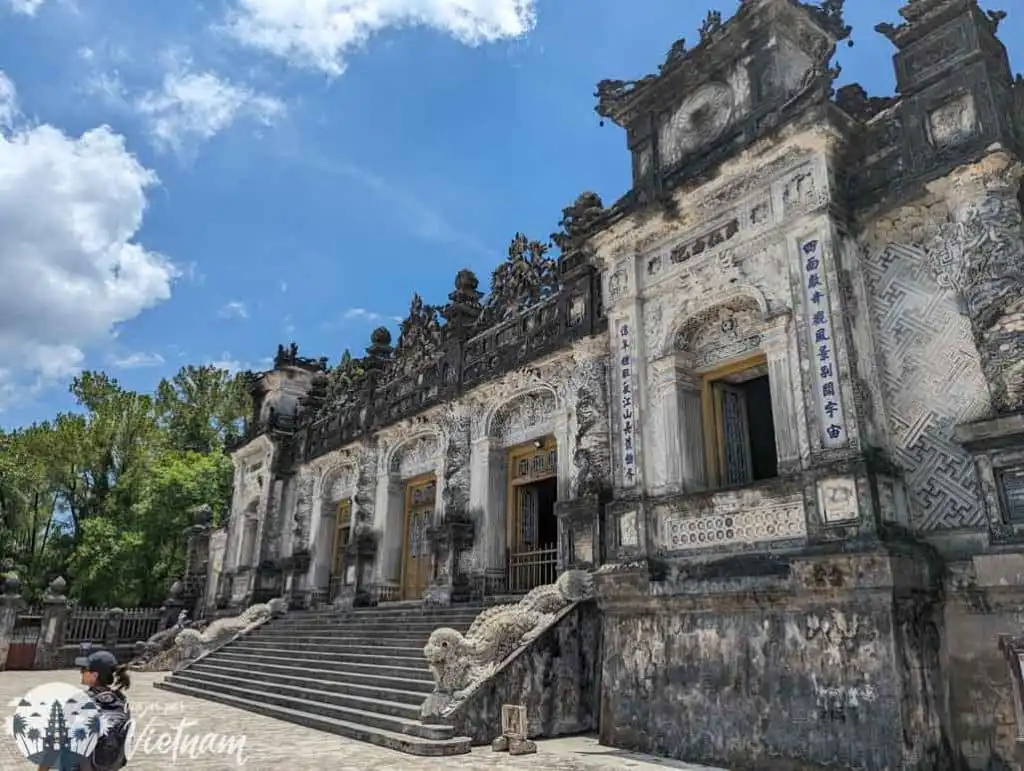
The tomb of Emperor Khai Dinh
The tomb of Emperor Khai Dinh, who ruled from 1916 to 1925, is one of the most beautiful you can see in Hue.
The emperor, known for his lavish lifestyle and regarded as a puppet of the French colonizers, commissioned this mausoleum as a faithful reflection of his taste for the foreign and his fascination with modernity.
Built between 1920 and 1931, the tomb rises in several tiers, with decoration that will leave you speechless.
Visitor information:
- Location here
- Open daily, 7:30 am – 5:30 pm
- Price: 150,000 VND (~US$6). (420,000 VND (~US$16) with the 3-site combo ticket, or 530,000 VND (~US$20) for 4 sites)
The tomb of Emperor Minh Mang
Emperor Minh Mang ruled from 1820 to 1841 and was a fierce opponent of foreign influence.
Considered one of the most impressive, Minh Mang’s tomb was begun in 1840 and completed after his death. It’s designed according to Feng Shui principles, in line with Minh Mang’s devotion to Confucianism and Vietnamese tradition — and his resistance to outside influence.
Surrounded by pine forests and ponds full of lotus flowers, in perfect harmony with its setting, it’s one of the most rewarding imperial tombs to visit in Hue.
Visitor information:
- Location here
- Open daily, 7:30 am – 5:00 pm
- Price: 150,000 VND (~US$6). (420,000 VND (~US$16) with the 3-site combo ticket, or 530,000 VND (~US$20) for 4 sites)
The tomb of Emperor Tu Duc
Emperor Tu Duc reigned from 1847 to 1883 and presided over a court highly favorable to the arts, poetry and literature — he was an accomplished poet himself.
His tomb is considered one of the most beautiful and picturesque among the Nguyen dynasty emperors’ tombs — in fact, it was designed as a retreat for Tu Duc himself during his lifetime.
The complex holds several palaces, pavilions and temples, although the tomb itself is rather modest by comparison, owing to Tu Duc’s taste for simplicity and harmony with nature.
Visitor information:
- Location here
- Open daily, 7:30 am – 5:30 pm
- Price: 150,000 VND (~US$6). (420,000 VND (~US$16) with the 3-site combo ticket, or 530,000 VND (~US$20) for 4 sites)
Join a free food tour
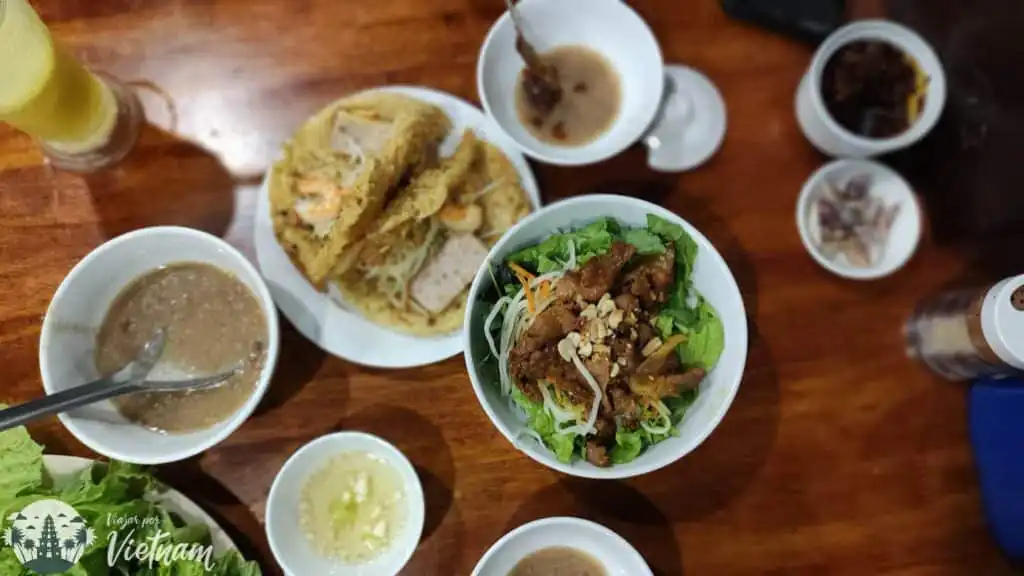
Hue is famous as the capital of Vietnamese cuisine.
That’s largely because, during its days as the empire’s capital, the emperors constantly demanded creativity and new dishes from their cooks to satisfy their exquisite palates.
Hue still preserves a multitude of dishes and snacks from that era — now priced for ordinary mortals rather than royalty.
That’s why one of the best things to do in Hue is, without question, a food tour that guides you through the huge variety of dishes and helps you understand the story behind each one.
Best of all, the tour is completely free and includes a guide who explains everything and takes you to corners you’d never find on your own.
You only pay for the different dishes you try (about US$9–11 in total), most of which you’ll only find in this city. If you’d like to tip, the guide will always appreciate it — and if not, no problem.
New, one-of-a-kind food for dinner, with the stories explained for free — now you have no excuse to leave Hue without discovering its culinary treasures.
You can book completely free through this link.
Watch the sunset by the Perfume River
It’s hard to imagine the city of Hue without the Perfume River.
One of the top things to do in Hue is simply strolling along its banks, where locals often come to exercise or escape the bustle of the rest of the city.
If you can, don’t miss sunset by the river. One of our favorite spots is right on the steps as you leave the Thien Mu Pagoda, where crowds of young Vietnamese gather every evening for a tofu-and-honey dessert and a beautiful sunset over the water.
You can also try paddle boarding or take a boat ride on the river — plenty of vendors in the area will offer you one.

Explore the Thien Mu Pagoda
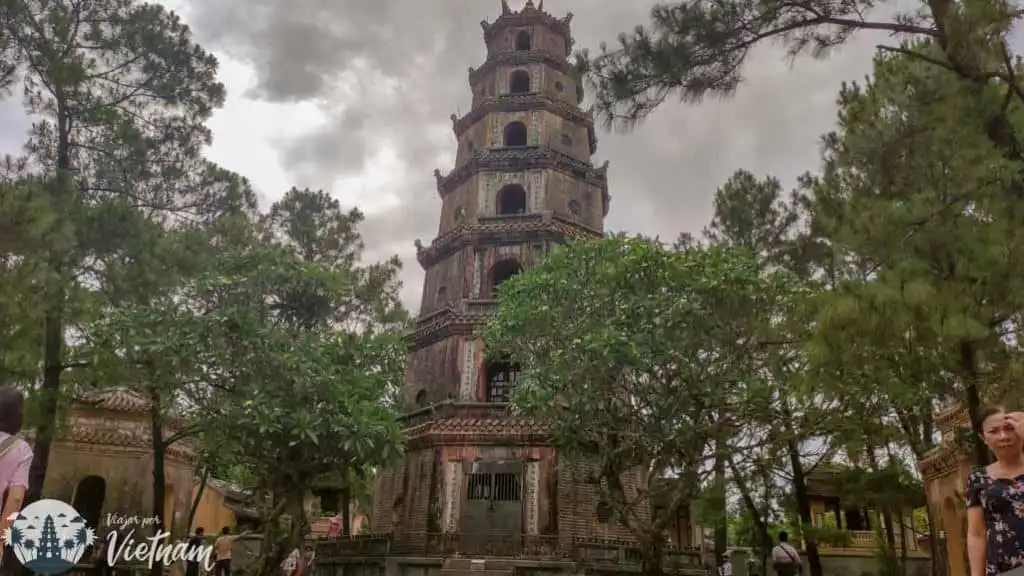
The Thien Mu Pagoda, also known as the “Pagoda of the Celestial Lady,” is one of Hue’s must-see sights and one of our favorite pagodas in all of Vietnam.
As the story goes, an old woman used to frequent the hill where the pagoda stands today and foretold that a pagoda would rise on that very spot, bringing good Feng Shui — after which, they say, she ascended to heaven.
Curiously, Nguyen Hoang arrived shortly afterward and, moved by the story, followed her plans and built the pagoda, naming it Thien Mu — Celestial Lady — in the old woman’s honor.
The complex includes several buildings — among them the seven-story pagoda, gardens and a small monastery — and remains a center of Buddhist teaching, so it’s not unusual to come across monks praying during your visit.
Inside, you’ll also find on display the blue car driven by the Buddhist monk Thich Quang Duc, known worldwide for setting himself on fire in the streets of Saigon in 1963, in protest against the persecution of Buddhists by the South Vietnamese government led by Ngo Dinh Diem.
Such is this pagoda’s fame that it’s the official symbol of the city of Hue — and for us, one of the city’s unmissable places.
Haggle at Dong Ba market
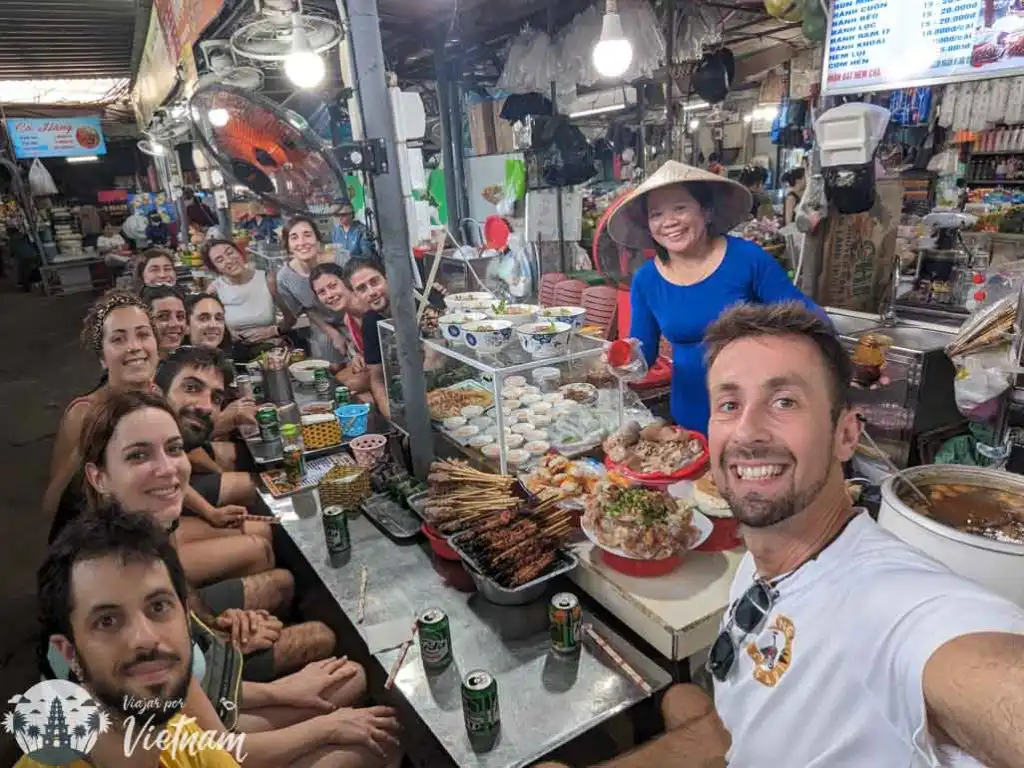
Dong Ba market is one of Hue’s main markets and a worthwhile stop while you’re in the city.
Whether you’re hunting for souvenirs or craving Hue’s delicious street food, here you’ll find everything you need — and plenty you don’t.
Dong Ba market draws tourists and locals alike, and if you’re the kind of person who enjoys getting lost among the stalls of your hometown flea market, you’re going to love this place.
Inside you’ll also find one of the best Bun Bo Hue (the city’s signature dish) you can try in town. Look for the food stall in the photo — it became famous in an episode by the late, beloved food lover Anthony Bourdain, in which he works his way through the highlights of Hue’s cuisine.
Feel time stand still at Hue’s abandoned water park
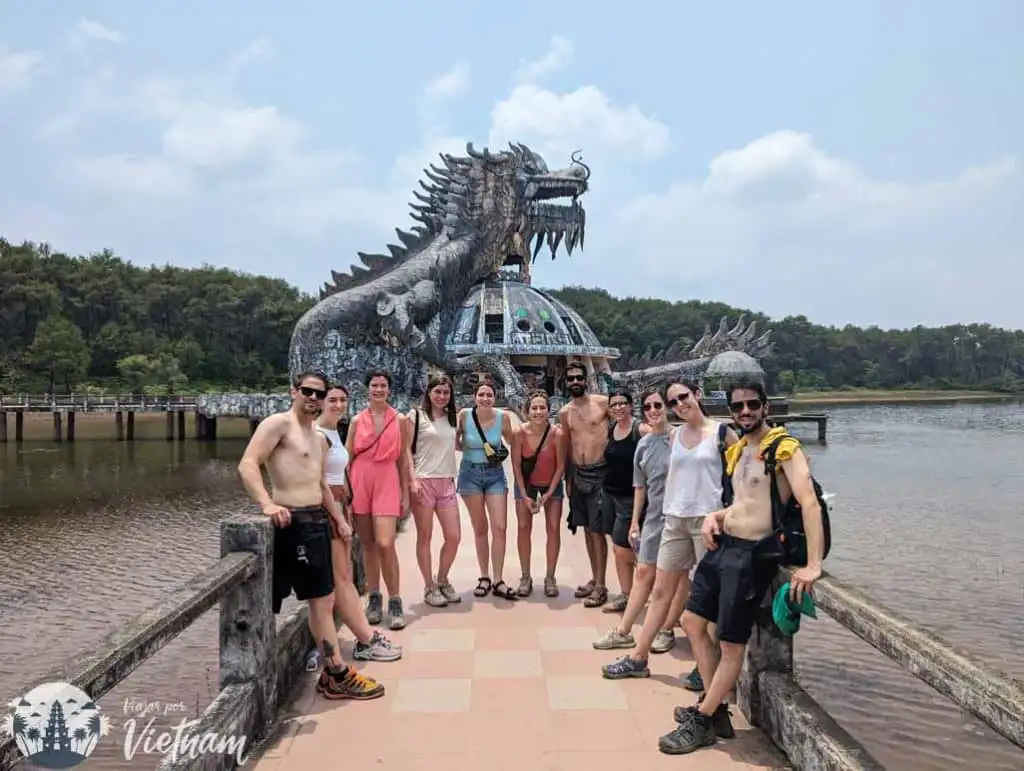
One of the most intriguing places to see in Hue is its abandoned water park.
What was once a bustling water park now lies swallowed by vegetation among the ruins of Hue’s landscape.
This forgotten amusement park stands as an unsettling testament to the passage of time. Built in 2000, it featured attractions including an aquarium, a dragon sculpture and a grandstand with room for around 2,500 people.
Despite high initial expectations, the project never achieved the commercial results it hoped for and had to close. In 2016, the Huffington Post published an article showing images of the site, and curious visitors soon began arriving, drawn by pictures of vegetation invading the old park’s structures and the abandoned atmosphere that delights travelers and photographers alike.
Hue’s abandoned water park sits near the tomb of Khai Dinh and not far from the center of Hue, so it’s easy to visit and slot into your tour of the surrounding area.
There’s no entrance fee, though on arrival you’ll be greeted by various hustlers trying to get you to pay something symbolic — 5,000 or 10,000 VND — claiming to be caretakers. You can simply ignore them and carry on your way.
Marvel at Hue’s Tiger Arena
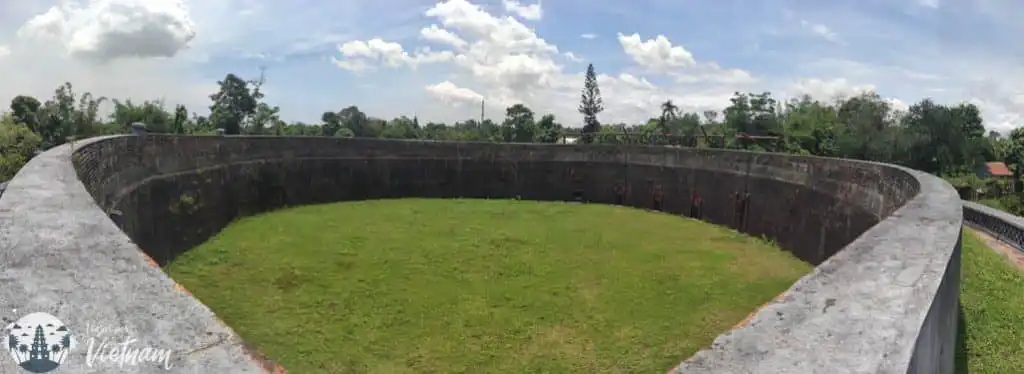
This curious spot sits about three kilometers from the city center. Built during the reign of Minh Mang, it was used for nothing less than rigged fights between tigers and elephants.
Fortunately, such spectacles are long gone from within its walls today, and a stroll around the site is well worth it while you’re visiting Hue.
Visit the An Bang cemetery
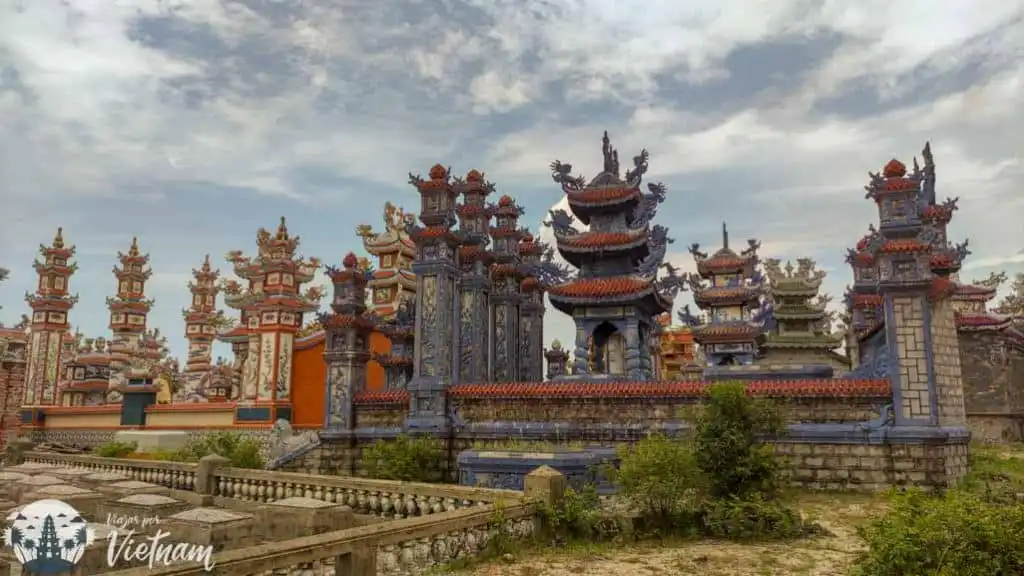
Quite a way outside Hue, on the road toward Da Nang and Hoi An, there’s a place unlike any other that will leave you speechless: the An Bang cemetery.
Across its roughly 250 hectares, the tombs built within its walls have been so meticulously maintained and decorated that they look like genuine monuments.
It may not be what you had in mind when picturing your vacation spots, but wandering this cemetery for a while genuinely rewards the trip.
Do keep in mind that it remains a place of mourning and respect for those no longer with us, so behave accordingly throughout your visit.
Map of the main places to see in Hue
Here’s our updated map of Hue’s points of interest, so you can locate them and find your bearings at any moment.
What to eat in Hue: signature dishes and specialties
Hue’s cuisine is said — and not without reason — to be the best in all of Vietnam. Remember that the royal court lived here for much of its history, which naturally gave rise to a wealth of exquisite dishes you won’t find anywhere else.
Among its culinary specialties you’ll find unique dishes such as:
- Bún Bò Huế: Hue’s most famous dish — essentially a thin-noodle soup with beef and a spicy kick, served with fresh herbs and lime.
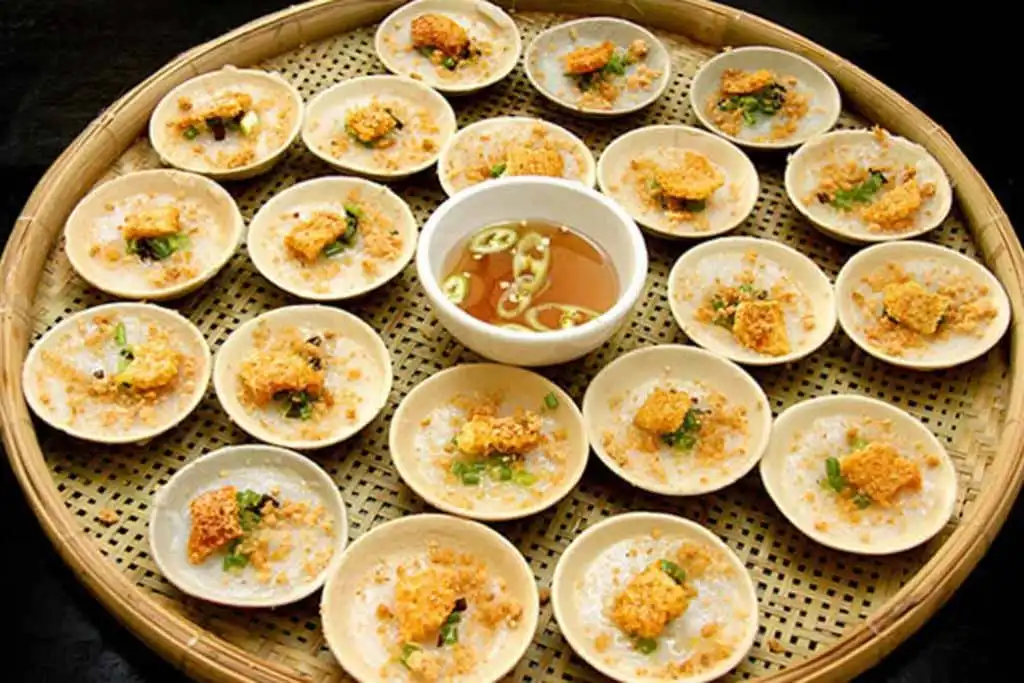
- Bánh Bèo: Our favorite Hue snack. Little steamed rice cakes topped with dried shrimp, scallions and fish sauce. Pair them with a good Huda Beer, central Vietnam’s classic brew, and they won’t let you down.
- Cơm Hến: You’ll find it in Hoi An too, but mostly in Hue — a rice dish with baby clams, fresh herbs and fish sauce, with chili and peanuts on the side to taste.
- Chè Huế: A traditional dessert that was never missing from the emperors’ table, though it often strikes Westerners as a little odd. It’s essentially a sweet, jelly-like soup made from ingredients like beans, lotus seeds, taro, fruit, coconut or sticky rice, among others.
Get ready for a feast of authentic flavors and try everything you can during your visit to Hue.
How to get around Hue
Hue’s many attractions are scattered around its outskirts, so if you want to explore it properly you’ll need some means of getting from one to the next.
Here are what we consider the best options for visiting Hue
Grab, taxi or private vehicle
Without a doubt, the simplest and most practical option is hiring a private vehicle to handle all your transfers throughout the day. That way you can cover most of Hue’s essential sights without racking your brain over how to get from one to the other.
You can book it through any local travel agency or directly online through this link.
The classic option is to negotiate directly with a taxi driver on arrival for your transfers during your stay. Just tell them what you want to visit and agree on a price.
The third option is using the Grab app, which gives you a fixed price for each ride. The downside is that drivers aren’t always available, and you’ll have to wait for them to reach you from wherever they are.
By rented motorbike
Our favorite way to explore Hue — and almost anywhere else in Vietnam — is on a rented motorbike.
You can rent one through your accommodation or at any of the many shops around the city, and roam at your own pace, visiting whatever appeals to you in the moment without depending on anyone else.
On a tour
If you’d rather dig deeper into the history and details of Vietnam’s old imperial capital, a tour is the perfect option — especially if you’re short on time.
Here’s the best rated one.
How to get to Hue
Hue is a very well-connected city.
You have 2 airports to choose from: one in the city itself and another in Da Nang, just over an hour away by car.
From Phu Bai International Airport or Da Nang International Airport, you can easily reach the city with Grab or by booking a private transfer online before you arrive — here’s the link.
Another very popular way to reach the city is by train — Hue has a railway station, so you can take the overnight sleeper train and live a truly unique experience.
Here are the timetables from Hanoi and from Ho Chi Minh City
How to get from Hue to Hoi An
To travel from Hue to Hoi An you can take a bus or shared minivan, or arrange private transport.
The journey takes roughly 3 and a half hours, depending on your choice and the traffic.
You can check timetables and book here.
But without question, if you have a bit of an adventurous streak, for us the best way to travel between the two is a full-day tour over the Hai Van Pass — riding the whole coastline, swimming at a waterfall and visiting Da Nang’s Marble Mountains along the way.
You can see it here by motorbike (ride yourself or be driven) — or if that’s a bit too bold for you, here it is by car.
Where to stay in Hue
In Hue the most convenient area is near the Perfume River, with the citadel and most restaurants close at hand.
Here are three options, one per budget:
Chi Homestay #4
From 160,000 VND (~€5) / night
The best-rated budget stay in Hue: authentic local atmosphere at hostel prices.
Check availability and prices →The Scarlett Boutique Hotel
From 1,100,000 VND (~€37) / night
A boutique hotel with a sky-high rating: the balance between price and comfort in Hue.
Check availability and prices →Melia Vinpearl Hue
From 2,200,000 VND (~€73) / night
The benchmark 5★ in Hue, with no fewer than 4,000 reviews.
Check availability and prices →