
Hanoi is the ideal place to start or finish your trip through Vietnam.
Not only is it the country’s capital, it’s an unmissable destination, packed with interesting places to explore and things to do.
You won’t tire easily in Hanoi: the motorbikes, the horns, the smells, the vendors… everything here is a stimulus.
We have to admit it’s overwhelming at first, but it soon becomes the perfect soundtrack to the start of your adventure. That’s why Hanoi is one of our favorite cities in Southeast Asia — a place that hooked us from the very first moment.
To make sure you get the most out of your time in the city, we’ve put together a complete selection of the essential things to see in Hanoi in 2026. Though we’ll tell you now: what we like most about this city is that there’s no single right way to explore it — there are many.
From getting lost in the Old Quarter to haggling in its markets, or simply sitting down to watch the tireless daily bustle from a tiny plastic stool while you drink an egg coffee (that surprising mix only the Vietnamese know how to get right). Hanoi always has something for every taste and every budget.
In this post
Keep reading, because today we walk you through everything to do in Hanoi so you can make the most of your visit. Here we go!
What to see in Hanoi in 1 day
If you’re passing through Hanoi and want to make the most of your time seeing its main sights, we recommend the following route:
- Start early with a visit to the Ho Chi Minh Mausoleum, the One Pillar Pagoda and the Presidential Palace.
- From there, take a motorbike taxi to the Temple of Literature or Hoa Lo Prison.
- Break for lunch and enjoy a delicious plate of Bun Cha.
- Try the famous egg coffee or coconut coffee to recharge.
- Stroll around Hoan Kiem lake and the historic center.
- Visit the iconic train street for a one-of-a-kind experience.
- If your visit falls on a weekend, don’t forget to drop by the night market.
- End the day with a beer at any Bia Hoi or on the lively Beer Street.
What to see in Hanoi in 2 days
The best way to get to know Hanoi is without doubt to give it two days, so you can explore most of its points of interest at a relaxed pace.
First day in Hanoi
Follow the itinerary we recommended above, which covers the city’s main attractions such as the Ho Chi Minh Mausoleum, the One Pillar Pagoda, the Temple of Literature and the historic center.
Second day in Hanoi
- Take a free walking tour to better understand Hanoi’s history and culture, and to get your bearings in the city.
- At lunchtime, don’t miss the Pho, an iconic dish Hanoi rightly boasts about — considered among the best in Vietnam.
- Spend some time exploring West Lake, an area with a bohemian, laid-back atmosphere that’s perfect for a stroll.
- If you’d prefer something more cultural, catch the famous water puppet theater, a unique and traditional experience in the city.
Get ready for your trip to Hanoi ✈️
FREE TOUR 👉 Don’t miss the best free tour in Hanoi.
1-DAY HALONG BAY TOUR 👉 Our favorite from Hanoi.
2D/1N HALONG BAY CRUISE 👉 The one we like most from Hanoi.
INSURANCE 👉 5% off our recommended travel insurance for Vietnam.
SIM CARD 👉 Stay connected throughout your trip with an eSIM for Vietnam.
TRANSPORT 👉 Book your transfers and transport from Hanoi in advance.
1. Learn its history on a free walking tour of Hanoi
Without doubt, one of the best ways to enjoy Hanoi is getting lost in its alleyways and letting yourself be carried along by the explosion of flavors, smells and sounds that surround you in every corner of the old town.
If you’re the type who likes to go deeper and really get to know the places you visit, we recommend taking this free walking tour.
It’s an ideal introduction to Vietnamese culture and it takes you through the most iconic spots of Hanoi’s historic center, while you pick up curious, surprising details about the reality of the city and the country.
Best of all, it’s completely free — though if you enjoy it, it’s always good to leave a tip.
That said, we recommend booking ahead, as it tends to fill up.
Whether alone or with company, wandering Hanoi’s old town is an experience you shouldn’t miss. Dive into the city’s vibrant chaos, sit down at any of its hundreds of cafés on their little stools and watch everyday life unfold around you. Every minute in Hanoi has something special about it, so just enjoy it and let yourself go.
2. Take a trip to Halong Bay
If there’s one unmissable place to see from Hanoi, it’s Halong Bay.
Just two hours from the capital, Halong Bay is considered one of the natural wonders of the world, which has made it an absolute must-visit destination.
To see it, you can make your own way to the Hai Phong port or to Cat Ba island and book a cruise from there — but the most popular option for visiting the bay is booking an organized tour from the capital.
Here’s the 1-day option, and at this other link the two-day option we recommend.
These tours normally include transfers from the capital, the cruise itself, meals and entry to the various spots in the bay you visit — which depend on the cruise you choose. That makes them a perfect way to enjoy the place, and one of the best things to do near Hanoi.

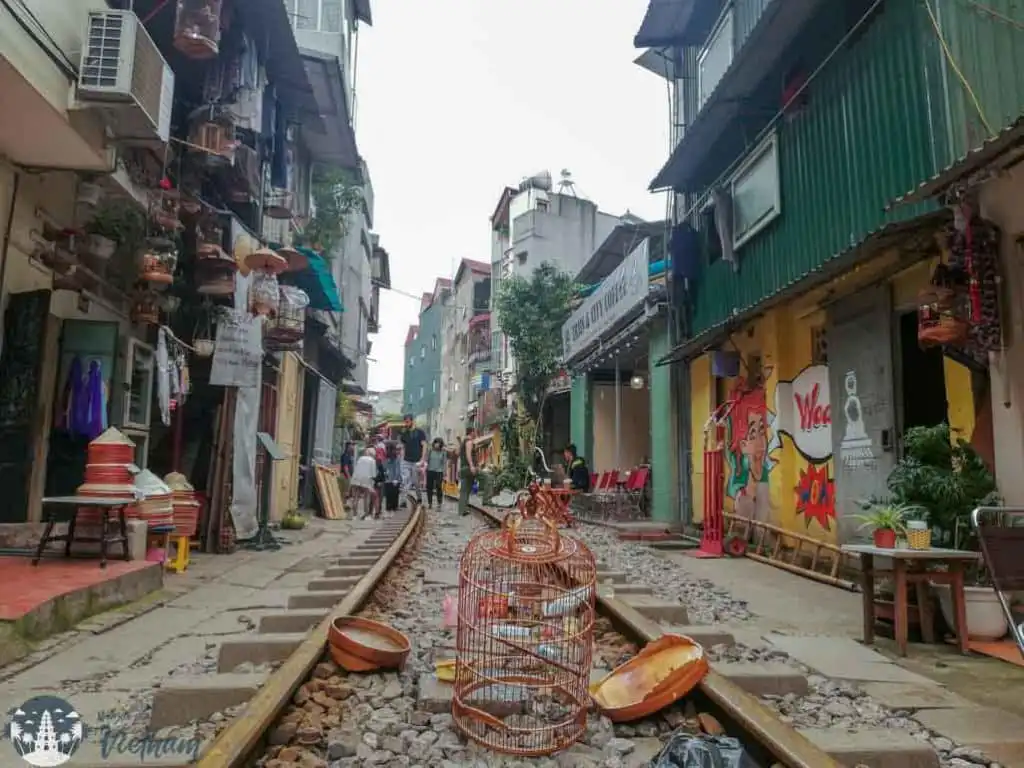
3. Watch the train arrive at Hanoi Train Street
We call it a”street” though it really isn’t one, because this place is simply part of the railway line that cuts through Hanoi, leaving in its wake picturesque scenes of cafés and houses that live literally with the train in their face.
Hanoi’s train street is the city’s Instagrammable spot par excellence, and one you probably won’t want to skip on your visit to the capital.
If you like taking the photo op to the max, a visit here will definitely stir up your feeds.
Although it was partially closed to the public, it’s still perfectly visitable. These days you normally get in by ordering something at one of the bars or cafés lining the tracks, with drinks from around 30,000 VND (~US$1.15). We explain in detail how to visit Hanoi’s train street in this post.
4. Catch the water puppet theater
In Vietnam, one of the most traditional art forms is water puppet theater.
This deeply traditional kind of show originally comes from the country’s farming culture, where rice is the main crop, and where performers once stood knee-deep in water, staging their puppet shows on the surface of the rice paddy.
Over time, this art form spread across the country, and today it’s part of traditional festivals in many places — now staged in theaters.
One of its finest examples is the Thang Long Water Puppet Theatre, on the shore of Hoan Kiem lake in the heart of Hanoi’s old town, where you can enjoy these shows, held without interruption 365 days a year.
Do book in advance, though, as showtimes are limited.
The Thang Long puppet theater: hours and prices
- Showtimes: Daily at 4:10 pm, 5:20 pm, 6:30 pm and 8:00 pm.
- Ticket price: between 150,000 and 200,000 VND (~US$5.80-7.70).
- You can buy it at the theater itself or online through this link.

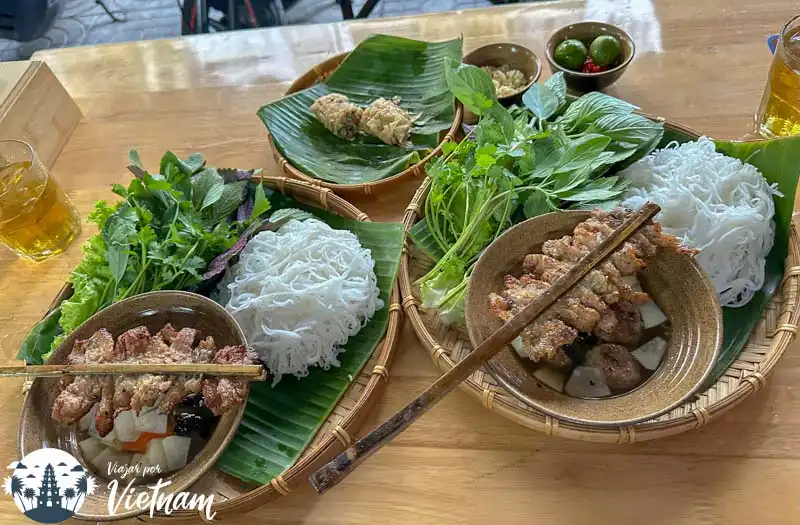
5. Eat Bun Cha, one of Hanoi’s most emblematic dishes
Bún Chả is a dish typical of Hanoi, which you’ll also find in other parts of northern Vietnam.
It’s without doubt one of our favorite meals in Vietnam, and probably one of the most filling.
The dish is basically a kind of broth to which grilled pork patties and pork belly are added, along with some vegetables — usually bamboo.
On the side you get thin rice noodles, known as bún, and a little basket of all kinds of fresh herbs to add to taste.
As if that weren’t enough, on the table you’ll usually find various condiments to add — vinegar, garlic and the green chili that locals tend to use in generous amounts to give the dish more flavor.
You can also order fried Vietnamese spring rolls on the side, standard at most restaurants serving this dish.
How to eat Bún Chả
One of the challenges many Westerners face on a first visit to Vietnam is how to eat the country’s sophisticated dishes. So you don’t get caught out, here’s the traditional way to eat Bún Chả Hà Nội.
- Take the bowl with the meat and the broth.
- Add garlic, chili and pickled vinegar to taste.
- Add whichever herbs you like best, tearing them into small pieces.
- Keep adding noodles and dunking them in.
- Enjoy the flavors.
Where to eat it
If you want a sure thing, our favorite is Bún chả 22 ngõ Huyện, right in the old town (Hoan Kiem). A full plate for around 50,000 VND (~US$1.90). In our view, eating it at one of the many street restaurants perched on plastic stools is part of the experience — places with tablecloths don’t do it justice.
6. Try egg coffee
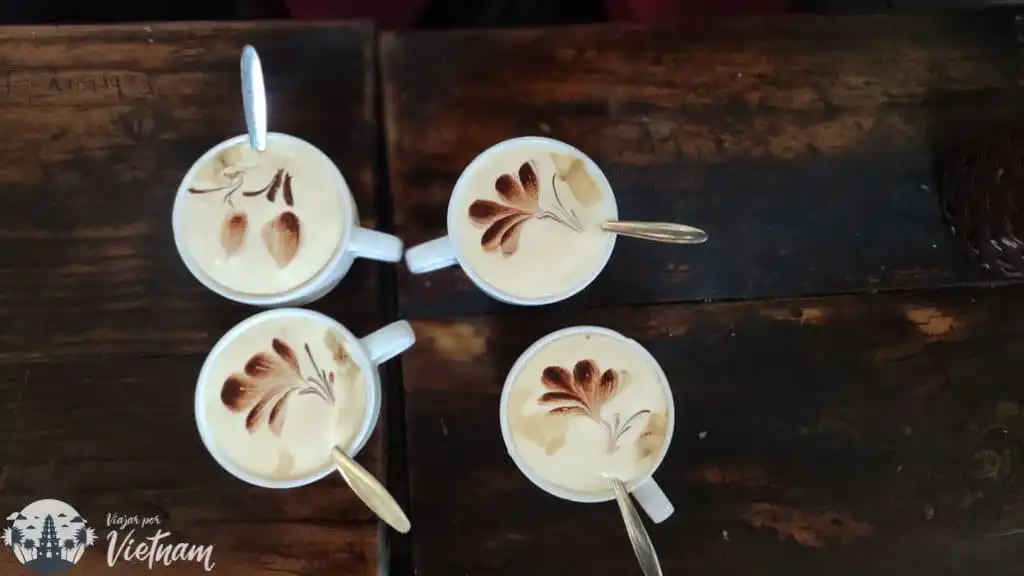
Yes, you heard right: egg. And before your Western culinary prejudices start telling you it can’t possibly be a good combination, we’ll say it now — it’s going to surprise you enormously.
As the world’s second-largest coffee exporter, Vietnam is a country where coffee is part of daily life and of Vietnamese society itself.
Hanoi is the perfect example of this coffee culture and the ideal place to try some of the varieties that are harder to find elsewhere in the country, like egg coffee, yogurt coffee or coconut coffee (our favorite).
Egg coffee originated at Cafe Giang, whose founder had to improvise with whipped egg yolk when milk was scarce. The place is still open today and, although it’s now a tourist magnet, it’s still worth visiting for the history. Here’s a complete article on the best cafés in Hanoi and the types of coffee you’ll find in the capital.
7. Soak up the nightlife at a Bia Hoi and see Hanoi Beer Street
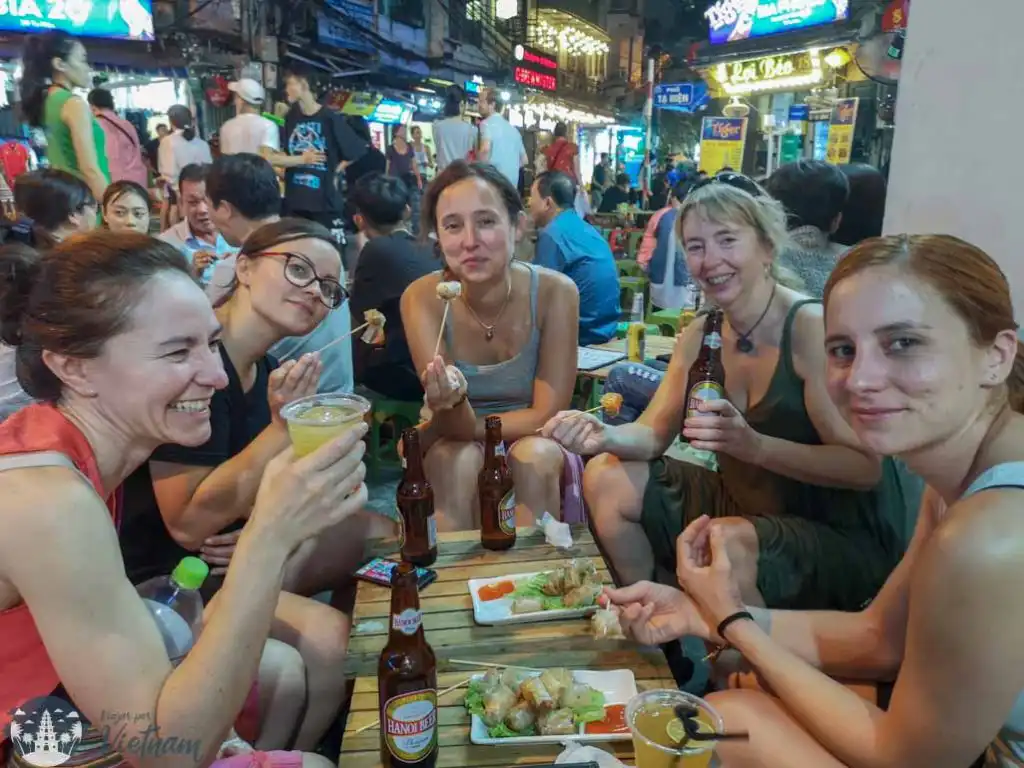
A stop at a Bia Hoi is an essential part of Hanoi nightlife.
Bia Hoi, which literally translates as”fresh beer”, is a light beer brewed daily that contains no preservatives, which means it spoils quickly.
It’s served in small taverns of the same name all over the city, and it’s hugely popular in Hanoi. Its low price (around 15,000 VND, about US$0.60 a glass), its alcohol content (3-4%) and its mild flavor (especially for Western drinkers used to fuller, stronger beers) have made it one of the most popular things in Hanoi.
If you love beer, don’t hesitate to drop into any Bia Hoi in the capital, take a seat on their plastic stools, enjoy a cold one and watch the city’s everyday life go by.
Beer Street
Beer Street, officially known as Ta Hien Street, is one of the liveliest, most vibrant streets in Hanoi.
It sits in the heart of the old town and is known for its buzzing nightlife, where locals and tourists gather to eat, drink and party every day.
Weekends are its peak, but you’ll find atmosphere almost any night of the week. In the vein of other party streets like Bui Vien in Ho Chi Minh City, if going out is your thing, this is the ideal place for a good time.
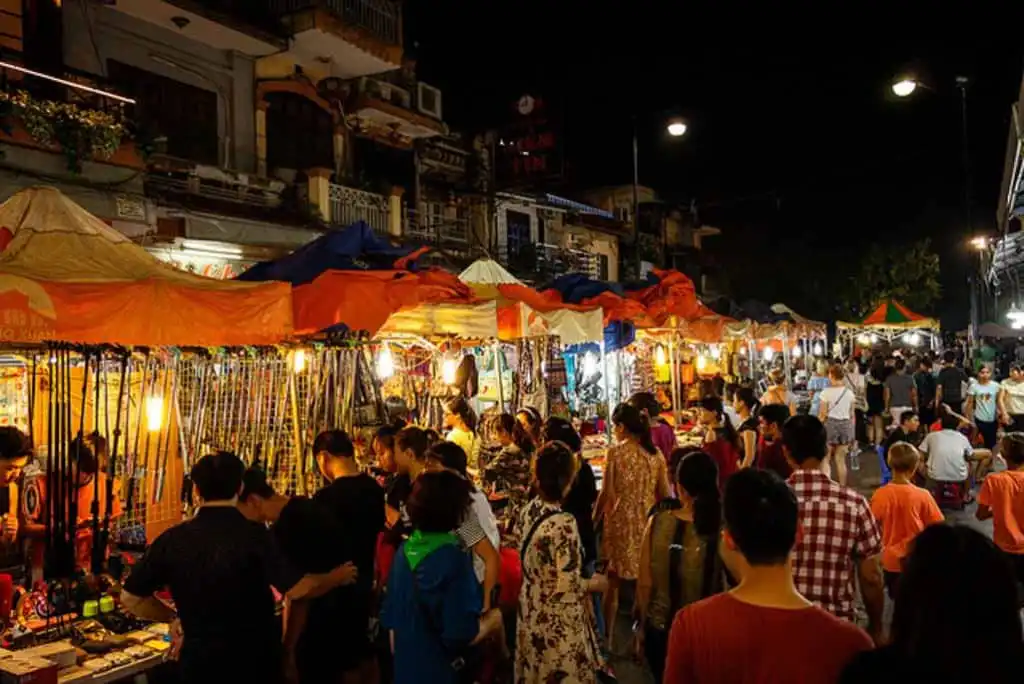
8. Get lost in the night market
If your visit to the capital falls on a weekend, you’re in luck: you’ll be able to explore the night market, right in Hanoi’s old quarter.
It stretches from the top of Hoan Kiem lake almost all the way to the Dong Xuan daytime market.
You’ll find it open every weekend: Friday, Saturday and Sunday from around 7:00 pm, when the vendors start setting up their stalls.
There you’ll find all kinds of souvenirs, clothes, food and an endless array of trinkets that will certainly help you round out those gifts for family and friends without spending a fortune.
The Dong Xuan daytime market
If you’re the type who likes getting into the thick of local life, this market is one of those places in Hanoi you can’t miss if you want to understand how people here really live.
Inside you’ll find a multitude of goods: clothes, shoes, appliances, toys and fabrics. It’s a market geared toward the local economy rather than tourism, which is exactly why losing yourself in it for a while is quite the experience.
And if the inside is a world of its own, along one of its outer streets runs a wet market of vegetables, fruit, meat, nuts and more — where you can marvel at the sheer variety of products sold here every day.
- Open daily from 8:00 am to 8:00 pm.
- If you have a weak stomach or you’re sensitive to strong smells, better skip it.
9. Give your body a break with a good Vietnamese massage
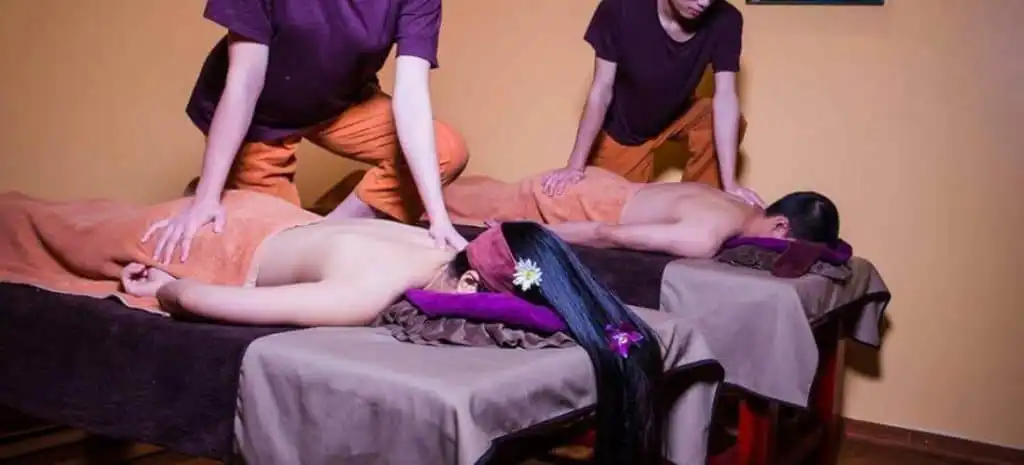
If you love relaxing and treating your body well, you’re in luck, because Vietnam is one of the countries with the best value-for-money massages in the world.
In Vietnam, massage is part of family and social culture, so you’ll find salons offering these services on almost every corner.
Traditional Vietnamese massage blends traditional techniques with influences from Chinese medicine, focusing on deep pressure and the manipulation of specific points on the body to relieve everyday stress.
Trying a Vietnamese massage is one of the most relaxing, revitalizing experiences you can have during your visit to Hanoi — or any other city in the country.
Among our favorite massages in Hanoi is without doubt Omamori Spa, where you’ll get a spectacular massage at the hands of blind masseurs. And if you prefer a foot massage, one of the best we’ve experienced is at Tâm Spa, 38 Hàng Bông.
Prices normally start at around 250,000 VND (~US$9.60) for a full-body massage and 100,000 VND (~US$3.80) for a foot massage.
So wherever you go, don’t think twice: after a long day of sightseeing around the city, reward your body with a good Vietnamese massage.
10. Stroll around Hoan Kiem lake
Hoan Kiem lake is one of the emblematic places to see in Hanoi and an oasis of calm amid the noise. It’s the ideal spot for a walk and a recharge by the water, while you learn the story behind it.
Formerly known as the emerald lake thanks to its green water all year round, it changed its name in the 15th century to Hoan Kiem Lake (Lake of the Returned Sword).
Legend has it that emperor Le Loi returned a magic sword to a turtle after defeating the Ming dynasty.
We tell the full story here.
The lake has long been home to a species of giant turtle, considered in Vietnamese culture to be sacred creatures symbolizing longevity, wisdom and good fortune.

11. The Ho Chi Minh Mausoleum
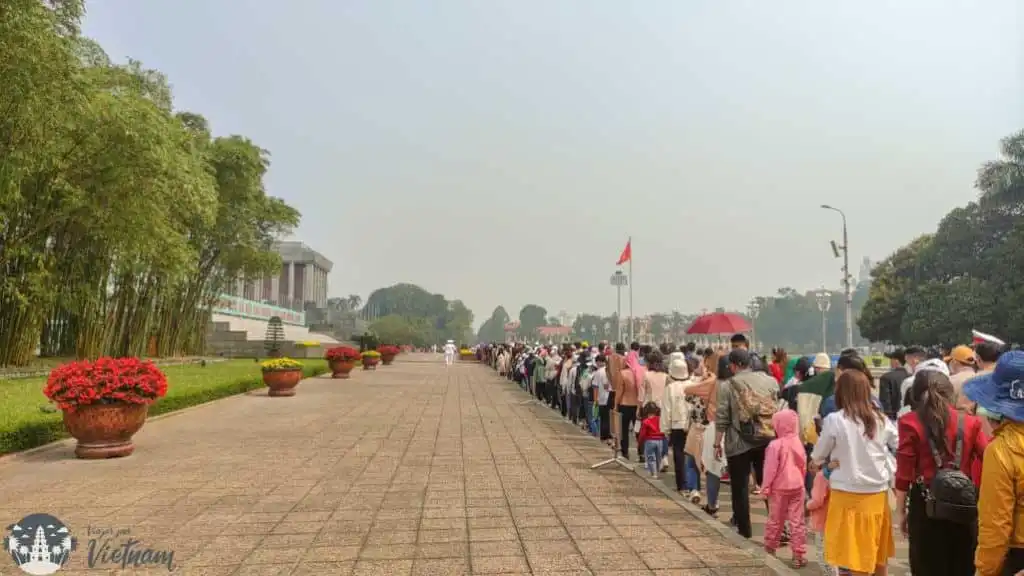
One of the essential places to see in Hanoi is the Ho Chi Minh Mausoleum — no visit to Hanoi is complete without paying respects to the man considered the father of modern Vietnam.
Ho Chi Minh is far more than a patriotic symbol for many Vietnamese, and his remains are a place of pilgrimage visited by thousands of locals and tourists every year. In the vein of other communist mausoleums such as Lenin’s, stepping inside is quite the experience — one you shouldn’t miss if you’re visiting Hanoi.
Although in his will President Ho Chi Minh expressed his wish to be cremated and to have his ashes spread across the country’s three regions (north, center and south), the government decided to embalm his body and build a mausoleum so that people could come and visit him.
Since it opened in 1975, it’s been one of the most visited places in Vietnam, especially by school groups and families.
The exterior of the mausoleum is a structure of gray granite and marble columns. Inside, what strikes you most — beyond the solemnity and the cold — is how well preserved President Ho Chi Minh’s body is, with four soldiers standing guard in the room at all times.
Visiting tips:
- Opening hours: Open every day except Mondays.
- Entry: Free.
- Appropriate dress is required.
- Get up early to avoid the heat and the lines.
12. The Temple of Literature
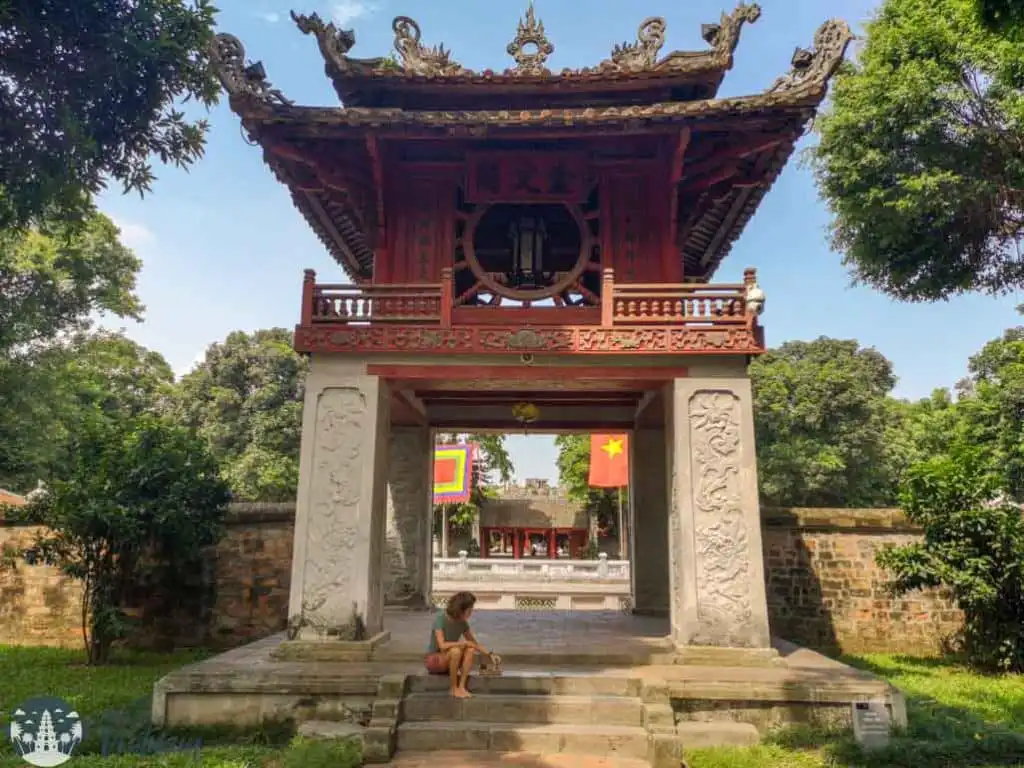
Another of the things to do in Hanoi is walking through the gates of the Temple of Literature to see what was once Vietnam’s first university, the training ground for much of the country’s scholarly elite.
Its history reaches back to 1070, when it’s believed to have been founded by emperor Ly Thanh Tong in honor of the Chinese philosopher Confucius.
A few years later, his son established the Imperial Academy here, where royals, nobles, princes and bureaucrats studied the doctrines of Confucius and received their academic training.
Today it’s one of the best places to visit in Hanoi. Changed and weathered though it is, it’s well preserved, and you can spend a good while wandering its courtyards and interiors, taking in its beautiful architecture and learning how the country’s leading intellectuals were educated after passing gruelling exams and trials.
Despite what its name suggests, the Temple of Literature isn’t really a religious site these days, but a purely touristic one.
Visitor information
- Hours: 8:00 am to 5:00 pm, daily.
- Price: 70,000 VND (~US$2.70)
- Audio guide available for an extra 50,000 VND (~US$1.90)
13. Hoa Lo Prison
If you’re interested in digging deeper into Vietnam’s history and its turbulent, difficult past, Hoa Lo Prison is one of the places you can’t miss in Hanoi.
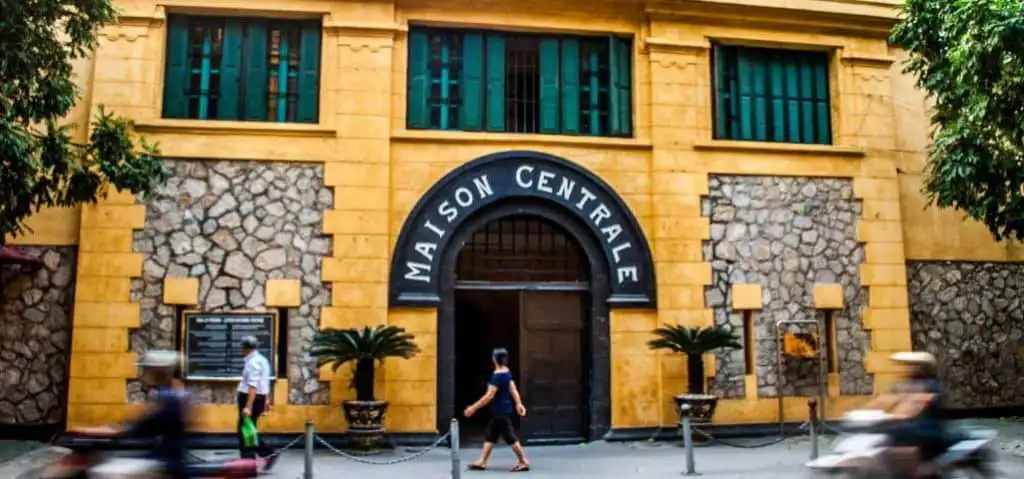
Also known — sarcastically — as the”Hanoi Hilton”, it was originally built by the French colonial government in the late 19th century to imprison Vietnamese political prisoners, and was later used by the North Vietnamese government to hold American prisoners of war during the Vietnam War.
Today, the”Maison Centrale” has become a museum telling the story of the prison and its temporary inhabitants. If you want to better understand the dark stories hidden behind the thick walls of Hoa Lo Prison, don’t hesitate to visit this place — bracing and moving in equal measure.
Visitor information
- Hours: 8:00 am to 5:00 pm, daily.
- Price: 50,000 VND (~US$1.90)
- Audio guide available for an extra 100,000 VND (~US$3.80) — a little pricey, but worth it for the historical context.
14. Hanoi’s Old Quarter
Hanoi’s historic center is one of the unmissable places on any trip to Vietnam, and the ideal spot to stay if it’s your first time in the city.
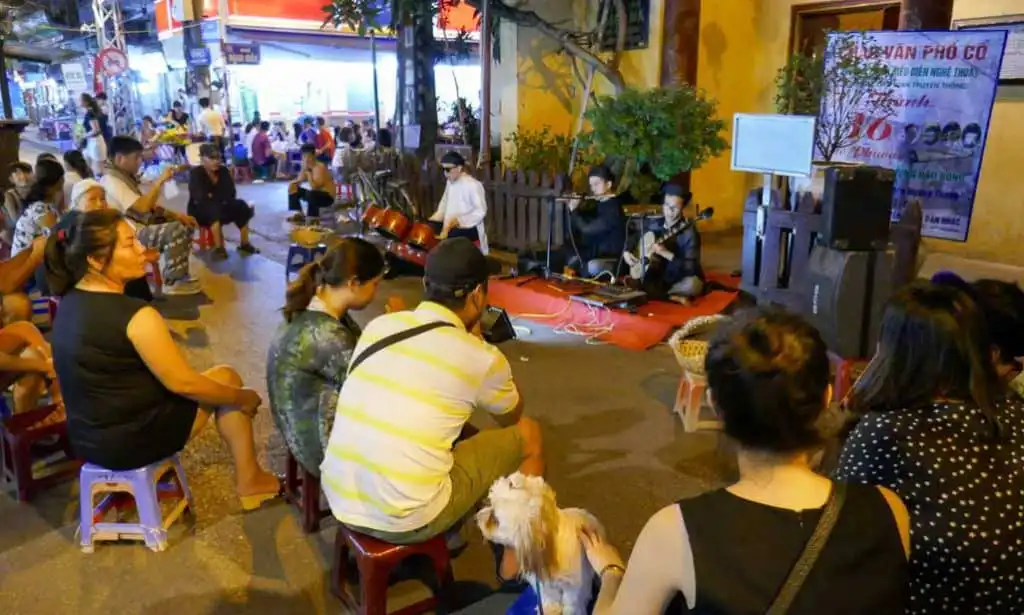
The Old Quarter is a full-blown labyrinth of ancient streets where tourists, locals, restaurants, shops of every kind, dozens of travel agencies and a café on almost every corner all blend together. We’d go so far as to say that almost anything that crosses your mind can be found in Hanoi’s Old Quarter.
The history of Hanoi’s Old Quarter
Hanoi’s history goes back to the 11th century, when emperor Ly Thai To decided to move the capital from Hoa Lu (Ninh Binh) to Hanoi, drawing in with the court a multitude of artisans from every region, who populated the area and organized themselves into guilds.
As legend tells it, the emperor dreamed of a dragon rising majestically to the sky from the Red River. Reading the dream as a divine sign of prosperity and growth, he decided to move the capital from Hoa Lu in Ninh Binh to what we know today as Hanoi. Inspired by his vision, he named the new capital Thang Long, meaning”the ascending dragon”.
The streets of the Old Quarter are still organized by guild to this day. Some of the main ones you can visit:
- Hang Bac Street: specializing in gold and silver jewelry, and where you can exchange money at the best rate in the city.
- Hang Ma Street: specializing in offerings, decorations and toys, mainly for the Mid-Autumn Festival and Christmas.
- Hang Buom Street: specializing in sweets and jams for the Tet festival.
- Hang Thiec Street: with metal goods of every kind.
- Lan Ong Street: specializing in traditional medicine and all sorts of natural remedies — walking down it is a treat for the nose.
While many streets have evolved over time and no longer keep their original features, some have managed to preserve their charm. Among them, you can visit a few that are open to the public, such as the Ma May Ancient House (No. 87, Ma May street).
15. The Thang Long Imperial Citadel
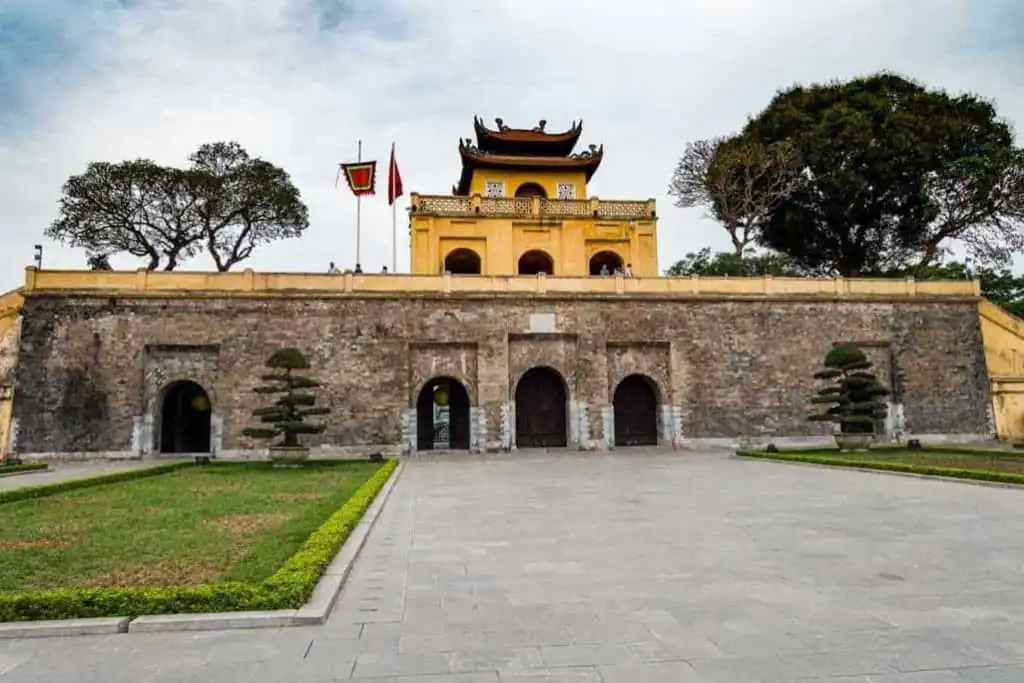
Another of the things to see in Hanoi is the Thang Long Imperial Citadel, declared a UNESCO World Heritage Site in 2010.
Built in the vein of other great courts such as Beijing’s Forbidden City, the Thang Long Imperial Citadel carries us back to a not-so-distant past, when Vietnam was still ruled by emperors and courts.
With origins reaching back to the 7th century, the first structure was a fortress used by the Chinese who controlled much of what is now northern Vietnam — though it wasn’t until the 10th century that Thang Long was built on this very spot.
Although the complex you see today has little in common with the original citadel, owing to the many destructions and reconstructions over the years, it remains a significant symbol of Vietnamese history.
Inside, beyond the numerous ruins, you’ll also find the flag tower, another of Hanoi’s best-known symbols.
In 1802, emperor Gia Long, founder of the Nguyen dynasty, moved Vietnam’s capital from Hanoi to Hue, bringing this place’s role as the center of imperial power to an end.
Visitor information
- Hours: 8:00 am to 5:00 pm, Tuesday to Sunday (closed Mondays).
- Price: 100,000 VND (~US$3.80).
- Free map at the ticket office; the explanations in each area are only in Vietnamese and English.
16. The One Pillar Pagoda and the Presidential Palace
Two places that are the perfect complement to your walk around the Ho Chi Minh Mausoleum, given how close they are — and one of the main things to do in Hanoi in a day.
The One Pillar Pagoda
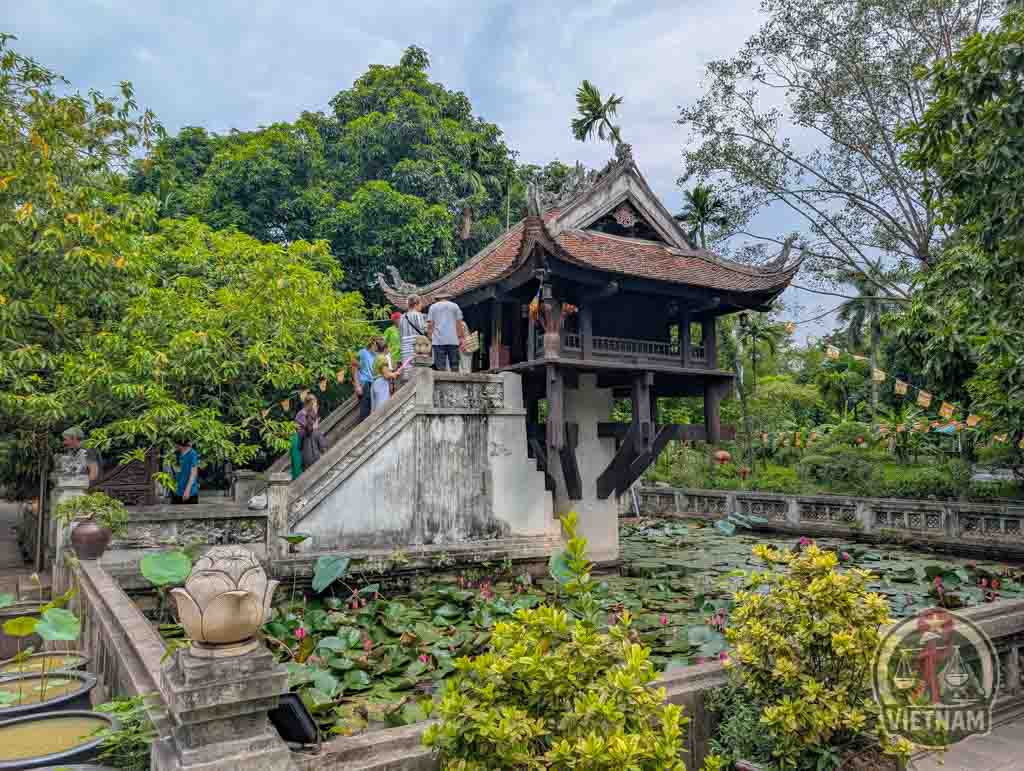
The One Pillar Pagoda was originally built during the 11th century by emperor Ly Thai Tong, though it was completely destroyed during the Vietnam War.
That said, this very special place has been fully restored today, based on its original and unique design, which makes it a more than curious spot to see during your stay.
- Open Tuesday to Sunday from 7:00 am to 6:00 pm.
- Free entry
The Presidential Palace
The Presidential Palace sits very close to the One Pillar Pagoda. You’ll come across it on your way out of the Ho Chi Minh Mausoleum, and it’s an interesting addition to that visit — it’s part of the same complex these days.
It was built in the early 20th century as the presidential residence of the Governor-General of French Indochina and, naturally, designed in a European style — the colonial influence of that era.
After 1954, it became President Ho Chi Minh’s official residence, though he refused to live in the building, considering it inappropriate while ordinary people were struggling to get by. He moved instead into a simple traditional wooden house next door, beside a garden and a fish pond.
Visitor information
- Only the exterior, the gardens, the pond, the museum and Ho Chi Minh’s wooden house can be visited.
- Entrance fee: 40,000 VND (~US$1.50)
17. The Hanoi Military History Museum
The Hanoi Military History Museum is a walk through the many wartime misfortunes Vietnam has sadly endured across much of its history.
This museum is an essential visit in Hanoi if you’re a military history enthusiast.
The new military history museum is one of the most imposing recently built structures in Hanoi, taking up an enormous space in the middle of the city. It houses several exhibitions, packed with numerous war artifacts and documents.
Among them are mines, infrared optics, telephones and butterfly bombs produced by the US and used by France in the Indochina War, as well as wooden remains used in the famous naval battle of Bach Dang against the Mongol army in 1288.
But without doubt the most interesting part of this place is walking through its outdoor courtyard among the wreckage of American planes, helicopters, missiles and tanks — including the fuselage of a US F-111A.
Visitor information
- Opening hours: 8:00 am – 11:30 am and 1:30 pm – 4:30 pm. Closed Mondays and Fridays.
- Entrance fee: 40,000 VND (~US$1.50)

18. The French Quarter
The French Quarter is one of the most picturesque places to see in Hanoi. It was built in the late 19th century with the aim of blending the Western way of life with Vietnamese culture and creating an operational zone for French governors and soldiers.
It’s an ideal place for a stroll if you want to appreciate the French influence on Hanoi’s architecture and urban planning.
Although Hanoi’s French Quarter and Old Quarter are close to one another, they’re distinct areas of the city:
- The Old Quarter is concentrated mainly to the north and west of Hoan Kiem lake.
- The French Quarter lies to the south and east of the lake.
Among its most iconic buildings are St. Joseph’s Cathedral, Hoa Lo Prison and the Hanoi Opera House.
19. The Hanoi Opera House
It’s the largest theater in Vietnam and a significant historic and architectural landmark in the city. Its design is heavily influenced by the Paris Opera and classical Greek architecture.
It doesn’t operate as a museum, so the interior can only be visited if you attend a show. The minivans to Mai Chau and other tourist spots usually depart from its square.
If you happen to pass by at night you can see it fully lit up, which somehow heightens its style and its French air.
- Hours: Variable.
- Price: Varies by show
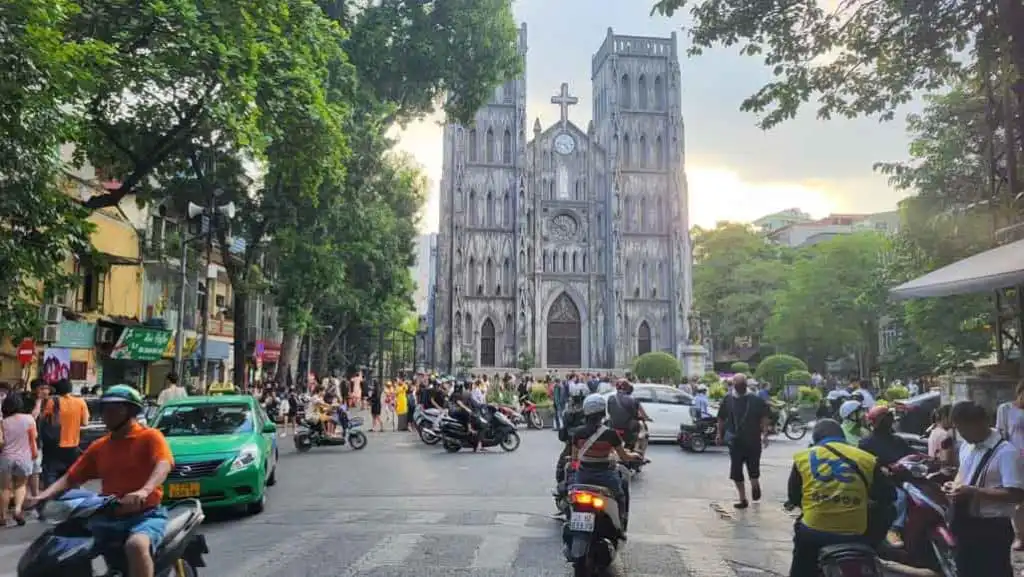
20. St. Joseph’s Cathedral
St. Joseph’s Cathedral is the oldest church in Hanoi and is considered the first major French colonial building in Indochina, raised in the late 19th century.
This neo-Gothic church, clearly inspired by Notre-Dame in Paris, contrasts strikingly with its Asian surroundings — which makes it a great spot to stop for a photo.
- Opening hours: Any time for the exterior, and during service hours for the interior.
- Price: Free
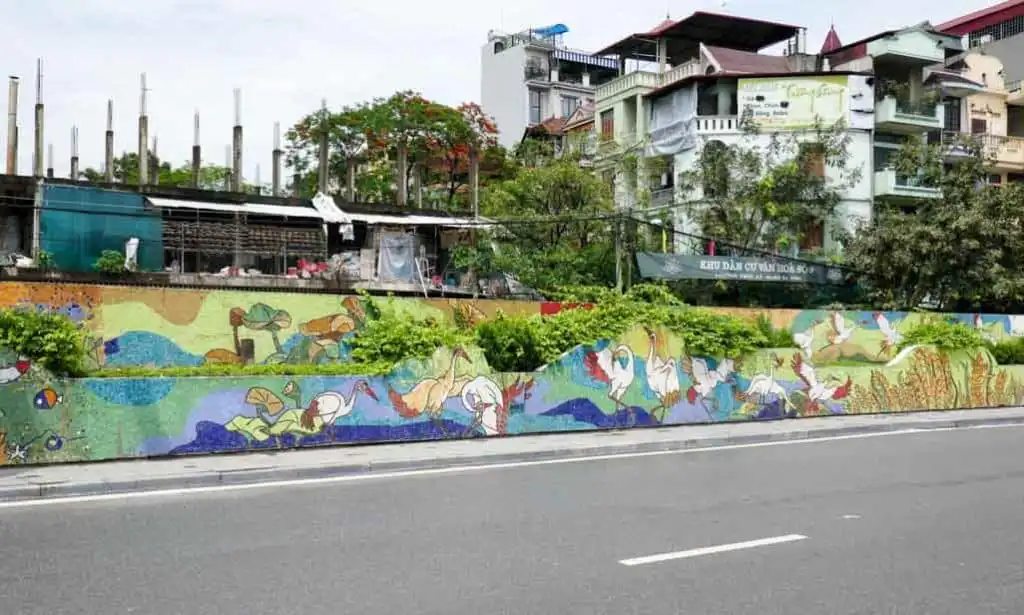
21. The longest mosaic in the world
Seriously? That’s in Hanoi? Yes — and it’s worth a look.
It isn’t the best known and many people miss it thanks to its peculiar location, but this mosaic in Hanoi, several kilometers long, holds the world record and is well worth a walk.
It’s not a tourist”must”, and being on a big, traffic-heavy avenue strips away a fair bit of its charm — but if you’re passing through the Long Bien bus station (where the airport bus drops you), you can take the chance to see some of its stretches.
22. West Lake and Tran Quoc pagoda
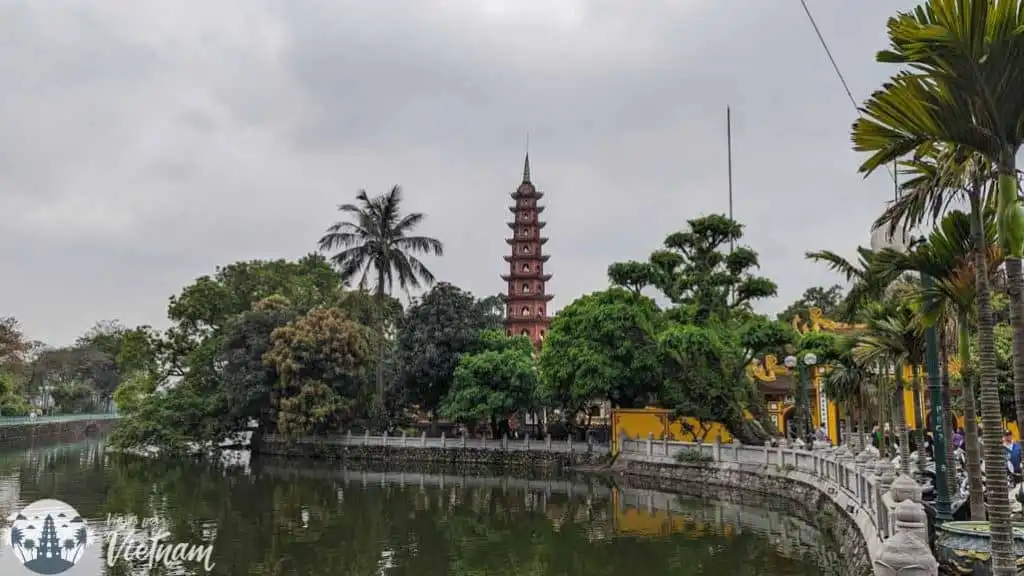
West Lake (also known as Ho Tay) sits in the northwest of the city and is the largest natural lake in Hanoi — without doubt an iconic spot in Vietnam’s capital.
With a shoreline of roughly 15 kilometers, it’s frequented mostly by locals and by a handful of expats who’ve settled into the Western-style houses dotting the area.
For us it’s a great place to disconnect from the city’s bustle and experience the authentic life of the local population.
Along its shores you’ll find restaurants, cafés and a very lively nightlife, which make this part of the city one of the most popular.
Among West Lake’s many points of interest are the Tran Quoc Pagoda, the oldest in the capital, built in the 6th century during the reign of king Ly Nam De, and the Tay Ho Temple, one of Hanoi’s most sacred temples.
Map of the main places to see in Hanoi
Here’s an up-to-date map of the most important places to see in Hanoi, so you can check them quickly and easily.
What to eat in Hanoi: 5 essential local dishes
Hanoi is one of Southeast Asia’s great culinary capitals and, in our view, eating well here is half the experience. Here are five dishes you absolutely have to try, along with the place where we like to eat them.
1. Bún chả
We covered it above, but it deserves the mention: it’s our favorite. Grilled pork patties, rice noodles, fresh herbs and a sweet-and-sour broth.
Nothing like what you’ll eat in other parts of the country. Our spot: Bún chả 22 ngõ Huyện.
2. Phở (Phở Bò)
The national soup. Beef or chicken broth simmered for hours, thin rice noodles (bún) and a tray of fresh herbs to add to taste.
Hanoi’s version is served cleaner than the southern one. A cheap dish, a perfect dish. We go to Family Pho, near Hoan Kiem: a bowl for around 50,000 VND (~US$1.90) that won’t disappoint.
3. Bánh cuốn
Less touristy, more local.
They’re a kind of steamed rice-flour sheet, wafer-thin, usually filled with minced meat, mushrooms and spring onion.
Ideal as a snack, or for breakfast if you really commit. Honestly, it’s one of the things we miss most when we leave Vietnam. Ballpark price: 40,000-60,000 VND (~US$1.50-2.30).
Our recommendation: Bánh Cuốn Cao Bằng Phố Cổ Hà Nội, right in the old town.
4. Đồ nướng giấy bạc (barbecue)
Pure late-night street food. Vegetables, beef, pork belly, seafood… everything grilled on a pan lined with aluminum foil right on the sidewalk, at plastic tables and stools with cold beers.
It isn’t a specific dish, it’s a group dinner ritual — basically because you cook it yourself.
In our view, one of the best food experiences you can have in Hanoi. The price depends on what you order; budget 100,000-150,000 VND per person (~US$3.80-5.80).
One of our favorite spots: Nướng Lẩu Hà Linh, though you’ll find plenty more in that area.
5. Chả cá lã vọng
An emblematic dish with a name of its own.
White fish marinated in turmeric and dill, fried in a hot pan right at your table, served with rice noodles, peanuts and fermented fish sauce.
This is no ordinary dish — it’s pricey by Vietnamese standards, but worth it at least once. Price: 80,000-120,000 VND (~US$3.10-4.60).
Our recommendation: Chả Cá Lăng Ngon (3B cơ sở 1, Hoan Kiem), where they nail it.
Note: egg coffee, although also typical of Hanoi, is covered above, since it’s a drink and not a dish.
Where to stay in Hanoi
First things first: the area you stay in will shape your trip. Hanoi has several neighborhoods and they don’t all serve the same purpose.
- Old Quarter — Our general recommendation, especially if it’s your first time. Chaotic, alive, full of restaurants and a 5-minute walk from Hoan Kiem lake. It’s where we always stay.
- Hoan Kiem (around the lake) — A bit quieter than the Old Quarter but just as central. A good option if you’d rather sleep with a little less late-night noise.
- French Quarter — More residential and elegant, with cafés and colonial architecture. It works for mid-to-high budgets that value calm over being right next to the Old Quarter.
Here are three options, one per budget, all in the Old Quarter or very close by:
Old Quarter View Hanoi Hostel
From 340,000 VND (~€12.80) / night
Sociable vibe and zero complications: the classic Old Quarter hostel, with over 2,800 reviews.
Check availability and prices →Classic Street Hotel
From 1,000,000 VND (~€37.75) / night
The perfect price-quality balance right in the Old Quarter, with 5,000 reviews of authority that’s hard to beat.
Check availability and prices →Le Premier Hotel & Rooftop Bar
From 2,300,000 VND (~€86.80) / night
One of the highest ratings in the country. The best gateway to the high end, with a rooftop bar and Old Quarter views.
Check availability and prices →In our view, if it’s your first time, don’t overthink it: any mid-range hotel in the Old Quarter will serve you more than well. The difference with the high end lies more in aesthetics and services than in location.
How to get around Hanoi
One of the main concerns for every traveler in Vietnam is learning to get around without trouble.
The good news is that if you’re sticking to the city’s historic center, it’s perfectly walkable between its main attractions.
If you simply don’t feel like walking any more, or you want to reach somewhere farther out like West Lake or the Ho Chi Minh Mausoleum, the easiest option is the Grab app, which will also serve you in other Southeast Asian countries.
Through Grab you can book a motorbike or a car at a price fixed in advance.
For the more old-school, there’s always the option of negotiating directly with a taxi or motorbike taxi — you’ll find them on almost every corner of the historic center.
Finally, a popular way to get around among tourists is the rickshaw, a mode of transport that became especially popular in the early decades of the last century.
How to get from the airport to the city center
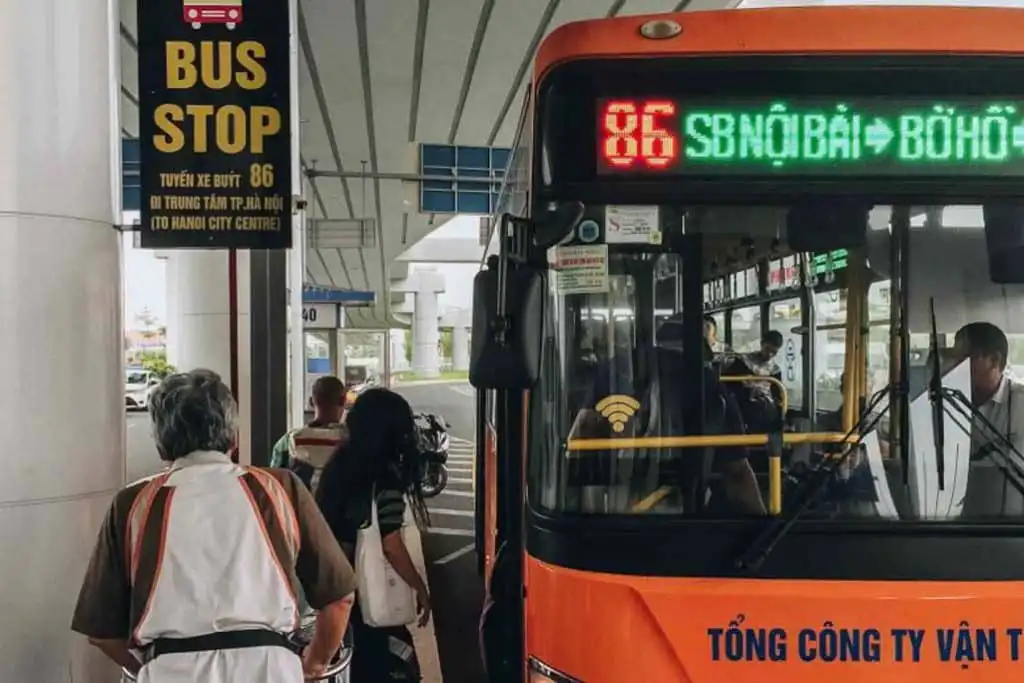
If it’s your first time and you’ve just landed in Hanoi, we explain how to get easily from Noi Bai airport to Hanoi’s Old Quarter, where most of the city’s visitors stay.
From Hanoi to Ninh Binh
If you’re thinking of carrying on with your trip and aren’t sure where to, just a couple of hours from the capital lies Ninh Binh, one of those places you won’t want to miss on your itinerary.
Here’s an interesting post with all the information on how to get from Hanoi to Ninh Binh by the different means of transport.
How to get from Hanoi to Sapa
Sapa remains one of the places that draws the most tourists and travelers from all over the world.
We explain how to get from Hanoi to Sapa without complications.
The most comfortable and cheapest option is the night bus (6 hours, 300,000 VND ~US$11.50, several departures a day). If you’d rather take the train, there’s also a night train (8 hours, 850,000 VND ~US$32.70) — pricier, but more comfortable if you sleep well on rails.
Getting from Hanoi to Hue
Set in central Vietnam, the city of Hue was one of the country’s most important, and the remains of its imperial past make it a practically mandatory stop.
If you want to travel from Hanoi to Hue, you’ll find all the information here.
How to get from Hanoi to Ha Giang
There’s no doubt that Ha Giang is today one of the most sought-after destinations in northern Vietnam.
If you’re thinking of heading there for the spectacular Ha Giang Loop, here’s all the information on how to get to Ha Giang in this post.
The most-used option is the night bus from Hanoi (6 hours, 300,000 VND ~US$11.50).
How to get from Hanoi to Hoi An
Hoi An, considered by many the most beautiful city in Vietnam, is very well connected with the rest of the country.
To get there, you first need to reach Da Nang, in the center of the country.
You can take a domestic flight (about 1.5 hours) or, if you’re like us and enjoy the scenic route without rushing, the overnight sleeper train (it takes all night).
Once you reach Da Nang, we explain how to get to Hoi An easily from Da Nang in this article.
Frequently asked questions about what to see in Hanoi
2 full days are enough for the essentials in the center: the old town, the local food and a free walking tour. If you want to add the French Quarter at a relaxed pace or a day trip (Halong, Ninh Binh), give it at least 1 more day.
Yes, very safe. Hanoi has no areas known to be dangerous for tourists. Just apply common sense in crowded places.
October to April is the best window: cool weather, no rain and very manageable temperatures. June to August is doable but demanding, thanks to the heat plus sky-high humidity. We cover it in detail in our guide to the best time to visit Vietnam.
In the Old Quarter: central, lively and right by the main sights. The French Quarter is a good alternative for higher budgets that value calm. You have our full hotel selection above in this same article
Noi Bai airport is about 30 km from the Old Quarter. Three options: the public bus (the cheapest), Grab/taxi (~300,000 VND, about US$11.50) or a pre-booked private transfer. We cover it in detail in the section on how to get from the airport to central Hanoi.
✔️ Information reviewed and last updated in April 2026.