
Sitting in central Vietnam and known worldwide for the images of its lanterns lighting up the narrow streets, Hoi An is without question Vietnam’s most touristy town — and for many, the most beautiful one you can visit in the whole country. Though as you know, there’s no accounting for taste.
In this guide we cover the best things to do in Hoi An, with a full selection of what we consider some of the finest activities the town and its surroundings have to offer.
Between the charm of its beautifully preserved Old Town, a UNESCO World Heritage Site, the calm you can breathe in its streets and the sheer number of places to visit, for us Hoi An is, without a doubt, a must on your Vietnam itinerary.
Unlike more urban, modern cities such as nearby Da Nang, Hanoi or Saigon, Hoi An is barely more than a large town.
And while Hoi An has plenty of sights, much of its charm lies in the simple things: wandering aimlessly through the old quarter or settling into one of its cafés to watch daily life go by.
Hoi An has a special something that captivates travelers — full of hidden little corners you stumble upon without looking for them. So remember to leave free time in your itinerary to explore the town unhurried and truly enjoy it.
Here’s our rundown of the best activities and places to see in Hoi An. It’s not everything there is, but it’s more than enough to give you a clear picture of how many different plans and experiences you can fit into just a few days.
Plan your trip to Hoi An in 30 seconds ✈️
- GUIDED TOUR 👉 Discover Hoi An’s Old Town on a walking tour with a local .
- LANTERNS 👉 Learn to make one and take your own lantern home with this workshop.
- INSURANCE 👉 Travel worry-free around Hoi An with a discount on our favorite travel insurance for Vietnam.
- SIM CARD 👉 Stay connected throughout your trip to Hoi An with an eSIM for Vietnam.
- LOCAL TRANSPORT 👉 Check timetables and transport to Hoi An from Ninh Binh , Da Nang or Hue.
In this post
1. Explore Hoi An’s Old Town with a local guide
Hoi An’s Old Town is one of the best places in Vietnam and one of the country’s essential visits. A UNESCO World Heritage Site, today it’s the perfect place to stroll and lose yourself in its streets.
One of the things we love most about Hoi An’s historic center is that it’s pedestrianized — access is limited to foot traffic and bicycles, sparing you the hassle of traffic, something you’ll especially appreciate in Vietnam, and making it far more pleasant to explore.
In our view, the best way to visit Hoi An’s Old Town is with a guide, who’ll take you through the history and inner workings of a town with a past as remarkable as this one. This walking tour with a local runs about 3 hours and costs 300,000 VND (~US$12).
We recommend booking in advance, because it tends to fill up, especially on weekends.
To visit the interiors, you’ll need to buy the Hoi An Old Quarter ticket, a combined ticket that grants you entry to up to 5 different sites in the historic quarter.
2. Take a lantern boat ride at sunset
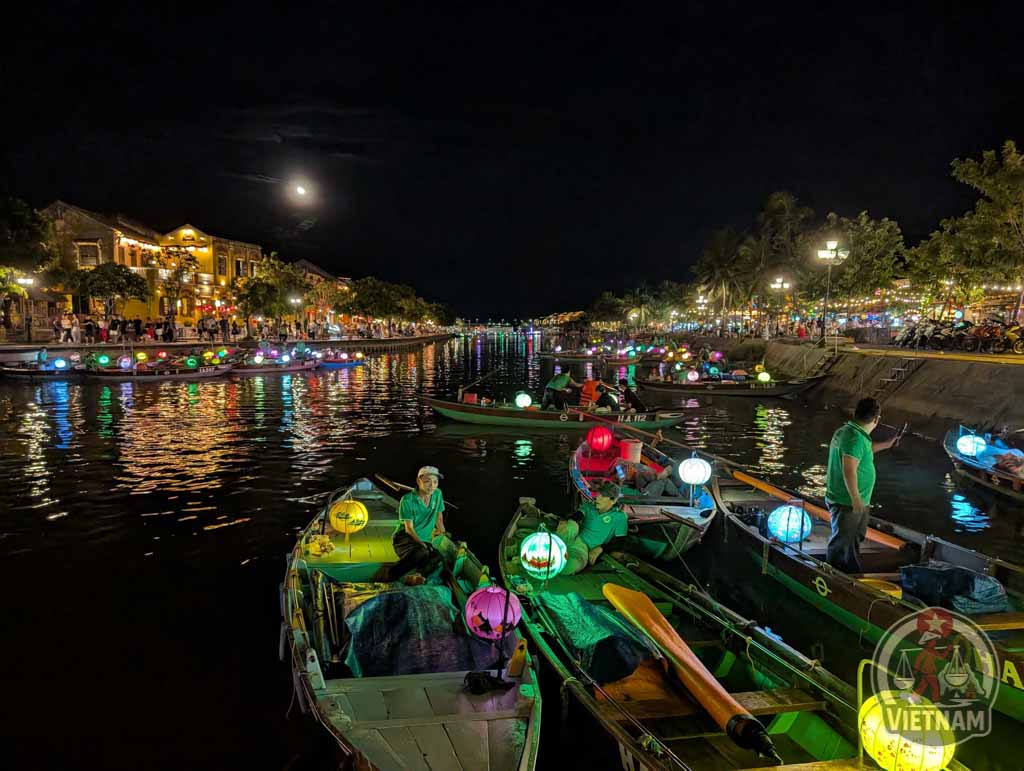
An evening boat ride on the river is one of the best things to do in Hoi An for families and couples alike.
Right by the night market you’ll find the river, home to one of Hoi An’s most popular activities — and one of the most loved (especially at sunset): hopping on one of the many lantern-lit boats waiting along the water for an evening ride.
Once there, several vendors will offer you the service. The price is negotiated with the local boat operators, and it generally depends on how long a ride you want — usually around 20–30 minutes.
If you’d rather skip the haggling, you can also book the experience in advance through this link.
3. Cycle through the rice paddies
Vietnam’s rice fields are a genuine spectacle, and while Hoi An’s aren’t as famous as Sapa’s terraces or the fields of Ninh Binh, they have a charm all their own.
One of the best things you can do in Hoi An is rent a bicycle and set off through the surrounding fields.
Use maps.me and, from the center, it takes less than 10 minutes to find yourself in the middle of nowhere, watching locals work with their water buffalo.
If you’re lucky enough to visit during the rice harvest season, you’ll see the fields in a stunning shade of green. Plus, getting around by bike lets you discover Hoi An at your own pace.
If you’d rather not go alone, there are several guided tours of the area like this one.
And if you want to do it with locals, a group of Vietnamese students runs free bicycle tours to practice and improve their English.
The ride runs every Tuesday, Saturday and Sunday, and you can book it here.

4. Learn to make Vietnamese lanterns
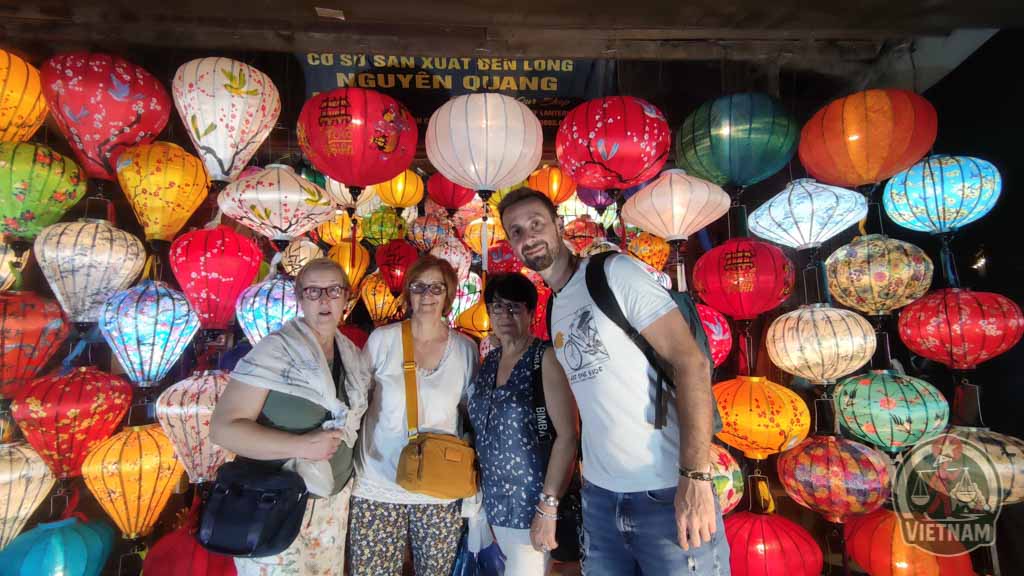
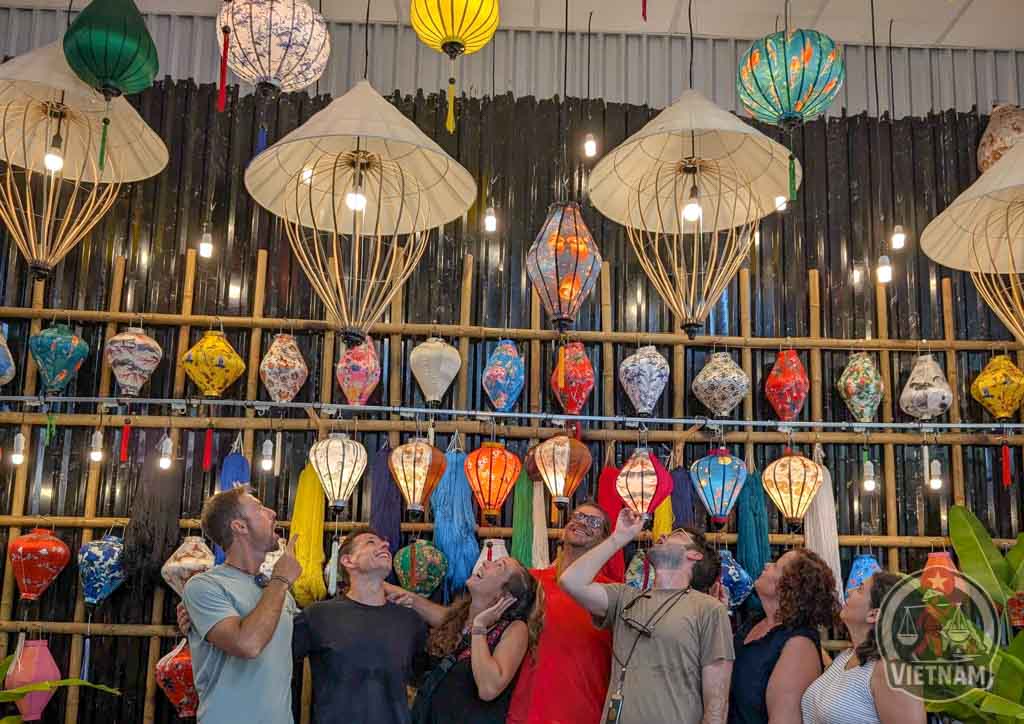
Alongside the cooking classes, another unmissable experience in Hoi An is taking a lantern-making workshop. These colorful lanterns are an iconic symbol of the town, and learning to make one is a fun way to dive into the local culture.
And what better souvenir to bring home from Vietnam than your own lantern, built and designed by you.
In these workshops, you’ll be guided step by step to create your own silk lantern. From choosing the design and colors to the final assembly, you’ll learn the traditional techniques used by Hoi An’s artisans.
If you’re a bit clumsy with crafts, or short on time, you can always opt to have the frame pre-assembled and simply choose and fit the decoration yourself.
Here’s one of our favorite workshops — you can book it online here.
5. Take a traditional Vietnamese cooking class
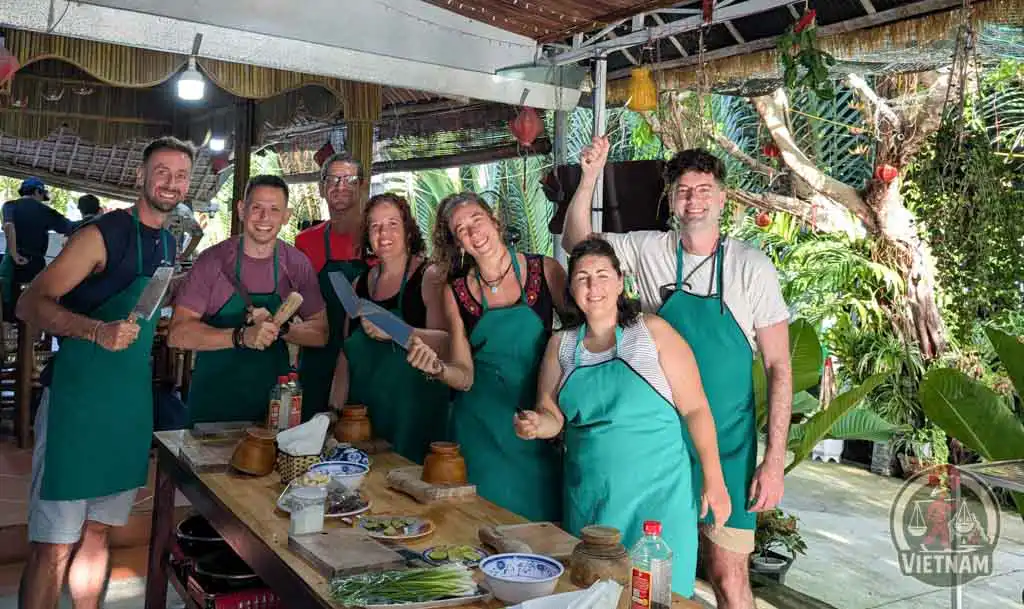
Hoi An is the perfect place to dive into the world of Vietnamese cooking, home to a wealth of unique dishes you’ll only find in this town. If you have the time, joining a cooking class is, for us, hands down one of the best things to do in Hoi An.
These classes usually begin with a visit to the local market to buy the ingredients, after which you’ll learn to prepare classic Vietnamese dishes such as Banh Mi or Pho, along with some of the local specialties — most notably Cao Lau, Cơm Gà and Mì Quảng
There are plenty of places across the Old Town offering cooking classes — here’s our favorite.
6. Step inside one of the traditional houses
Hoi An’s importance as a trading port drew merchants and traders from all over the world, and they left the old quarter a legacy of houses that today offer a small window into the wide range of traditions and cultures that once coexisted in this town.
Several are still preserved and run by the families themselves, who open them to the public and pass on the legacy of their ancestors — which makes them another of Hoi An’s key sights.
Among the main old houses you can visit, these stand out:
- Tan Ky Old House: Tan Ky is one of the most famous and most visited houses in Hoi An. With over 200 years of history, this residence is a prime example of the fusion of Vietnamese, Chinese and Japanese architectural styles.
- Tran Family Chapel: The Tran Family Chapel is not just a family home but also a place of worship. Built in the 18th century, it showcases traditional Vietnamese architecture and is dedicated to the ancestors of the Tran family. Its peaceful garden and the many family statues and artifacts it houses offer an intimate glimpse into the family’s life and traditions.
- Phung Hung Old House: Phung Hung is known for its robust design — and famous for its balcony, which offers views over the bustling market below, letting visitors soak up Hoi An’s vibrant daily life.
- Quang Thang Old House: Less well known but just as fascinating, Quang Thang is an outstanding example of Hoi An’s traditional architecture and decoration. With decorative elements showing a clear Chinese influence, the house is a living testament to the lifestyle and culture of Hoi An’s merchants several centuries ago.
7. Cross Hoi An’s Japanese Bridge
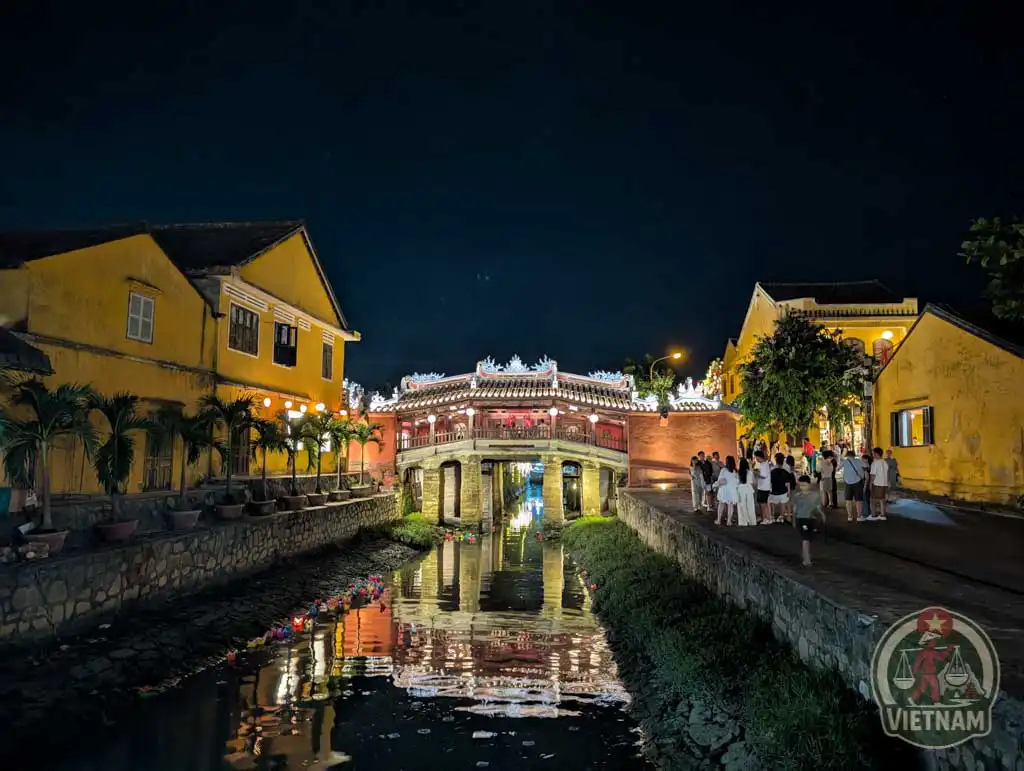
Hoi An’s Japanese Covered Bridge is one of the emblems of the old quarter.
Built to connect the town’s different districts, it stands out for both its architecture and its historical value. It’s the perfect spot to pause and take in its charm — especially at night, when it takes on an even more special glow.
The bridge had been under restoration since 2023, but the works were recently completed, so it can be visited as normal again.
8. Visit the Assembly Halls
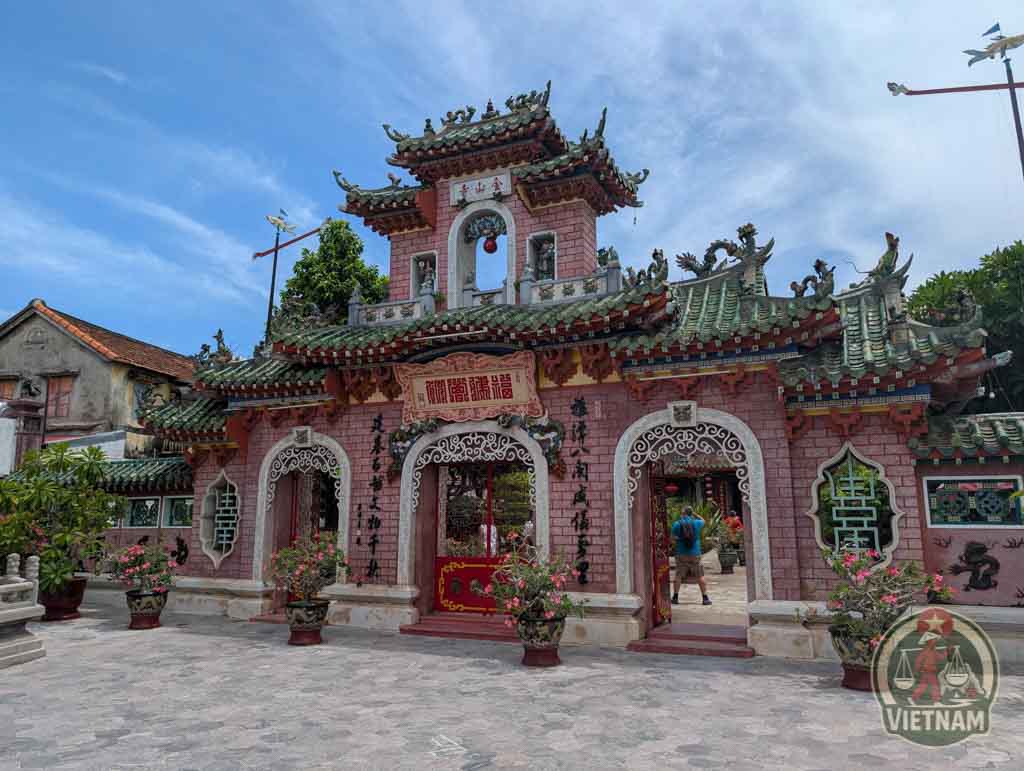
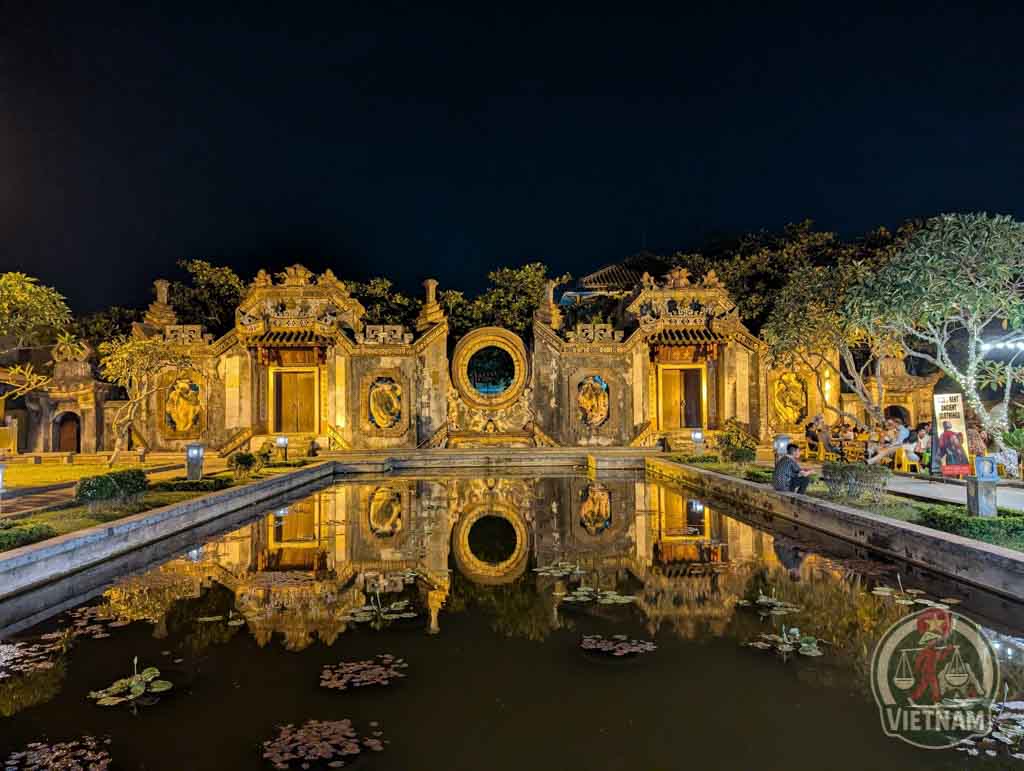
Among Hoi An’s many historical treasures are several assembly halls, once used as gathering places by the Chinese communities that settled here.
Both for their role in the town’s development and for how well preserved and striking many of them are, for us they’re another of Hoi An’s essential sights.
Here’s a list of the main assembly halls you can see around town:
- Fujian Assembly Hall (Phuc Kien)
- Built in 1690, this is one of the most visited halls in Hoi An. It serves as a place of worship to Thien Hau, the sea goddess who protects sailors.
- Cantonese Assembly Hall (Quang Dong)
- This hall stands out for its impressive, detailed architecture. It’s known for its large courtyard and the intricate reliefs depicting scenes from Chinese mythology.
- Chaozhou Assembly Hall (Trieu Chau)
- Dedicated to the deity Thien Hau, this hall is famous for its exquisite woodwork and the elaborate carvings that adorn its beams and columns.
- Hainan Assembly Hall (Hoi Quan Hai Nam)
- This hall centers on the worship of the 108 Hainanese who came to be regarded as heroes after dying while protecting the local community.
9. Explore the ruins of My Son
One of the best destinations near Hoi An is, without a doubt, the My Son sanctuary.
Built between the 4th and 14th centuries, My Son was an important religious and political center of the Champa civilization. This temple complex is one of the area’s main attractions and, keeping things in proportion, faintly recalls Southeast Asia’s other great sites such as Angkor Wat or Bagan.
If you love ancient civilizations, this is unquestionably another must-see near Hoi An.
Entry costs 150,000 VND (~US$6). You can get there on a rented motorbike or, if you don’t ride, on a day trip from Hoi An — a comfortable, affordable and practical option that usually includes breakfast.

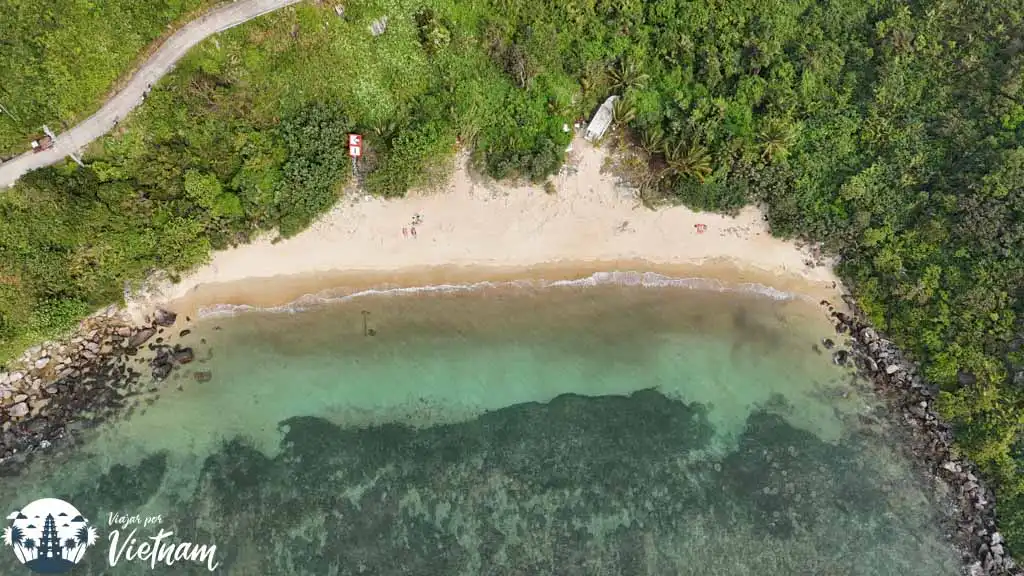
10. Spend a morning on the beach
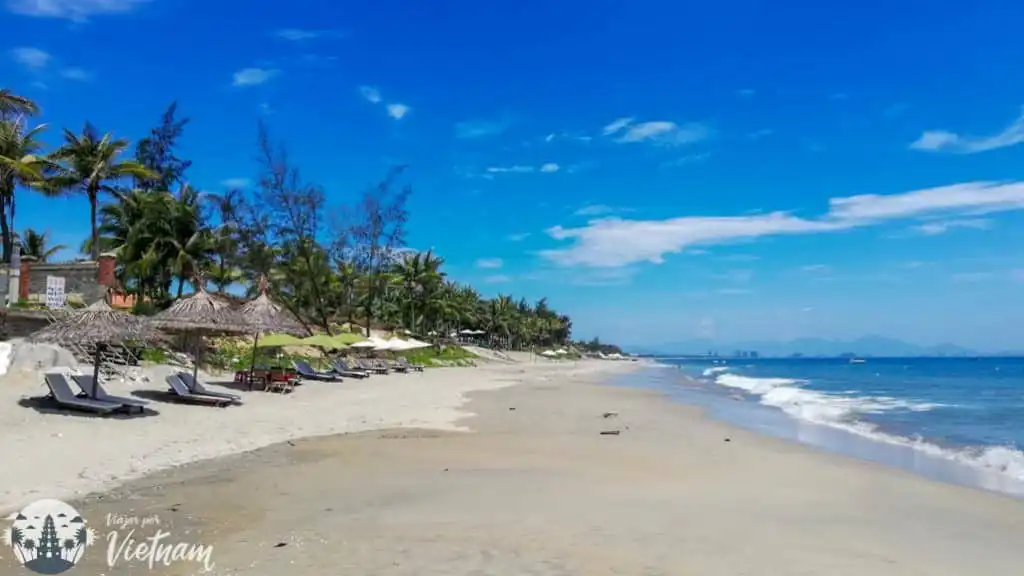
One of the perks of visiting Hoi An is that it sits on the coast, so a quick escape to the sea is always on the table.
If you’re worn out from cultural visits and sightseeing, it might be time to head for the coast and check out some of the best beaches hiding around Hoi An.
They’re not beaches to rival the Philippines or Indonesia, but they’re plenty good for a dip and an escape from the intense heat typical of this part of Vietnam, especially in summer.
That’s why we count them among Hoi An’s points of interest — ideal if you have some extra time and want a slower-paced plan.
11. Explore one of Hoi An’s museums
Hoi An is a town with a fascinating history, and you can feel it in many of its corners. To properly understand its significance, though, a good option is to visit one of its museums.
Here’s a list of some of the standout museums to visit in Hoi An:
- Hoi An Museum of History and Culture
- Housed in a 2,000-year-old building, this museum displays artifacts spanning the region’s early history and the cultural influence of the many civilizations that traded in Hoi An.
- Museum of Trade Ceramics
- This museum holds an extensive collection of ancient ceramics recovered from shipwrecks and local archaeological digs, illustrating Hoi An’s role on the historic maritime trade routes.
- Sa Huynh Culture Museum
- Dedicated to the Sa Huynh culture, which flourished in the region more than 2,000 years ago, the museum exhibits jewelry, tools and other artifacts unearthed in the area.
12. Sample the street food at the night market
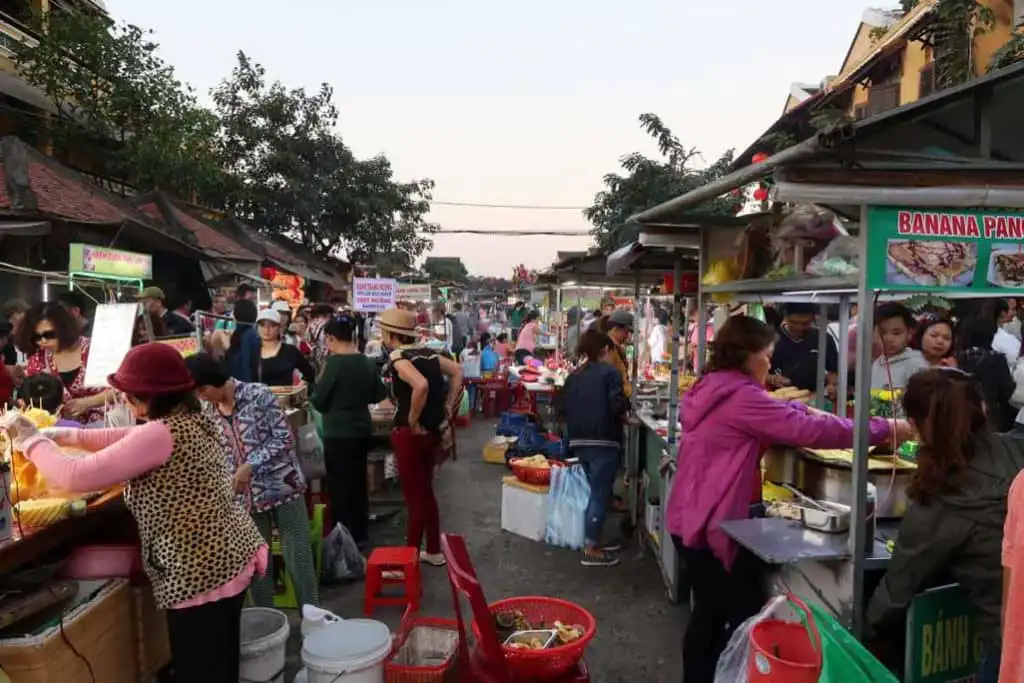
Right in the heart of the old quarter, the Hoi An Night Market features on practically every tourist route through town, making it one of Hoi An’s most visited spots — especially after dark, when it lights up with lanterns.
Here you’ll find a bit of everything: clothes, shoes, handicrafts, trinkets… It’s the perfect place to pick up cheap souvenirs for family and friends, or for those unavoidable gift obligations where you want something inexpensive and fuss-free.
The best part, though, in our opinion, is the rows of food stalls lining the sides, serving a multitude of cheap street food dishes to try during your stay in Hoi An: Nutella pancakes, sandwiches of every kind (Banh Mi), traditional ice cream and, of course, the classic”Vietnamese pizza” (bánh tráng nướng), one of the most popular snacks
The market is open every day from 5 pm to 11 pm, but the best time to visit is between 7 pm and 9:30 pm.
13. Play Bài Chòi, a little-known local tradition
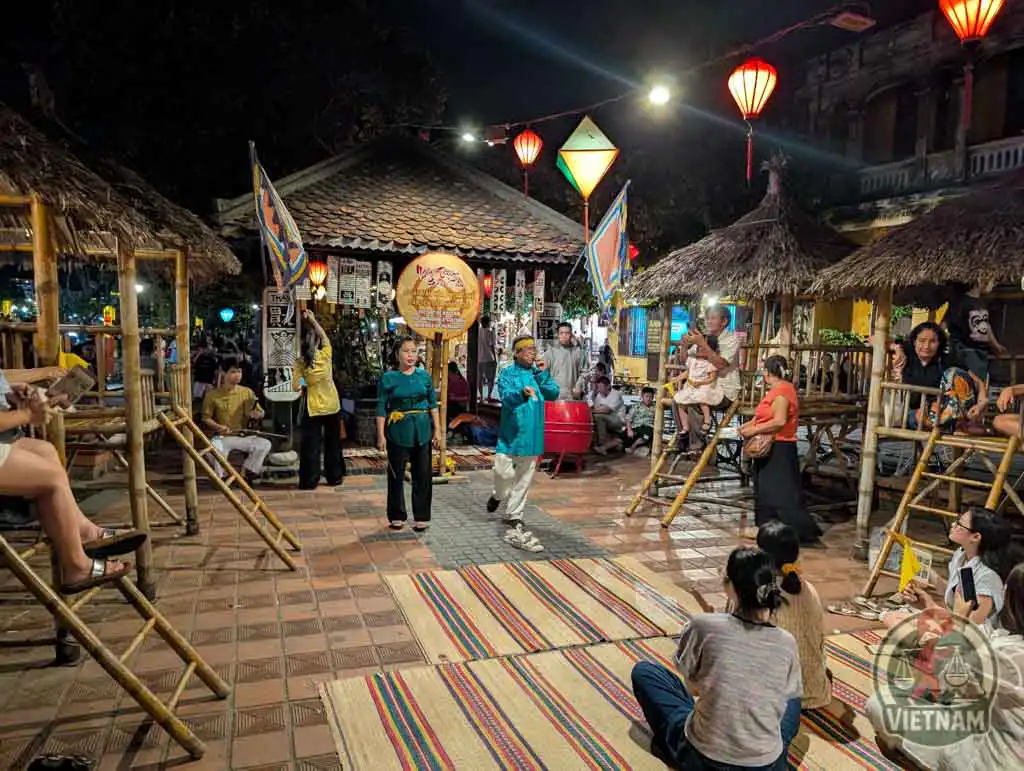
One of the most curious and authentic pastimes in Hoi An, still little known among foreign travelers, is playing Bài Chòi.
Bài Chòi is a kind of traditional Vietnamese bingo played outdoors, usually near the river as evening falls. To join in, just take a seat and pay a small fee; in exchange you’ll receive several tiles marked with Chinese characters.
During the game, a caller dressed in traditional costume sings verses and songs describing one of the tiles. When the song ends, they reveal the card — and if you’re holding it, you’re one step closer to winning.
The prizes are usually đèn lồng (Hoi An’s classic lantern) or other small keepsakes. But beyond the prize, it’s a fun, different way to experience a local cultural tradition while mingling with locals and visitors.
14. Visit the Golden Bridge (the hands bridge) and Ba Na Hills
Without question, one of the most widely shared images of Vietnam is the bridge held up by two giant hands.
This bridge sits in the Ba Na hills and is known as the”Golden Bridge”. It’s part of the Sun World Ba Na Hills theme park, built at about 1,487 m of altitude, styled after a European village and reachable only by cable car. Since opening in 2018 it has served up spectacular panoramic views and unforgettable photos, making it one of the most magnetic spots for Instagram lovers.
That’s why it’s one of the main things to do around Hoi An, drawing thousands of visitors from all over the world. It’s especially appealing if you’re traveling as a family or simply don’t want to miss the iconic photo on the bridge.
You can visit by arranging transport to the area and paying the entrance fee there, though our recommendation is to go on a tour like this one that includes everything you need.
Opening hours and prices
- Price: 900,000 VND (~US$35) for adults and 750,000 VND (~US$29) for children (waxwork museum not included)
- Hours: Open every day from 7:00 am to 10:00 pm

15. Take a side trip to the beautiful Cham Islands
Another of Hoi An’s great attractions lies along its coast. And while Vietnam’s beaches don’t have the fame of some neighboring countries, that’s partly because many travelers haven’t yet discovered the Cham Islands.
On this small archipelago you can enjoy snorkeling, diving, exploring the beaches and visiting the little fishing village to see local life up close — so if you’re after peace and beaches, this is one of the few places in Vietnam that delivers both.
Our advice is to visit on a day tour or to make your own way to Cửa Đại, where the boats to the islands depart.
We cover it all in detail in this guide
16. Get tailor-made clothes
Central Vietnam has a long textile tradition, and Hoi An — as a former trading port — is one of its great historical hubs.
Today, the Old Town is packed with tailor shops where you can order made-to-measure clothing at relatively affordable prices.
The final cost mostly depends on the quality of the fabrics: the better the material, the higher the price — though it’s still cheaper than an equivalent service in most Western countries.
You can customize practically everything: garment type, cut, fabrics and details. Before work begins, it’s standard to leave a small deposit to confirm the order.
Turnaround times are impressively fast too: in many cases your garment will be ready within 24–48 hours, and they can even deliver it to your accommodation.
A quintessential Hoi An experience — and a great chance to take home something truly unique from your trip.
Map of the places and activities in Hoi An
Here’s a simple map so you can place Hoi An’s main points of interest.
Hoi An, a short history of Vietnam’s old trading port
In the 16th and 17th centuries, Hoi An was the place everyone wanted to be.
Its strategic location in the center of the country, straddling the main trade routes, turned this small town into a thriving hub of international commerce.
As history tells it (and as its heritage still shows), in its glory days Hoi An buzzed constantly with merchants and goods — silks, spices, ceramics, ivory and teas, along with precious metals and other exotic wares arriving from across Asia.
All that activity attracted Chinese, Japanese and European traders, enriching the town enormously on every level.
Sadly, the silting of the Thu Bon River brought the port’s decline, and trade largely shifted to neighboring Da Nang in the 19th century — though the legacy remains clearly visible in Hoi An today, where the influences of all those cultures blend into a single town.
These days, Hoi An remains a spectacular destination — only now it’s us travelers who fill its streets, making it one of the most visited places in Vietnam.
How many days to spend in Hoi An?
Planning your visit to Hoi An is easy. The Old Town is largely pedestrianized, which makes it simple to cover most of its highlights on foot without much planning.
Even so, if you’d rather play it safe and make the most of your time, these sample itineraries fit neatly around however many days you have and cover Hoi An’s essentials.
Hoi An in 1 day
If you only have one day, your best bet is to focus on the Old Town.
Spend it covering the main sights such as the Japanese Bridge and the assembly halls, and relaxing in one of the many cafés.
In the late afternoon, a great option is a lantern-making workshop, finishing the day at the night market, soaking up the atmosphere and the street food.
Hoi An in 2 days
With two days, keep day one as described and devote the second to renting a bicycle and riding through the nearby rice paddies, or taking a leisurely route to the beach.
Another option is a day trip to one of the nearby attractions, such as the My Son sanctuary, Ba Na Hills, the Marble Mountains or the Cham Islands. It all comes down to your personal taste.
Hoi An in 3 days
If your itinerary gives you 3 days in Hoi An, you’re in luck: you’ll be able to do everything we’ve suggested for the previous days without having to choose, since you’ll have enough time for most of it.
You could also add a cooking class if you have time to spare, to round off your visit to this lovely corner of Vietnam.
How to get to Hoi An
Getting to Hoi An is fairly straightforward and easy to do from almost any city in the country.
The simplest way to reach Hoi An is to fly first to the nearby city of Da Nang, which has an international airport and is the area’s main transport hub, then transfer from Da Nang to Hoi An — we explain it all in detail in this guide.
Hoi An has no train station, so you’ll need to head to Da Nang first if you choose to travel by rail.
From Da Nang you can take a taxi or this shared shuttle if you’re traveling solo and want to save.
How to get to Hoi An from Hue
The distance between Hue and Hoi An is roughly 120 km, and you have several options for the journey.
The simplest option is the bus (about 4–5 h) or a door-to-door minivan (3–4 h).
You can check timetables and book your trip at this link.
There’s also this shuttle — door-to-door, affordable and comfortable.
The most exciting and fun option, and the one we recommend, is doing it on a tour over the famous Hai Van Pass, a mountain pass that snakes along the coast, rewarding you with breathtaking views and a day to remember.
These tours usually stop at a waterfall for a swim, then for a seafood lunch at Lang Co beach, and typically visit Da Nang’s Marble Mountains and the Linh Ung Pagoda — saving you a return trip to Da Nang to see the city.
You can see the details and book here.
How to get to Hoi An from Hanoi or Ninh Binh
If you’re in the north of the country, the best way for us to reach Hoi An from Hanoi or Ninh Binh is to take the overnight train to Da Nang and transfer to Hoi An from there.
The overnight train doesn’t just save you a night’s accommodation — it’s also a fascinating experience in its own right, and one we recommend living at least once in Vietnam.
You can check train timetables and book at this link.
And here’s the onward transport between Da Nang and Hoi An
The other option, if trains aren’t your thing or you’re in a real hurry, is to fly directly from Noi Bai airport to Da Nang.
Long-distance buses reach Hoi An from practically every corner of the country.
You can check timetables and fares here.

Where to stay in Hoi An
The ideal spot is the historic center if you want to be close to everything: the old town, the lanterns and most restaurants are all within a stroll.
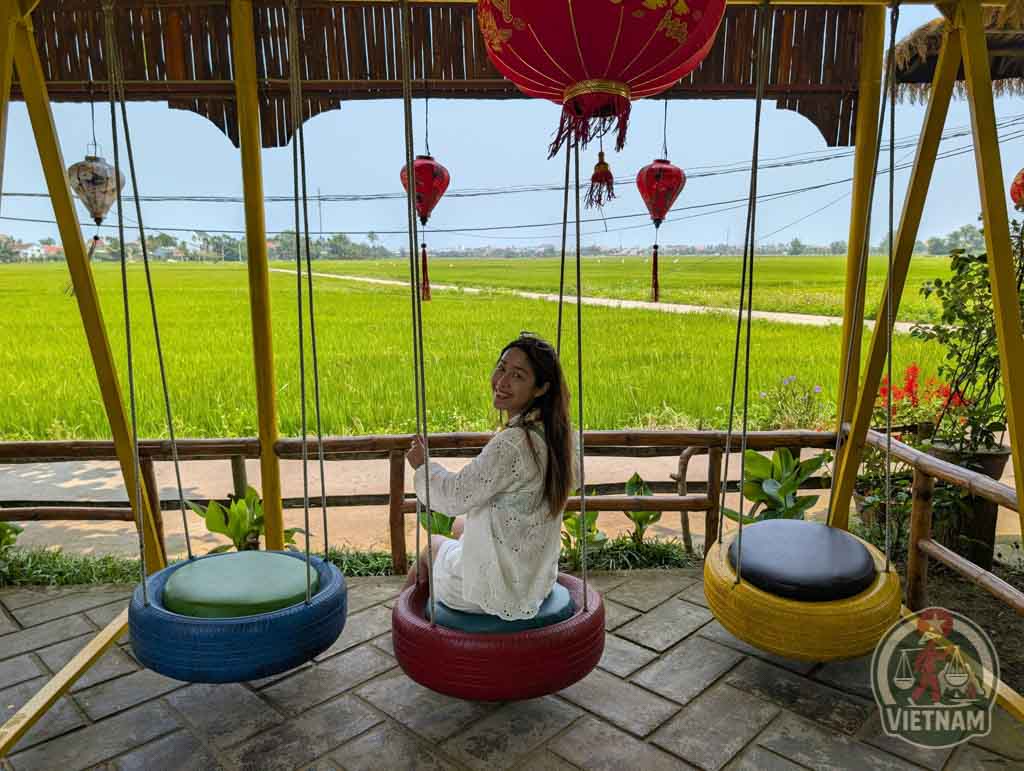
If you’d rather have something quieter and surrounded by nature, you can stay on the outskirts, among rice paddies and a short bike ride from the center.
Here are three options, one per budget:
Threeway Riverside Villa
From 500,000 VND (~€17) / night
The budget option with the most reviews: at this price, it’s hard to find anything better in Hoi An.
Check availability and prices →Vincent’s House
From 800,000 VND (~€27) / night
A 9.8 with 1,000 reviews says almost everything: the best-rated mid-range in town.
Check availability and prices →Allegro Hoi An · A Little Luxury Hotel & Spa
From 3,800,000 VND (~€127) / night
If you want to finish Hoi An in style, this 5★ with a spa is the best rated of the high-end options.
Check availability and prices →When is the best time to visit Hoi An?
The climate in central Vietnam differs from both the north and the south of the country. While Hoi An can be visited year-round, it’s worth knowing its seasons to avoid surprises.
The best time to visit Hoi An runs from January to April, when temperatures are pleasant (around 30 °C / 86 °F) and dry days dominate — ideal for exploring the town and its surroundings.
Between May and August you can still travel with little rain, but the heat ramps up considerably, especially in midsummer.
From September the rainy season begins, occasionally accompanied by typhoons. Travel is still possible, but you can count on rain making an appearance. This period usually stretches to late December, and during these months localized flooding is common in Hoi An due to its riverside location.
✔️ Information reviewed and last updated on September 14, 2026