In this post
What is the Mekong Delta?
The Mekong Delta is the region between Ho Chi Minh City and neighboring Cambodia where the river’s waters meet the sea, creating a web of waterways and fertile land.
The Mekong is one of the longest rivers in the world, at more than 4,000 km, flowing from its source in the Himalayas through the countries of the region — China, Myanmar, Thailand, Laos and Cambodia — before ending its journey in southern Vietnam.
Nearly half of all the rice produced in Vietnam is grown on the delta’s land.
The Mekong Delta, Vietnam’s garden
For visitors, the area’s attractions are essentially its floating villages built over flooded land, its waterways, and the variety of animals, flowers and fruit that fill the region.
The Mekong Delta is, on the whole, a rewarding area to include in your trip to Vietnam — although, like other places such as Sapa, it has seen explosive tourist growth in recent years that has cost the area some of its charm. Still, if you have a few spare days on your Vietnam trip, it remains well worth visiting one of the most rural corners of the country.
What to see in the Mekong Delta: the main areas to visit
The Mekong Delta covers a vast area spanning some 12 provinces with their corresponding cities and towns.
Here’s a summary of the main places to visit and the different things you can see and do in each one.
My Tho
Located in Tien Giang province, it is, without question, the most touristy and most visited city in the Mekong Delta. Beyond its famous floating market, this part of the delta also holds impressive pagodas and plenty of orchards to visit, where you can get acquainted with the area’s farming and way of life.
While it’s not the most authentic part of the delta, it’s only a couple of hours by bus from Ho Chi Minh City, which makes it an ideal destination for day trips and tours from Ho Chi Minh.
It’s a good option if you only have one or two days in your itinerary, since its location is perfect and easy to reach.
My Tho market
A typical Vietnamese market, also known to locals as Hang Bong market. Unlike many of the Mekong Delta’s markets, this one is not floating, but it can be a worthwhile stop if you have a little extra time.
How to get to My Tho
Getting to My Tho is very simple, and you can do it easily from nearby Ho Chi Minh City.
Here you can check bus timetables if you want to go independently, and at this other link some of the best-known tours of this part of the delta.
Cai Be
Not far from My Tho lies the town of Cai Be, another classic destination for travelers exploring the Mekong Delta.
It sits on the north bank by the My Thuan bridge and serves as a gateway to the city of Vinh Long and much of the delta region. Like the rest of the area, Cai Be’s economy runs on agricultural products such as rice and tropical fruits — oranges, mangoes, guavas, pomelos, pineapples…
Most tours of the region stop in Cai Be thanks to its convenient location within the delta, its main attraction being the Cai Be floating market.
How to get to Cai Be
Cai Be is about 112 km from Ho Chi Minh City (Saigon). You can easily get there by bus — timetables here.
Can Tho
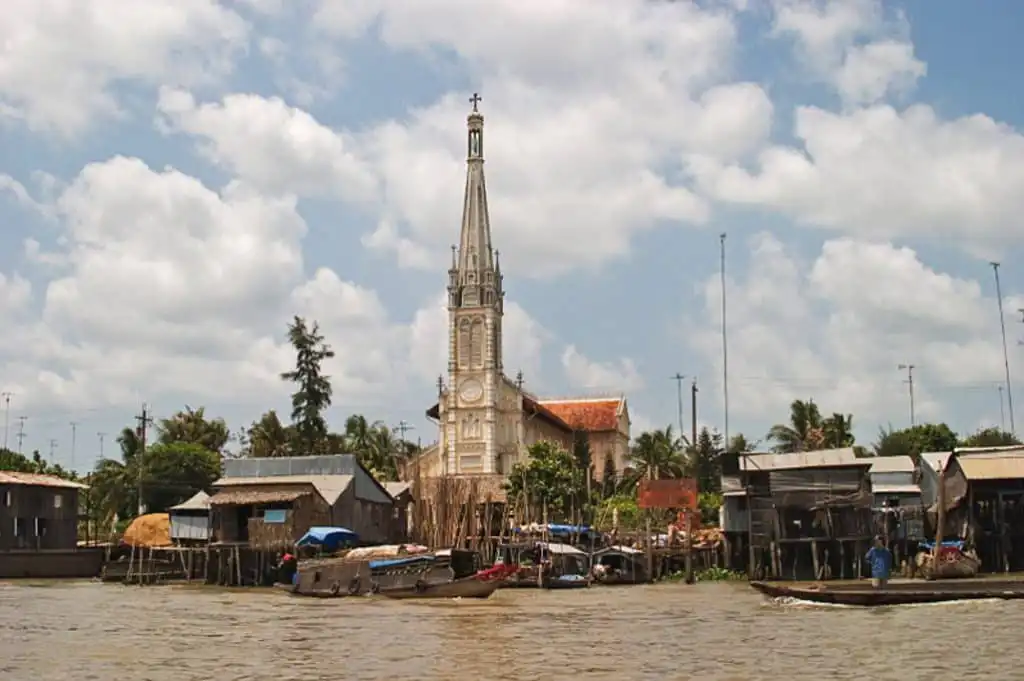
Can Tho is the largest city in the Mekong Delta region and a major commercial and transport hub. The city is known for its picturesque canals and for hosting two of the country’s leading markets, the floating markets of Cai Rang and Phong Dien, as well as Ninh Kieu wharf and the landmark Can Tho Bridge.
Can Tho is a big city, but it makes a perfect base for exploring the area if you’re after a bit more comfort on your trip, since from here you can explore the delta on day trips and tours or on your own.
The night market
Very different from the daytime markets, the night market springs up beside the wharf every evening as the sun sets, offering all kinds of food at very low prices — a great option for a stroll while sampling the local dishes.
Can Tho Grand Prison
One of Can Tho’s historic sites is its prison — built in the French colonial era and later used by the Americans during the Vietnam War, it held the dissidents of the day.
Can Tho Grand Prison is a deeply moving place and a symbol of the Vietnamese people’s resistance during the wars against the French and the Americans.
Today the prison is preserved as a history museum, with exhibits of torture instruments, documents and life-size models.
To get there you can take a taxi or a bus from central Can Tho.
How to get to Can Tho
To reach Can Tho, you can fly directly to Can Tho International Airport from several major Vietnamese cities, or take a bus from Ho Chi Minh City, a ride of roughly 3–4 hours.
You can check timetables and available transport here.
Ben Tre
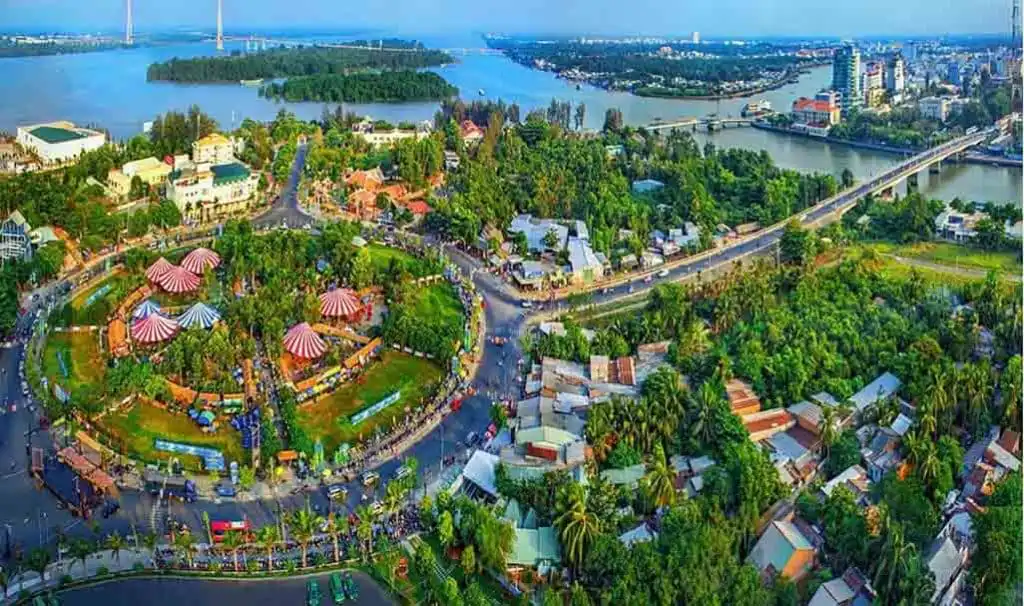
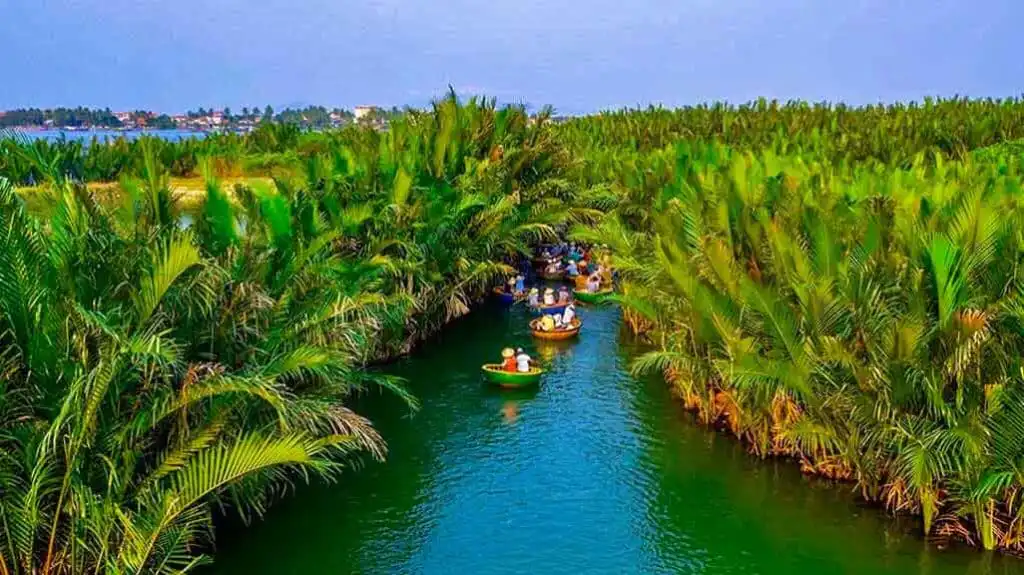
Capital of the province of the same name and just a few kilometers from My Tho, with which it shares many attractions, Ben Tre is known as the coconut capital, thanks to the sheer number of coconut palms flourishing in the area. But there’s more to this place than coconut trees — here are some of your options for visiting it.
With the coconut as the symbol of the area, one of Ben Tre’s main draws is visiting one of the coconut farms or processing workshops to understand its role in the local economy and how everything is made.
Ben Tre pairs perfectly with nearby My Tho, which is why tours usually combine both places — they’re close enough to explore in a single day.
Cai Mon Orchard Village
Here you’ll find an abundance of fruit — mango, durian, rambutan and many more — but Cai Mon is also famous for its wide variety of flowers and ornamental plants, a delight for anyone with a green thumb.
How to get to Ben Tre
Located roughly 87 kilometers southwest of Ho Chi Minh City, it’s easily reachable through several transport options.
The most common way to reach Ben Tre from Ho Chi Minh City is by bus. The trip usually takes 2 to 3 hours, depending on traffic conditions.
Several bus companies run daily services between the two destinations.
You can check timetables at this link.
Chau Doc
If you’re keen to explore a truly special corner of the Mekong Delta, Chau Doc is your next stop.
Close to the Cambodian border, this place has a charm of its own thanks to the Cham ethnic community, whose temples transport you straight to the Cambodian style of nearby Angkor Wat.
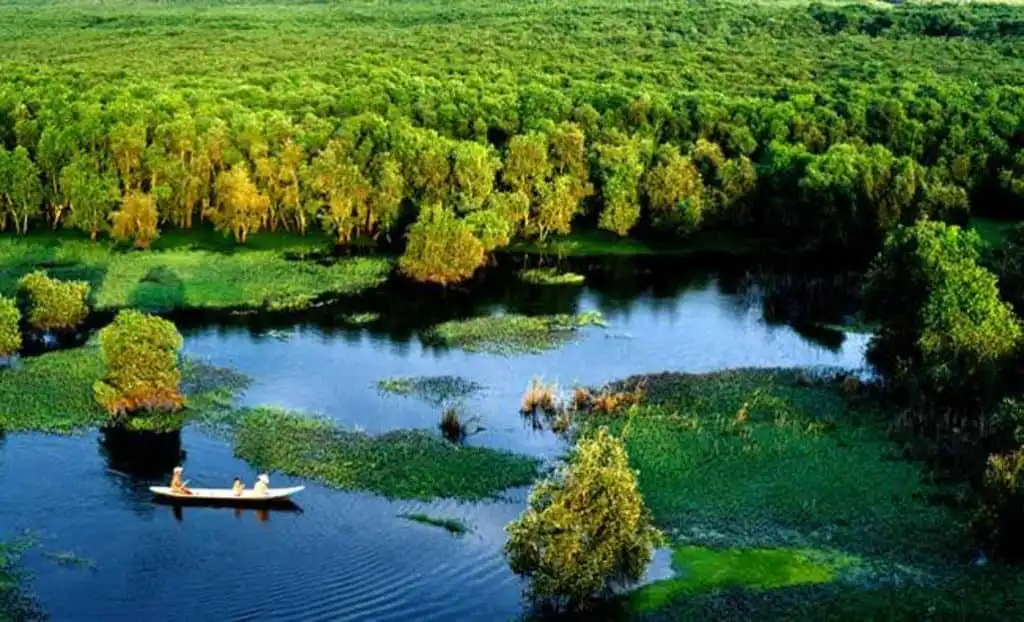
The main highlight of the area is undoubtedly the Tra Su Cajuput forest, which we cover further down. It’s the image we all carry in our heads of the Mekong Delta.
If you’re up for a hike, exploring Sam Mountain is another option in the province — the views from the top won’t disappoint, especially at sunrise or sunset.
And if you have time to spare, the Ba Chua Xu Temple is another of the area’s must-sees, rounding out your visit to this province perfectly.
Things to do in the Mekong Delta: the main activities
1. Visit one of the floating markets
If there’s one thing you can’t miss on your way through the Mekong Delta, it’s visiting one of the many floating markets scattered across the area — the traditional way the local population has always traded.
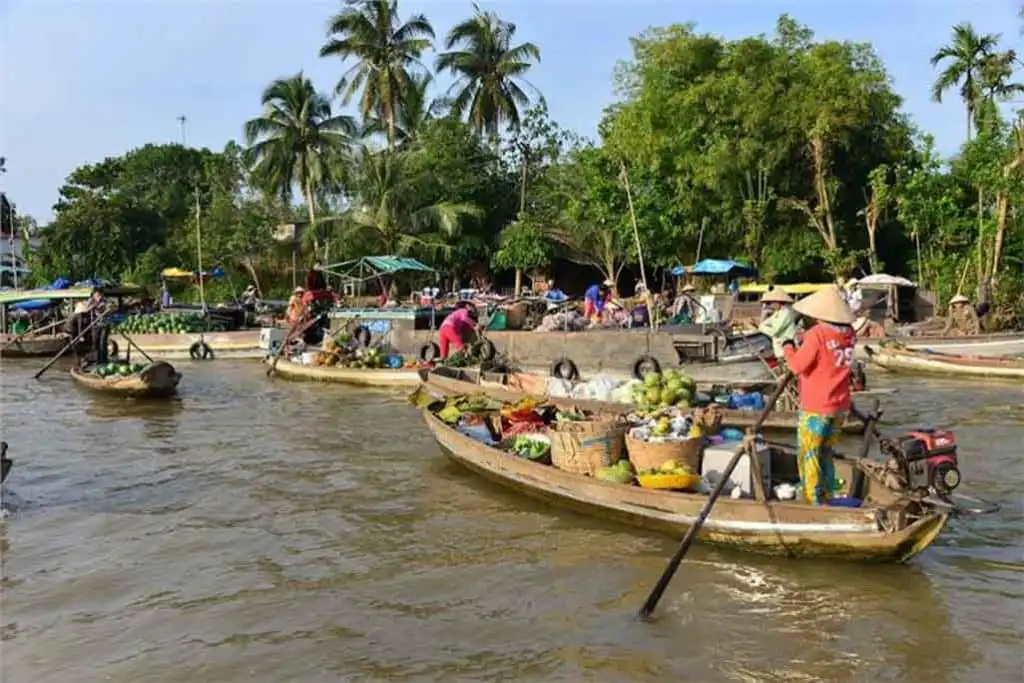
They’re called floating markets because much of the trading takes place on boats on the river, lending them a colorful, vibrant atmosphere.
Cai Be floating market
The Cai Be floating market was established in 1732 during the Nguyen dynasty, when the town of Long Ho — later renamed Cai Be — was built. Boats began gathering and trading at the mouth of the Cai Be river, laying the foundations of what is today its floating market.
It has seen better days, but it’s still an interesting option if you haven’t visited one yet and want to experience this particular way of doing business.
Phong Dien floating market
The Phong Dien floating market is smaller and more traditional, offering a calmer, less touristy experience than its big brother — and with it, a more intimate, authentic glimpse of delta culture.
Phong Dien stands out for its relaxed atmosphere and the chance to interact more closely with the locals, making it an ideal destination for anyone seeking a deeper connection with life on the Mekong.
Cai Rang floating market
The Cai Rang floating market is the biggest and most famous in the Mekong Delta and Can Tho’s main attraction. To reach it, head to the wharf and board one of the boats departing for the market.
Activity starts very early, around 4:00 am, when boats loaded with fruit and vegetables set off along the canals toward the market. So if you want to see it properly, we recommend getting up early — which in Vietnam means setting your alarm for hours genuinely unreasonable for someone on vacation, but it’s the best way to catch it in its full splendor.
Once there, simply relax, watch the bustle of boats coming and going, and call out for whatever you’d like to buy. Touristy as it is, this market remains a great way to soak up the lively, colorful atmosphere of the Mekong Delta.
Nga Nam floating market
It’s one of the main floating markets of the delta region, so here you’ll find a huge range of Mekong products and specialties.
On a visit to this market you’ll come across boats brimming with rice, vegetables, fresh fruit, shrimp, fish, crabs, frogs — almost anything your imagination dares to conjure. Visiting it is almost like traveling back in time to the floating markets of the Mekong Delta of decades past.
The market gets going around 3:00 am and peaks around 5:00 am, so if you want to experience it, you’ll need to spend the night nearby to arrive on time.
Tra On floating market
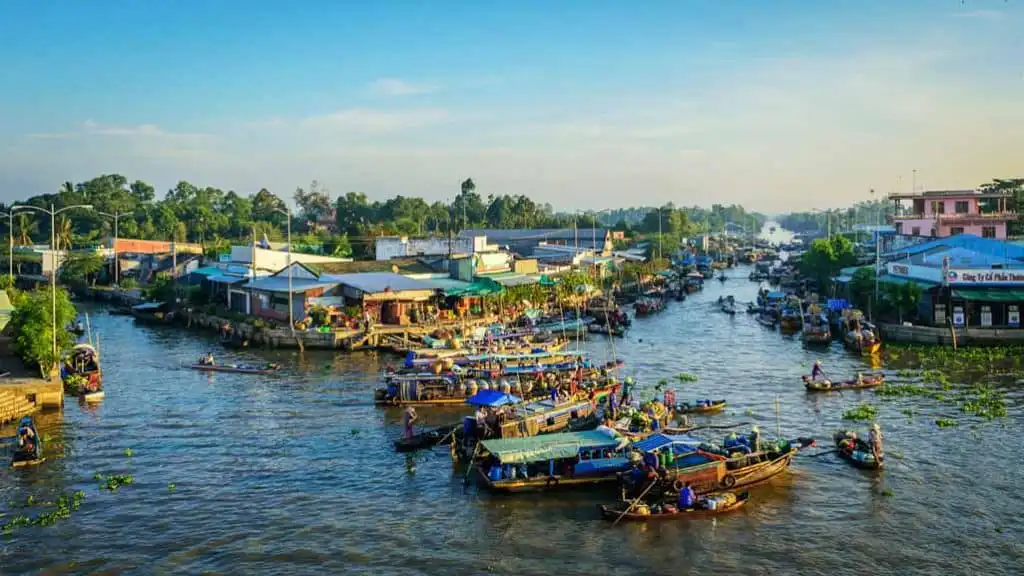
The last market on this list is the Tra On floating market, sitting at the foot of the Hau river. This market has a quirk: it depends heavily on the river level — the higher the water, the busier the market.
Trading starts very early, sometimes as early as 2:00 am, though arriving around 5:00 am — its busiest moment — is plenty.
Like the other floating markets, the main goods sold here are rice, seasonal fruit and vegetables.
2. Take a boat trip along the Mekong Delta’s canals
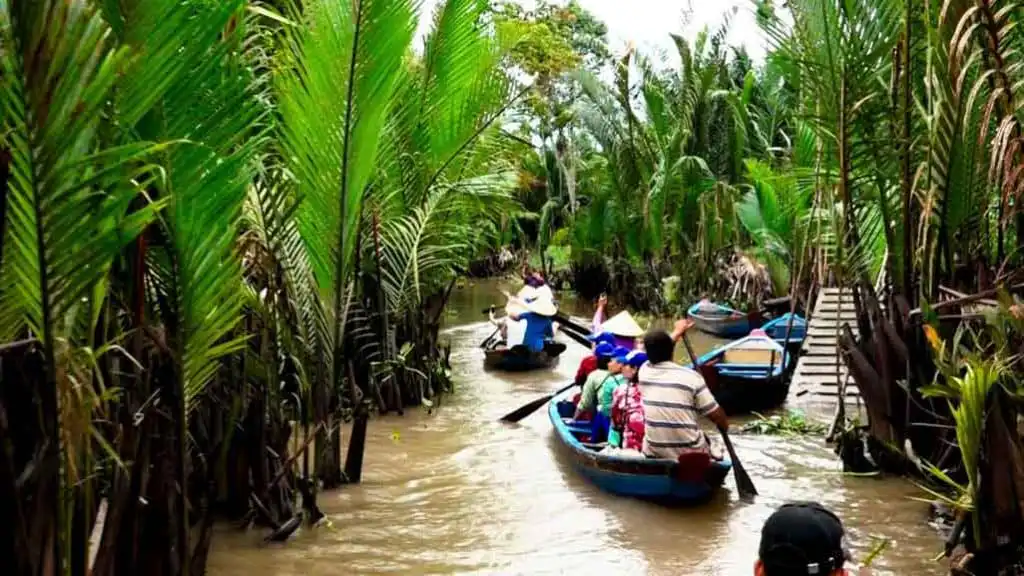
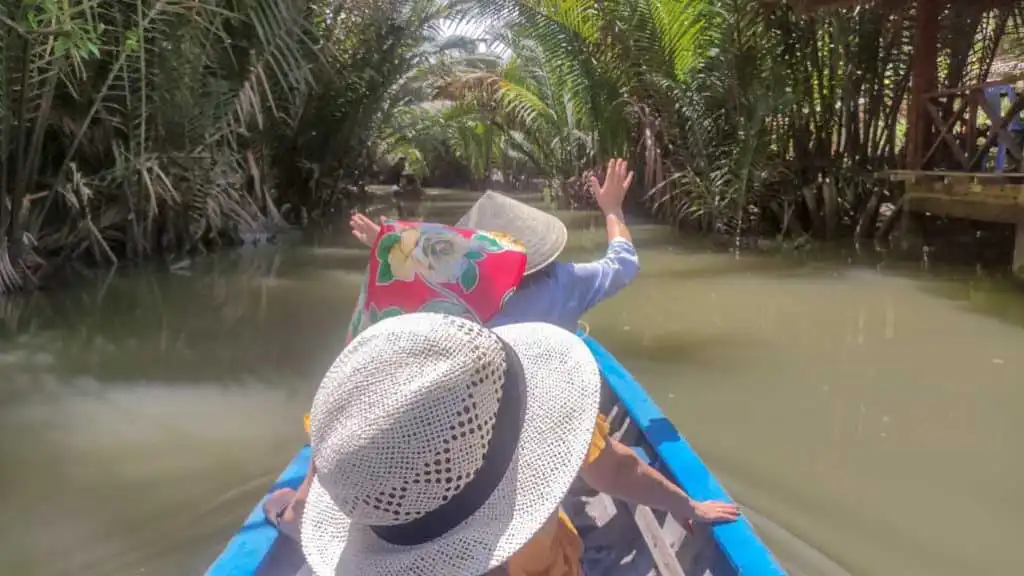
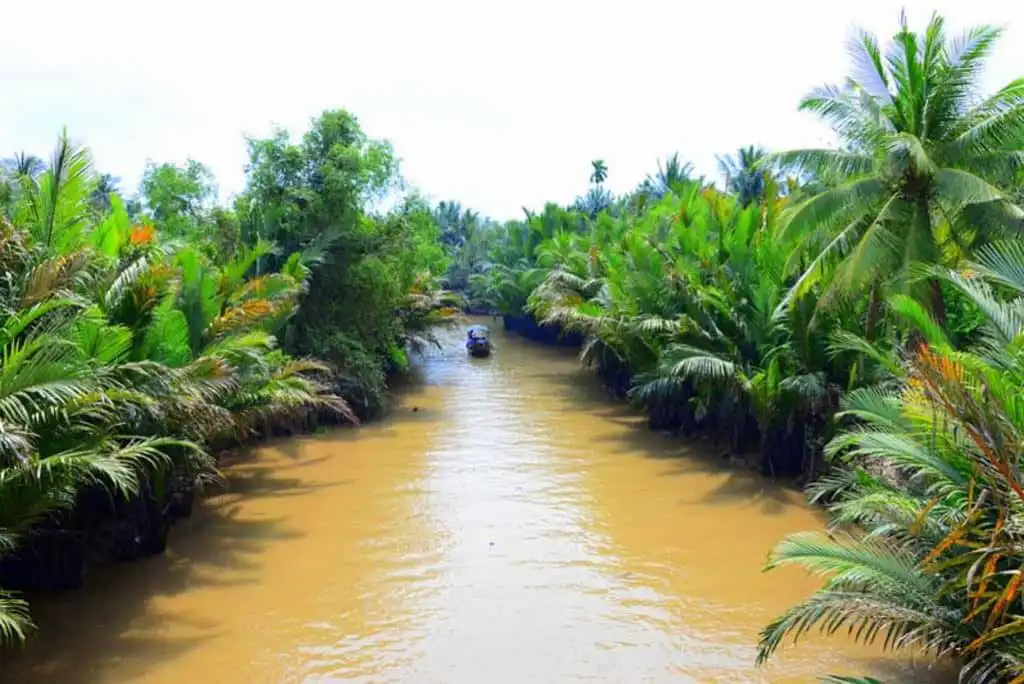
Boat excursions are the quintessential tourist activity in the Mekong Delta.
These guided trips along the area’s narrow canals are a common denominator across every corner of the delta, and while they’re very touristy, as you’d expect, they’re a good choice if you want to better understand the region and enjoy the delta’s scenery.
How many places you visit depends on the tour you choose, but nearly all of them include a boat ride through various canals. Along the way you’ll get to observe the daily life of the people who call the area home. The scenery is genuinely lovely and, in our view, the main appeal of the tour.
Besides the boat ride, these tours usually include visits to local workshops and tropical fruit orchards. At the workshops you can watch up close how regional specialties like coconut candy are made — and, of course, taste them.
These boat rides are generally done as part of a broader tour, but if you’re after a bit more authenticity or something more exclusive, you can always travel to any of the delta towns and hire a boat there to take you through the canals.
3. Cycle among villages and coconut groves
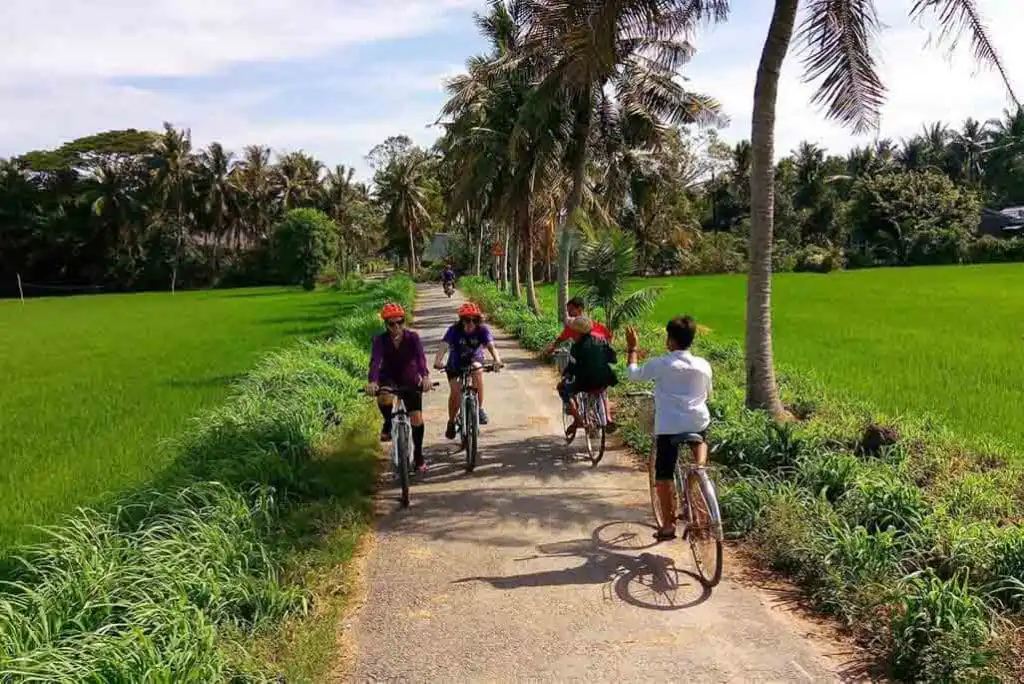
If you’re traveling independently, a great way to discover the area is simply to rent a bicycle and roam the back roads in search of something more authentic, drifting at your own pace through the lands flanking the canals and simply watching local daily life unfold.
The Mekong Delta is ideal cycling country, mainly because it’s completely flat, so hills won’t be an issue. Countless roads and paths connect villages, rice paddies and orchards, and you can enjoy them with barely any traffic.
Most accommodations lend bicycles for free, and if you’re good with directions you can trace whatever route your imagination designs, entirely on your own.
4. Discover the Lung Ngoc Hoang nature reserve
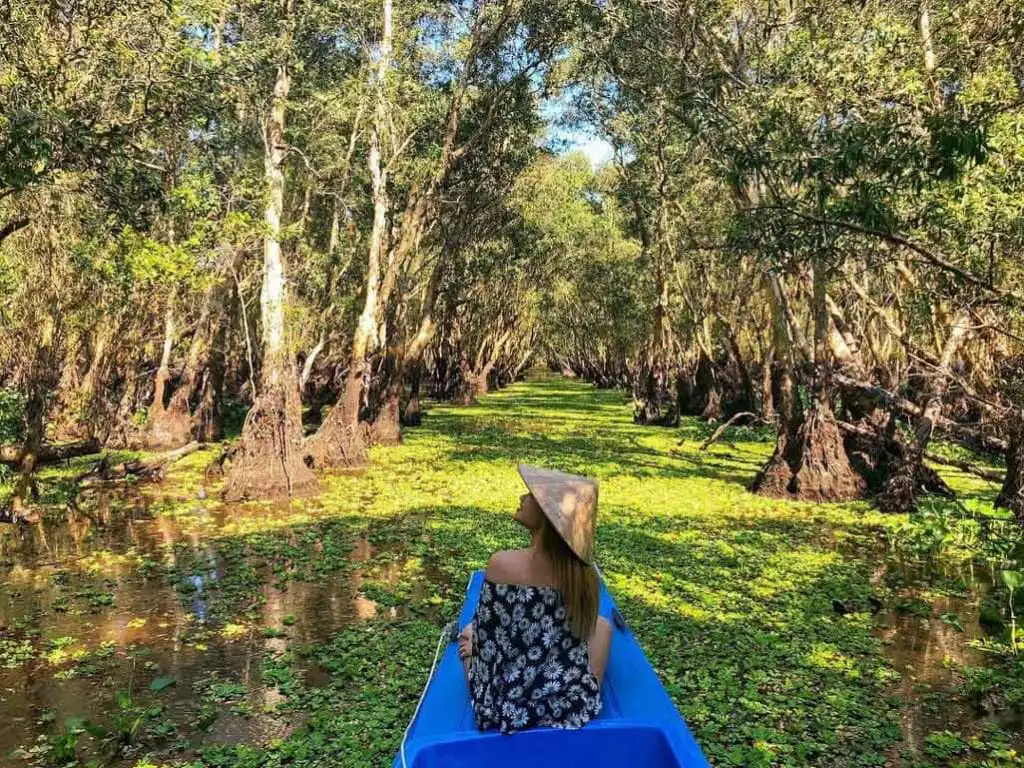
This wetland, very close to Can Tho, is a natural paradise in southern Vietnam that’s well worth a visit. It’s a very special nature reserve, home to incredible biodiversity — including some 140 plant species and up to 70 different bird species, several of them endangered and of great scientific value.
It’s famous for its striking Cajuput forest, or Melaleuca forest, named after the tree that thrives here — Melaleuca cajuputi, used to make cajuput oil.
The best time to visit the Lung Ngoc Hoang nature reserve is September and October, when the flood season transforms the forest into a spectacular aquatic landscape carpeted in duckweed — ideal for photography and birdwatching.
To get the most out of it, we recommend visiting on a guided excursion like this one.
Visitor information
- Opening hours: 7:00 am – 7:15 pm
- Entrance fee: 200,000 VND (~US$7.70) per person (entry ticket: 100,000 VND; boat: 50,000 VND; rowing sampan: 50,000 VND)
How to get to the Lung Ngoc Hoang nature reserve
The Lung Ngoc Hoang nature reserve is easy to reach from Can Tho.
We recommend hiring a car with a driver, renting a motorbike if you dare to ride, or going on a tour.
5. Explore the Vinh Trang Pagoda
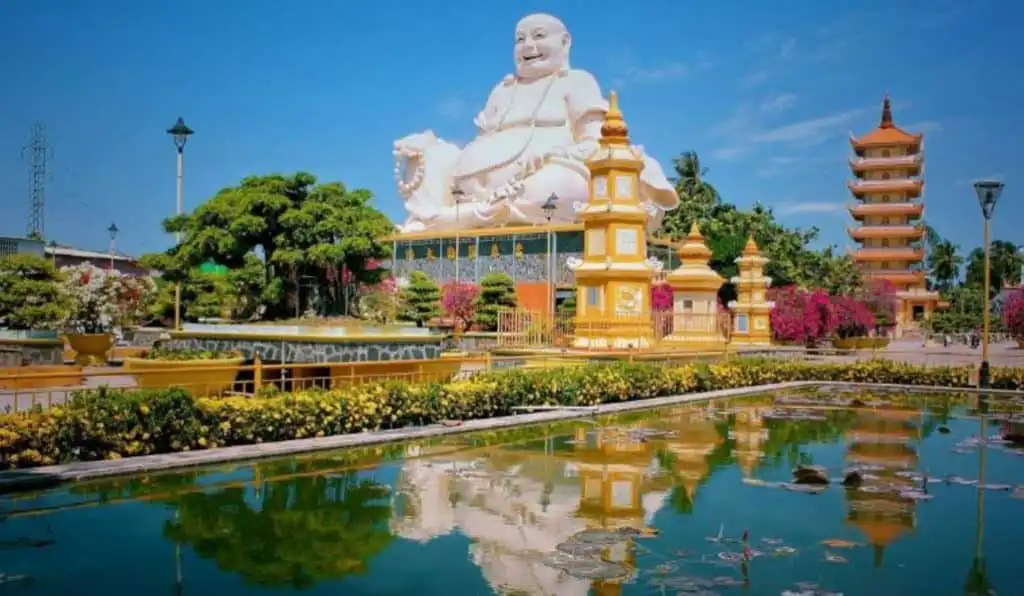
The Vinh Trang Pagoda, in My Tho, is the largest in the region. Built in the 19th century, it blends Eastern and Western architectural styles and is unquestionably a must-see if you’re in the area.
Inside you’ll find a fine collection of Buddha statues, including one 20 meters tall. The pagoda is easy to reach on a tour from Ho Chi Minh City, or by taxi or bicycle from My Tho, as it sits just 5 km from the city center.
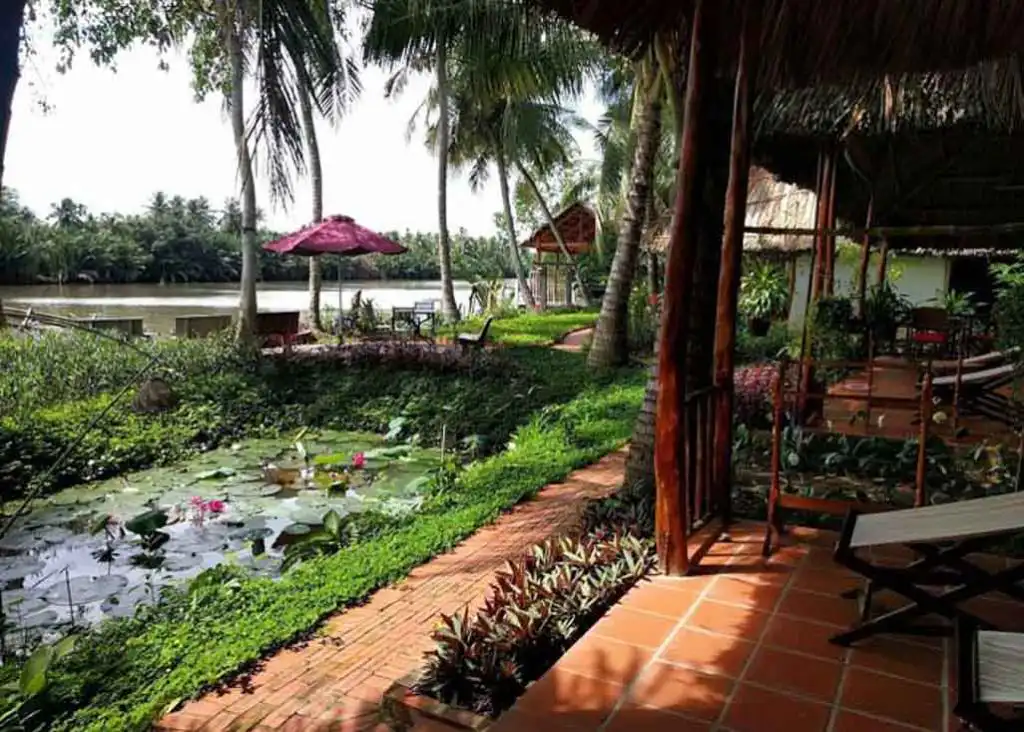
6. Spend at least one night in a homestay
There’s no better way to discover and fully immerse yourself in local life in the Mekong Delta than staying in the area with a local family.
Spending at least one night in a Mekong Delta homestay is the best way to unwind and enjoy the slow life, as well as a great opportunity to learn more about the local culture.
The big advantage of a homestay is that it offers a far more personal, closer experience than a simple day trip — so if you have the time, don’t hesitate: come spend a night in the delta.
7. Van Ho Bird Sanctuary
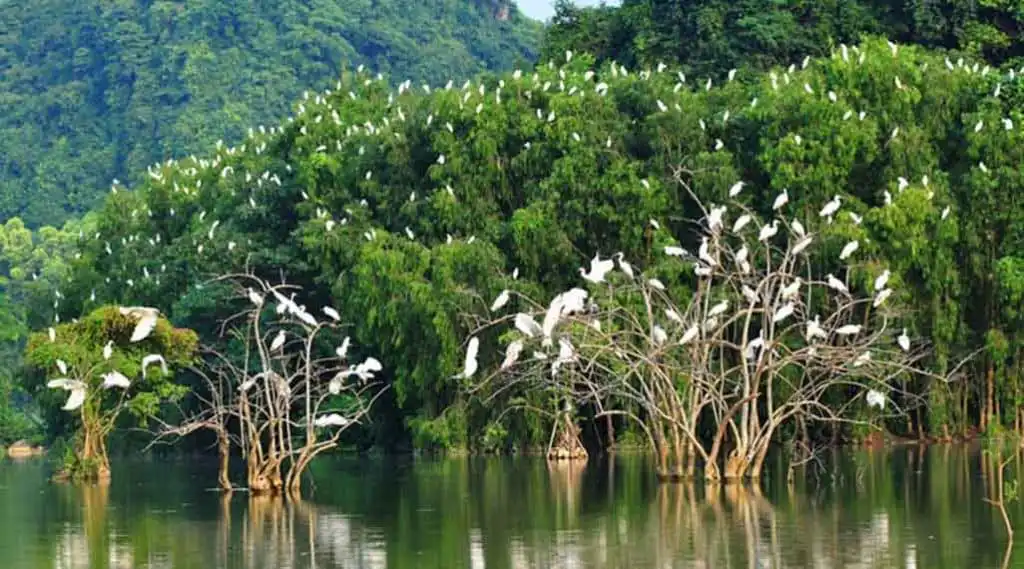
Ben Tre isn’t just a destination for vacationing tourists: a multitude of bird species have also chosen to make this place their home — because if water and heat bring anything, it’s biodiversity.
At Van Ho you’ll find nearly 84 different bird species, with the storks as the stars of the show.
The ideal way to see them is at dusk, on a boat tour through the canals with a guide who can help you appreciate their variety and importance.
8. Go birdwatching in Tram Chim National Park
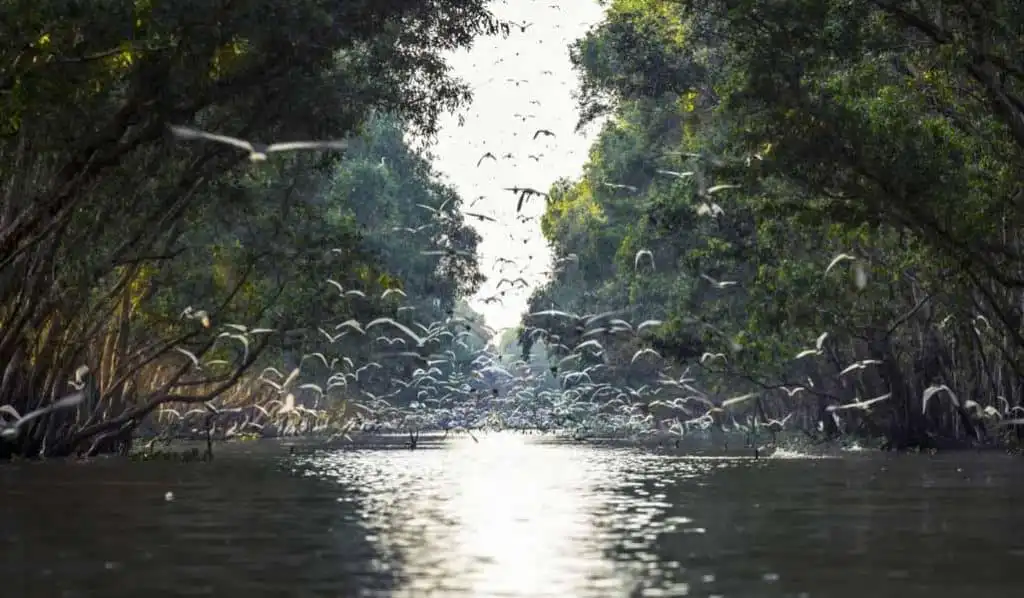
Tram Chim National Park, located in Dong Thap province, stretches across 7,133 hectares and is home to more than 230 bird species.
Tram Chim is a major biodiversity refuge, hosting a quarter of Vietnam’s bird population — which makes it one of the country’s best national parks for birdwatching and species conservation.
It’s one of Vietnam’s Ramsar sites (Ramsar sites are wetlands of international importance designated by the Ramsar Convention, especially as waterbird habitats).
The best time to visit is August to November, when the rains ease and the weather turns more pleasant.
Tram Chim National Park is located in Dong Thap province.
You can take a bus from Ho Chi Minh City to Dong Thap. Once there, take a taxi or rent a motorbike to reach the park.
Timetables here
How to get around the Mekong Delta
Here’s a rundown of your options for getting around the area.
By bus
As in many other regions of Vietnam, it’s fairly straightforward to move between different parts of the Mekong Delta by bus.
The main starting points are Ho Chi Minh City and Can Tho, from which several bus lines fan out across the delta.
By private car or van
If you’re traveling in a small group, a private car or van is an ideal option. It lets you easily build your own tailor-made trip — you just hire a driver to take you around.
By rental bicycle or motorbike
Ideal for those after an extra dose of adventure.
Both motorbike and bicycle let you cover the region’s short distances while staying closer to the landscape around you.
The motorbike has the added bonus of handling longer distances, letting you travel the whole delta and lose yourself in the quiet scenery of this corner of Vietnam.
On a tour
The best way for those short on time.
A tour usually covers the main sights of the different areas in little time, giving you a taste of everything the delta has to offer.
How to get to the Mekong Delta
Here’s a summary of the main ways to reach the Mekong Delta. If you want the full details on getting there from Ho Chi Minh City, we cover it in this other post.
On a tour from Ho Chi Minh City
The simplest and fastest way to visit the Mekong Delta — recommended mainly if you’re short on time — is to book a day trip from Saigon.
That said, these excursions often leave something to be desired and can give you the wrong idea of the area, so if you have time, we recommend traveling to the delta on your own and exploring from there.
Tours from Ho Chi Minh City usually include round-trip transport, lunch and the main activities, such as boat rides.
These excursions typically cost around US$30, and countless agencies in the city offer them.
Here are some of the main Mekong Delta tours.
How to get to the Mekong Delta on your own
The best option is to travel to one of the delta’s towns and, from there, spend a few days visiting the places that interest you most.
Spending the night in the area lets you take things slower and get to know the region in a richer, deeper way, with more contact with the local population, away from the crowds and the most touristy excursions.
To get there independently, you can either take a bus from Ho Chi Minh City or fly to Can Tho airport, the delta’s main city.
And if you can ride a motorbike and you’re hungry for adventure, renting one in Ho Chi Minh City and spending a few days riding through the Mekong Delta is the perfect combination.
Where to stay in the Mekong Delta
Our recommendation is to use Can Tho as your base: it’s the delta’s main city and the starting point for seeing the floating markets first thing in the morning.
Here are three options, one per budget:
Chill Guesthouse Can Tho
From 350,000 VND (~€12) / night
A budget guesthouse in Can Tho, with a very good score and over 600 reviews.
Check availability and prices →Boutique Lodge Can Tho Homestay
From 1,000,000 VND (~€33) / night
A 9.7 with 1,000 reviews: the best-rated mid-range stay in the delta.
Check availability and prices →Victoria Can Tho Resort
From 3,400,000 VND (~€113) / night
Can Tho’s classic resort, to finish the delta in style.
Check availability and prices →