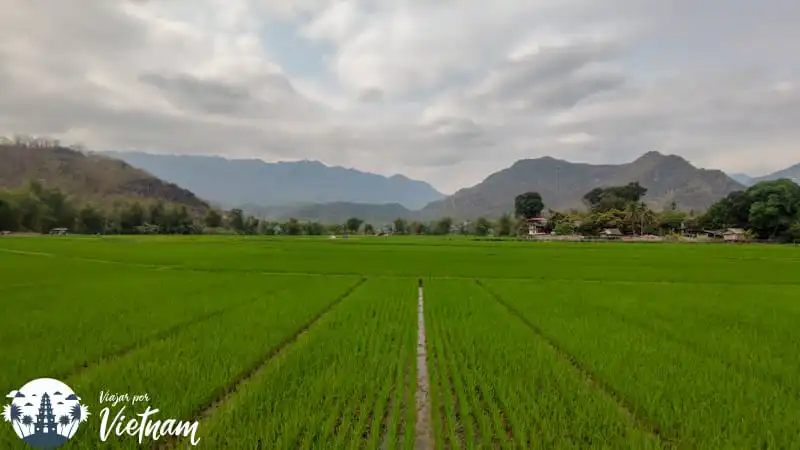
If you’re wondering what Mai Chau has to offer, the truth is you won’t find grand monuments or famous temples here — just simple, authentic rural life. In Mai Chau, postcard Vietnam, with its brilliant green rice paddies, becomes more real than ever.
Just three and a half hours from Hanoi, this mountain-ringed valley offers rice fields, villages where time moves slower, and nights in traditional wooden stilt houses with views of silence, frogs and crickets.
A few years ago, coming here meant stepping off the tourist trail and truly understanding how people live in the north of the country. Today, although it’s a tourist spot like many others in Vietnam, it still keeps a charm that makes a couple of days among its fields well worth it.
If you want to know the best things to do in Mai Chau and the places you shouldn’t miss, in this guide we give you all the keys to make the most of your visit.
In this post
Trek through the rice paddies of Mai Chau
Of all the things to do in Mai Chau, trekking isn’t just another activity: it’s the way to understand the place and see everyday life up close.
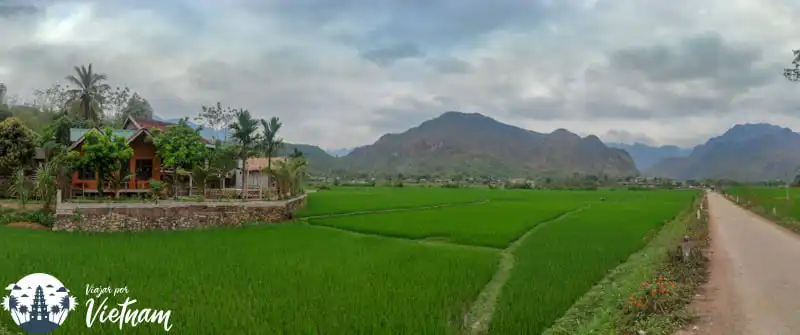
It was the first thing we did after dropping our backpacks at the homestay — heading out to walk among the rice paddies (most of them freshly planted at the time), following the dirt paths that connect one village to the next.
Wander the area on foot or by bicycle and you’ll cross paths with Thai women (the majority ethnic group) carrying baskets and working the fields, buffalo half-submerged in the irrigation channels, and children who’ll watch you curiously as you pass.
You can use Maps.me to plot your own route, or simply let the paths lead you.
Stay overnight in a homestay
In most of Mai Chau’s villages, such as Ban Lac, Ban Nhot or Na Phon, the Thai have adapted their wooden houses to welcome travelers, putting the experience of sharing their daily customs within reach of anyone who visits.
Several ethnic groups live side by side in Mai Chau. The White Thai are the main one — they run most of the homestays and preserve a culture deeply shaped by farming and traditional weaving. You’ll also find the Black Thai, with somewhat darker clothing, and to a lesser extent the Hmong and the Muong.
These family homes are perfect for your stay in the area. The families speak barely any English, but it’s easy to get by with gestures — which makes the experience even more authentic, because ethnic villages aren’t something you “see,” they’re something you live. And that’s the whole point.
Cool off at Go Lao waterfall
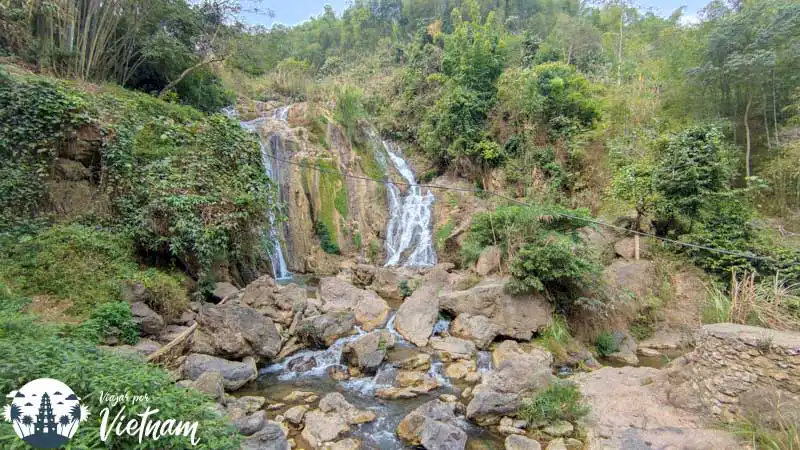
Just 15 kilometers from Mai Chau lies Go Lao waterfall, also known as Go Mu. It’s not the tallest or the most impressive in Vietnam, but it is a perfect spot for a dip to escape the heat.
We arrived at Go Lao melting from the heat, parked the motorbike, changed into our swimsuits and jumped straight in. The pool is small but plenty to shake off the swelter and cool down for a good while. We shared it with several groups of Vietnamese friends spending the day there, and although we could barely talk, laughter and gestures were more than enough to understand each other and have a great time.
Take in the views from the Thung Khe Pass
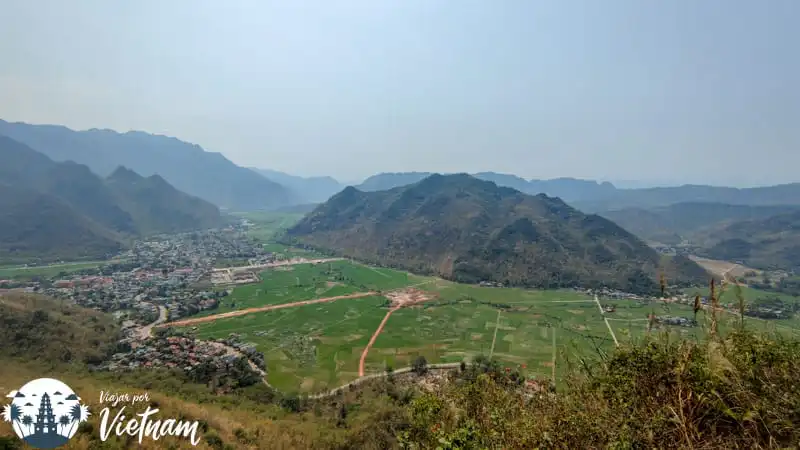
Between Mai Chau and the road to Hoa Binh sits the Thung Khe Pass, a beautiful mountain pass with several viewpoints made for a stop.
If you’re coming from Hanoi, the Thung Khe Pass is a near-obligatory stop along the way.
Along the pass there are several lookouts where locals set up little stalls selling corn, sugarcane and hot tea.
The best stretch comes just before the descent into Mai Chau, where you’ll find a couple of cafés and restaurants at the main viewpoint.
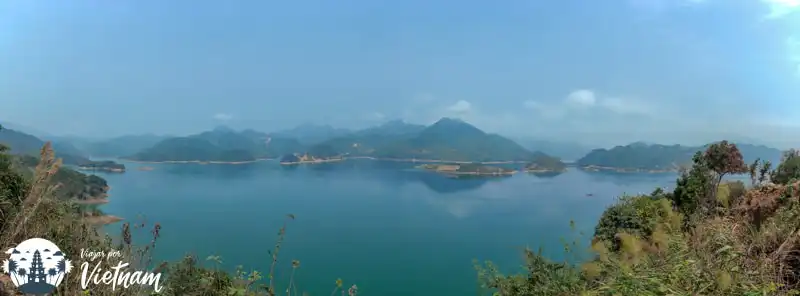
If you’re already in Mai Chau, the best plan is to rent a motorbike and ride the 10 km up to this lookout, the prettiest in the whole area: a perfect place to gaze over the entire valley spread out at your feet and soak in the views before continuing your route.
Ride a motorbike around the valley and Hoa Binh lake
If you enjoy getting lost among villages and forgotten back roads, Mai Chau is the perfect place to rent a motorbike and head out exploring on your own.
A few kilometers away, Hoa Binh Lake — actually an enormous reservoir — offers mile after mile of lonely roads hugging its shores.
You can kick off your route with a visit to Go Lao waterfall, then keep skirting the lake and let the road decide.
You can head back over the Thung Khe pass, a spectacular mountain road.
The whole loop serves up stunning scenery, authentic villages where life keeps its traditional rhythm and — best of all — practically no tourists.
Explore its caves
Mai Chau, like its neighboring regions, sits on limestone formations that have carved out several cave systems. If you have time during your visit, we recommend venturing into some of them.
Mai Chau’s two main caves are Mo Luong Cave and Chieu Cave.
Chieu Cave
We won’t lie: the stairs up to it are a genuine endurance test.
Climbing more than a thousand steps in Vietnam’s humid heat was no picnic — and we started early — but reaching the top was worth it, not only for the cave’s enormous interior, but because from the entrance you get spectacular views over the whole Mai Chau valley.
Mo Luong Cave
Very close to the village you’ll find Mo Luong Cave, far more accessible, right at the edge of the valley.
You can buy your ticket right across from the Mai Chau Lodge hotel. As with many caves in Vietnam, these served as shelters and military storage during the war, which adds historical weight to the visit.
Pu Luong Nature Reserve
If you’re left wanting more rural, authentic and less-visited landscapes, write this name down: Pu Luong Nature Reserve.
Located about an hour from Mai Chau, this nature reserve offers even wilder rice terraces, traditional villages and trails where you’ll barely cross paths with other travelers.
Although some organized tours for international retirees include it on their circuit too, it’s a perfect option if you’re after a quieter, more local experience, away from the usual routes.
How to get to Mai Chau
The easiest and cheapest way to reach Mai Chau from Hanoi is by bus or limousine minivan. Several companies operate the route.
- Tickets cost around 300,000–400,000 VND (~US$12–15), though you can travel from 100,000 VND if you take the local bus.
- The journey usually takes about 3.5 hours, depending on traffic.
On this website you can check timetables and buy your tickets online.
You can also reach Mai Chau by bus from other nearby places such as Ninh Binh. Duration and price are similar.
Check the timetables and book here.
We break the whole journey down in this detailed article.
How to get around Mai Chau
An ideal (and healthy) way to get around Mai Chau is by bicycle. It lets you roam the rice paddies, back paths and nearby areas at a slow pace, stopping wherever you like, with total freedom.
If you want to visit some of the spots covered in this guide, like Go Lao waterfall or the Thung Khe pass, the best way to get around is a rental motorbike, as they’re a bit too far to reach by bicycle.
You can rent both a bicycle and a motorbike at your homestay for around 50,000 and 120,000 VND (~US$2 and US$4.60) respectively.
How many days to spend in Mai Chau?
If you’re short on time but still want to see the area, even briefly, we recommend doing it on a tour like this one to squeeze the most out of every hour.
It ultimately depends on your taste and how much time you have for the country, but we recommend spending at least 2 days in Mai Chau. That way you’ll have enough time to enjoy most of its highlights and experience a night in the valley.
If you’re the unhurried type, a couple of nights in Mai Chau will surely help you recharge and get to know the area in much greater depth.
Where to stay in Mai Chau
In Mai Chau the whole point is to sleep in a homestay among the rice paddies, in the valley’s villages. And if you want to end the trip with a treat, there are also top-level retreats in the surrounding mountains.
Here are three options, one per budget:
Lim’s House
From 530,000 VND (~€18) / night
A highly rated family homestay: the classic way to experience the valley.
Check availability and prices →Mai Chau Valley Retreat
From 1,200,000 VND (~€40) / night
A quiet, well-rated mid-range stay with the valley all around.
Check availability and prices →Avana Retreat
From 8,000,000 VND (~€267) / night
The area’s luxury retreat: expensive, yes, but with one of the best ratings in all of northern Vietnam.
Check availability and prices →When is the best time to visit Mai Chau?
The best time to visit Mai Chau coincides with the rice harvest seasons, which in this area usually fall in early April and early September, as there are generally two harvests a year.
Visit then and you’ll catch Mai Chau’s landscapes and rice paddies in their full splendor — and take home some truly unique photos and memories.