
One of the first questions that comes up when planning a trip to Vietnam is: do I need a visa, or can I just show up? The answer depends on two things: your nationality and how long you plan to stay.
Vietnam grants visa exemptions to citizens of certain countries for limited periods, while longer stays — and travelers from non-exempt countries — require a visa.
The good news: in recent years the process has become far simpler thanks to the e-visa, which lets you arrange everything quickly and fully online.
In this article we cover everything you need to know about the Vietnam visa in 2026 — who’s exempt and for how long, the requirements, the visa types available and how to apply — so you can organize your trip worry-free.
In this post
1. Vietnam visa 2026: do I need a visa to enter Vietnam?
Whether you need a visa to travel to Vietnam as a tourist comes down to two factors:
- Your nationality: Each country has its own agreements and policies regarding Vietnam’s entry requirements.
- How long you want to stay: Vietnam grants visa exemptions of 14 to 45 days to citizens of around 38 countries, as we break down in the next section.
As in almost every country, Vietnam has some minimum entry requirements that apply regardless of whether you enter with a visa or under an exemption.
Passport requirements
- Your passport must be valid for at least 6 months from your date of entry into Vietnam. Check the expiry date before you travel and renew it if needed.
- You need at least two blank pages in your passport, free of stamps or visas from other countries — simply so it can be stamped on arrival. If you’re one of the lucky ones with a full passport, get a new one to avoid problems.
Proof of onward travel
- Before flying to Vietnam, the airline at your departure airport will ask for a return ticket or, failing that, an onward ticket out of the country proving you won’t stay in Vietnam longer than your visa or exemption allows.
- This matters: if you can’t show proof of onward travel, you may not be allowed to board. Always carry it with you.
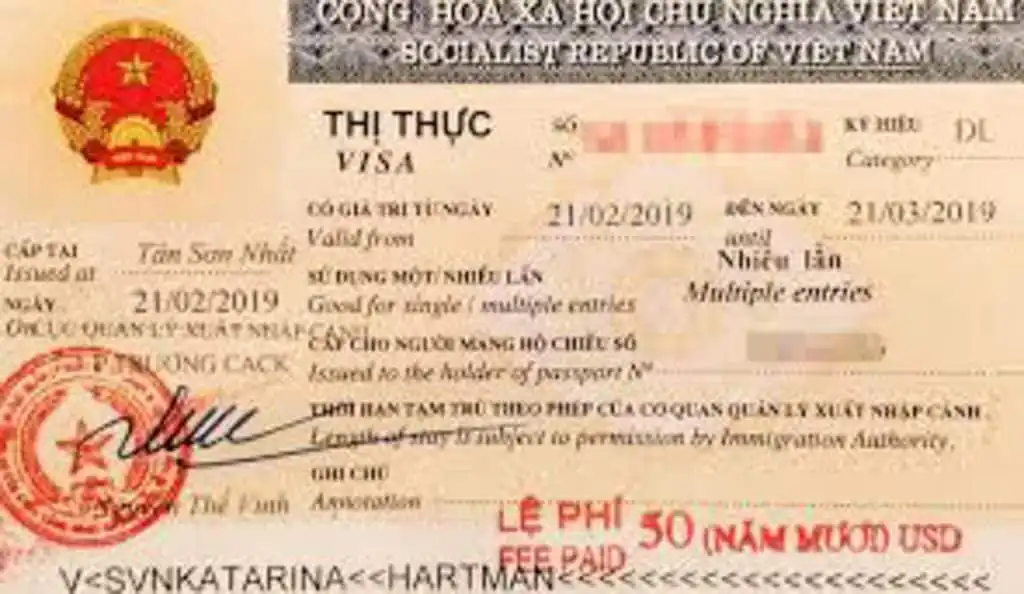
2. Vietnam visa exemptions: which countries can enter visa-free?
Citizens of around 38 countries can enter Vietnam without a visa for stays of 14 to 45 days, depending on their nationality. Here’s how it breaks down for the nationalities that visit Vietnam most:
United States, Canada, Australia, New Zealand and Ireland: e-visa required
Let’s get the big one out of the way first: the US, Canada, Australia, New Zealand and Ireland are NOT on Vietnam’s visa exemption list. If you hold one of these passports, you’ll need a visa for any tourist visit, however short.
Don’t worry, though — the process is simple: the e-visa (covered below) is arranged fully online, costs US$25, allows stays of up to 90 days and is normally approved within 3 to 5 working days.
United Kingdom: 45 days visa-free
UK citizens can enter Vietnam without a visa for up to 45 days. The exemption applies to regular British passports; British National Overseas (BNO) passport holders are not eligible and need an e-visa.
Asian neighbors: Japan, South Korea and Southeast Asia
- Japan and South Korea: 45 days visa-free.
- Thailand, Malaysia, Singapore, Indonesia, Laos and Cambodia: 30 days visa-free.
- The Philippines: 21 days visa-free.
- Brunei and Myanmar: 14 days visa-free.
- China and India are NOT exempt: travelers from both countries (as well as from Taiwan and Hong Kong) need an e-visa for any visit.
Europe: 45 days visa-free for most travelers
Citizens of Germany, France, Italy, Spain, Denmark, Sweden, Norway and Finland enjoy a 45-day exemption, and since August 2025 Vietnam extended the same 45 days to the Netherlands, Belgium, Switzerland, Poland, the Czech Republic, Hungary, Romania, Slovakia, Slovenia, Croatia, Bulgaria and Luxembourg (a policy currently in force until August 2028). Russia also gets 45 days.
Note that Ireland is the exception in Western Europe: Irish citizens are not exempt and need an e-visa.
For the record, the longest exemptions of all go to Chile and Panama, with 90 days visa-free.
How the visa exemption works at the border
If your country is on the list, there’s nothing to arrange in advance: on arrival, simply present your passport at immigration and you’ll be stamped in for your exemption period. You’ll still need to meet the general requirements above, including the onward ticket.
Keep in mind that the exemption is single entry. That said, since the minimum-gap-between-visits requirement was scrapped, if you’re touring the region you can spend your full exemption in Vietnam, hop to a neighboring country and come back in for a fresh stamp, completely free.
If you plan to stay in Vietnam longer than your exemption allows — or your country isn’t on the list — you’ll need to apply for a visa. Here are your options.
3. Vietnam e-visa: 90 days, fully online
For anyone who needs a visa — or wants to stay longer than their visa-free period — Vietnam offers an electronic visa (e-visa) allowing stays of up to 90 days.
The whole process is done online and, once approved, your e-visa is issued within 3 to 5 working days of applying.
Here’s the link to the official immigration website to apply for the electronic visa.
Who can apply for the Vietnam e-visa?
Citizens of all countries and territories can apply for the Vietnam e-visa — including the US, Canada, Australia, New Zealand, Ireland, China and India, none of which qualify for visa-free entry.
Vietnam e-visa at a glance
The key features of the e-visa for traveling to Vietnam:
- It allows a stay of up to 90 days.
- It can be issued as a single-entry (US$25) or multiple-entry (US$50) visa.
- To enter the country on an e-visa, you must arrive through one of the designated entry points (which include all international airports and most land borders) — you can check the full list on the official website.
Bonus: the Phu Quoc exception
One quirk worth knowing: the island of Phu Quoc has its own 30-day visa exemption for all nationalities. If you fly directly to Phu Quoc (with an international connection that doesn’t pass immigration elsewhere in Vietnam) and stay only on the island, you don’t need a visa regardless of your passport — including US, Australian, Chinese or Indian travelers. The moment you continue to mainland Vietnam, the normal rules apply.
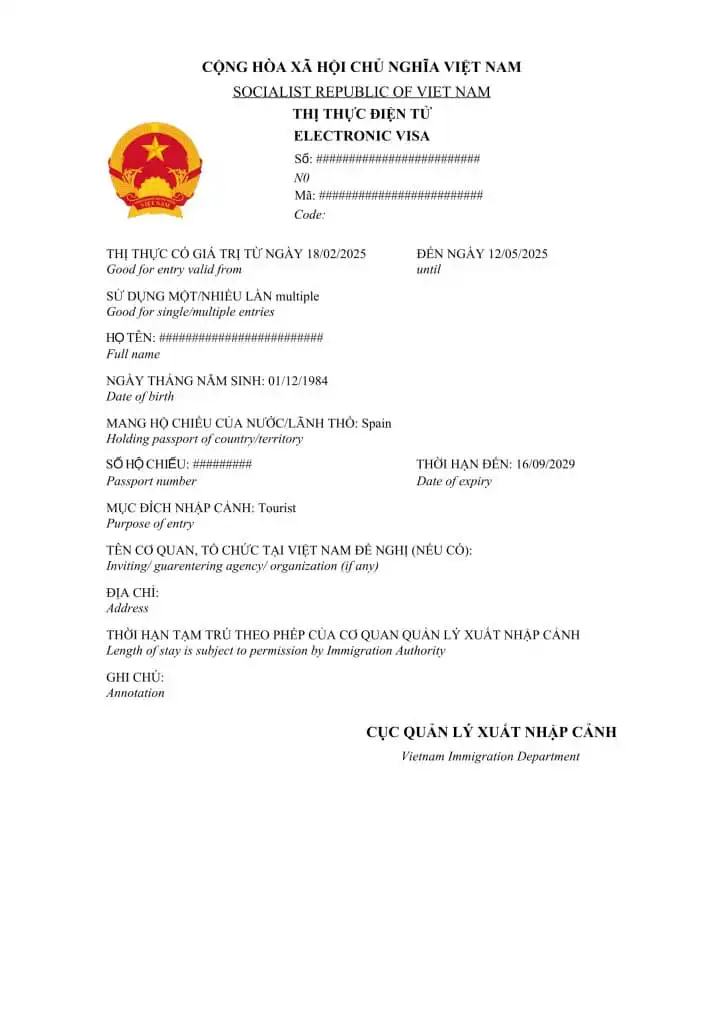
To apply for the electronic visa for Vietnam, follow these simple steps:
1. Always apply only through Vietnam’s official e-visa portals, listed here:
– https://immigration.gov.vn/
– https://evisa.xuatnhapcanh.gov.vn/trang-chu-ttdt
Beware of unofficial lookalike websites charging inflated fees; if you prefer assistance, use only a reputable visa agency, which will handle the process for a small commission.
2. Complete the e-visa application with all your personal details.
Make sure every detail is correct and truthful, and that your passport information and photos meet the required standards. Any false or incorrect statement can result in the visa being denied.
3. Comply with Vietnam’s immigration and residence rules after entering.
Foreigners must register their temporary residence in Vietnam — but don’t worry, the accommodation you’ve booked takes care of this for you.
1. The application form, correctly completed — remember to do it on the official website.
2. A passport-style photo of yourself, 4×6 cm, in .jpg format, with a white background and no glasses.
3. A photo in .jpg format of the main page of your passport.
4. A valid passport with at least six months of validity from your arrival date.
5. Your temporary address in Vietnam (your hotel’s address works) and your entry and exit points.
6. A debit or credit card for the payment.
The electronic visa gives you access to the country as a tourist for a maximum of 90 days.
The price of the 90-day (3-month) visa for Vietnam depends on whether you need a single entry or multiple entries:
– US$25 for single-entry visas.
– US$50 for multiple-entry visas.
We recommend carrying your e-visa both printed and in digital format on your phone.
Yes. The United States, Canada, Australia, New Zealand and Ireland are not on Vietnam’s visa exemption list, so citizens of these countries need a visa for any tourist visit. The simplest route is the e-visa: fully online, US$25, up to 90 days.
UK citizens are the exception among English-speaking countries: they can enter visa-free for up to 45 days (except BNO passport holders).
Among Vietnam’s neighbors, Japan and South Korea get 45 days and most Southeast Asian countries get 14 to 30 days visa-free, while travelers from China and India need an e-visa.
✔️ Information reviewed and last updated on July 16, 2026