
Exploring Phong Nha was one of those improvised decisions that end up defining a trip.
In our case, we didn’t quite know what to expect before visiting — only that there were impressive caves and plenty of nature — so we decided to go and find out for ourselves whether it was really worth it.
Luckily, the decision paid off in full, and we found much more than we expected: landscapes, trekking, adventure and calm, plus a cool climate to rest from the intense heat of the rest of the country.
In this guide we cover the best things to do in Phong Nha and how to organize your days to fit it into your Vietnam itinerary.
In this post
Why visit Phong Nha?
As a UNESCO World Heritage Site since 2003, we worried before visiting Phong Nha that we’d run into mass tourism like in Halong Bay or other famous corners of Vietnam — but luckily that wasn’t the case.
What surprised us most about Phong Nha was how little (almost nonexistent) domestic tourism we came across. Perhaps it was the season (April), but beyond a handful of nature-loving foreigners, there was hardly anyone around us — and we loved it.
So if that sounds like you and you enjoy quiet places packed with outdoor activities, don’t hesitate to add it to your itinerary.

How to get to Phong Nha?
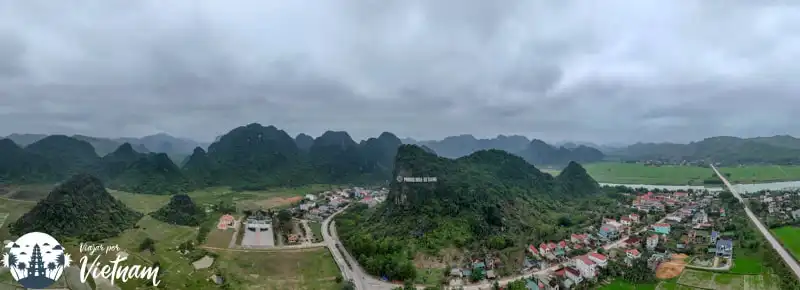
Phong Nha sits in central Vietnam, inside Phong Nha-Ke Bang National Park, in Quang Binh province, roughly 40 kilometers northwest of Dong Hoi, the nearest major city with train connections and an airport.
You have several options depending on where you’re coming from — here’s a rundown of the main ones:
By night bus
The simplest and most direct way to reach Phong Nha is by bus. We arrived from Ninh Binh on a night bus we booked the day before.
The ride took about nine hours and, while not the most comfortable of the trip, we managed to sleep nearly the whole way.
The bus dropped us right in the center of Phong Nha, and within minutes we were settled into our guesthouse.
There are also night buses from other places such as Hanoi, Hue and Da Nang.
The advantage of the bus is that it stops right in Phong Nha, making it a practical, budget-friendly way to arrive — especially if you don’t want to lose a whole day on the road. That said, book ahead, particularly in high season.
You can check timetables and prices here.
By train
If you’d rather have a bit more comfort in exchange for a couple of connections, another way to reach Phong Nha is by train — though bear in mind the train doesn’t go all the way to the village.
The nearest station is in Dong Hoi.
From there, you can take a taxi or a private transfer to Phong Nha, which takes about an hour. As with the bus, we recommend the night train, available from the north as well as from other points in the center and south of the country.
You can check timetables and prices here.
By plane
If spending the night on a train or bus isn’t your thing, the best way to arrive is, without question, by plane.
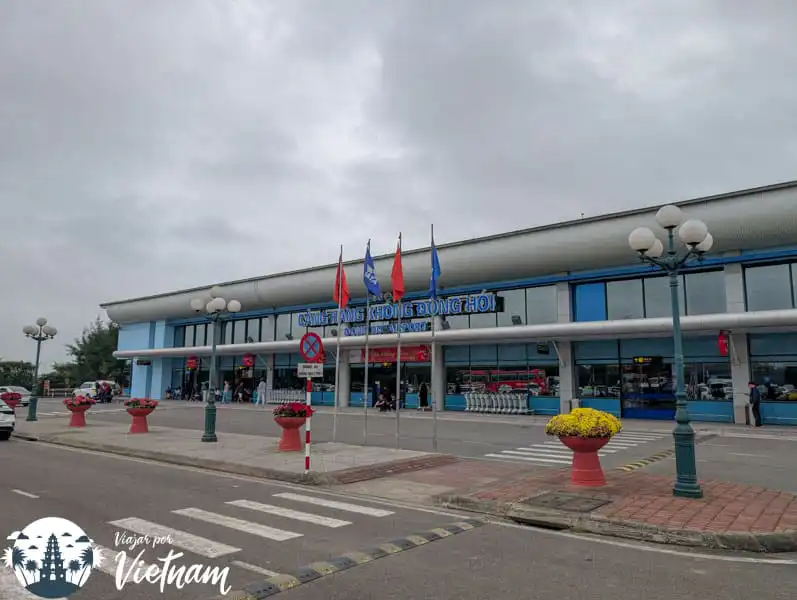
The closest airport to Phong Nha is Dong Hoi Airport (VDH). There are daily flights to Dong Hoi from Hanoi, Ho Chi Minh City and, at certain times of year, also from Da Nang or Dalat.
From Dong Hoi, just like with the train, you can take a taxi to Phong Nha.
Here’s a full article explaining how to get here from different points around the country.
The best caves to visit in Phong Nha
Phong Nha is without doubt Vietnam’s paradise for caving and adventure expeditions, and the main reason most people come here at all.
Below are some of the top things to do in Phong Nha, along with all the information you need to visit them.
Phong Nha Cave: the most touristy cave in Phong Nha
Phong Nha Cave is hands down the most accessible of them all — and therefore the most visited. It’s ideal as a first taste before you start exploring the area.
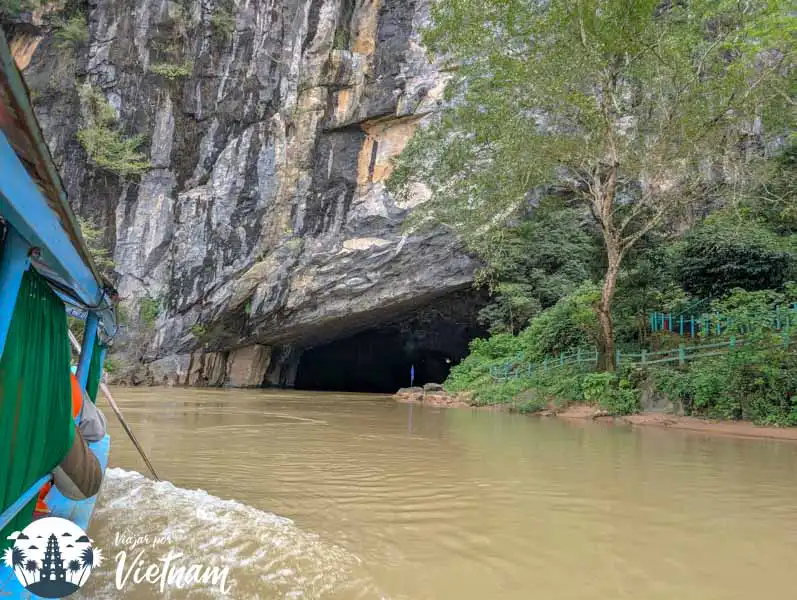
To visit, head to the village’s main pier, where you buy your ticket and hire the boat to the cave.
Each boat takes a maximum of 12 people. If your group is smaller — as it usually is — you can share with other travelers to split the cost. We were lucky enough to meet two German couples right before paying and managed to bring the price down.
From the pier, the boat heads upriver for about 30 minutes to the cave entrance. There, they cut the engine, check your ticket and continue a little further using only the oars, up to the starting point of the walking route.
From there you make your way down through impressive galleries crowded with stalactites and stalagmites.
All in all, the visit takes roughly two hours. It’s suitable for everyone and requires no great physical effort. Highly recommended if it’s your first day in the area or you don’t feel like trekking.
Prices and tickets
- Cave entrance: 150,000 VND (~US$5.80) per person
- Boat ride: 550,000 VND (~US$21) per boat, for up to 12 people.
Paradise Cave: the most photogenic cave in Phong Nha
Paradise Cave (Thien Duong) is the park’s most photogenic jewel — a 31 km-long cave discovered in 2005. Access is from a parking lot a couple of kilometers away, from which you can walk up a trail or pay for the usual electric buggy if you’d rather skip the climb.
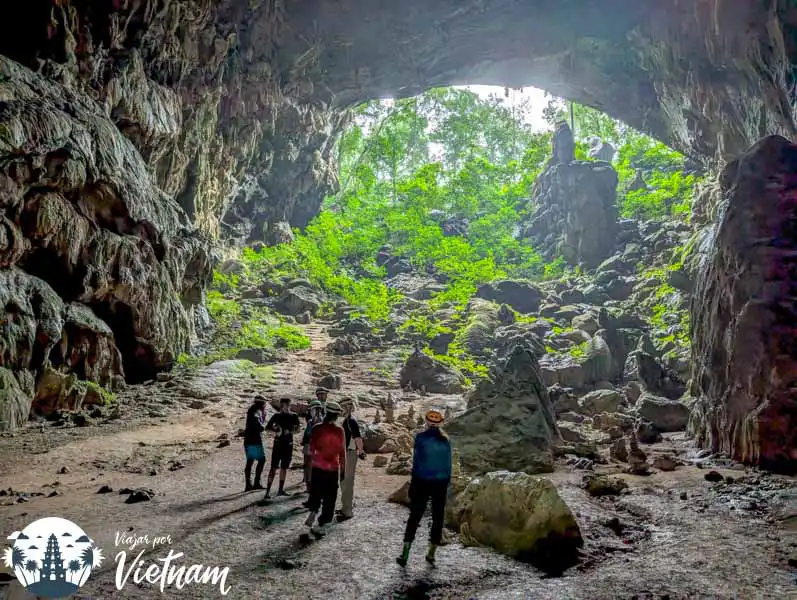
Once inside, the first kilometer follows well-lit wooden walkways, packed with stalactites and stalagmites of every shape imaginable.
For the more adventurous, there’s a 7 km guided excursion into sections where an underground river still flows. If you’re into photography, this cave is one of the unmissables.
If you’re planning your visit and don’t know where to begin, begin here.
Prices and tickets
- Entrance costs around 250,000 VND (~US$9.60) per adult and half that for children.
- The electric buggy is paid separately.
Elephant Cave (Hang Voi)
This cave hides in the middle of the jungle and is reached after some twenty minutes of near-vertical climbing through thick vegetation.
Its mouth is about 60 meters high and 300 meters long, and the interior holds a wealth of stalactites and stalagmites.
During the war, the cave served as a shelter for Vietnamese soldiers.
Visiting it requires a full-day tour — the Elephant Cave & Ma Da Valley tour, which combines a full day of moderate hiking, a dip in Ma Da lake and swimming your way through Tra Ang cave before the day is done.
We absolutely loved it.
Dark Cave: zipline, mud baths and plenty of adrenaline
Dark Cave is Phong Nha’s adventure option par excellence, and also its most popular tour.
The tour combines a zipline of nearly 400 m — one of the longest in Vietnam — with several mud pools and a good stretch of kayaking on the river, making it especially popular if you want light adventure and a bit of everything.
Some tours combine all of this with visits to Paradise Cave and Phong Nha Cave as well, so if you only have one day, this tour is perfect for you.
Son Doong: the largest cave in the world
Son Doong is the largest cave on the planet — a whole underground world. This cave is what put Phong Nha on the map and on the bucket lists of people all over the globe.
Located in the central area of the park, its interior stretches a staggering 9 km, with a width of about 150 m and a height of more than 200 m.
It was discovered by local man Ho Khanh in the 1990s, though British explorers only began mapping it in 2009.
It’s undoubtedly one of Phong Nha’s greatest treasures, but visiting this cave is a real odyssey: access is limited to very small groups, managed by the Oxalis agency. The expedition — around 4 days and 3 nights — demands good physical fitness and costs US$3,000.
Because of its exclusive nature and the environmental impact, spots are limited and you need to book months in advance.
Other incredible caves and expeditions in Phong Nha: Hang En, Tu Lan and Hang Pygmy
Still hungry for more? There are plenty of alternative caves offering unique experiences, especially if you’re willing to commit several days to an expedition.
Hang En
Known as the third-largest cave in the world, it serves as the gateway to Son Doong and is explored on a two-day expedition with a night camping inside its enormous chamber.
The route includes jungle trekking, river crossings and an underground lake. The difficulty is moderate, and it’s ideal for anyone after an out-of-the-ordinary experience.
Tu Lan
This cave system lies about 70 km northwest of Phong Nha and can only be accessed with a guide. Tours combine jungle and valley hiking with swims through flooded sections, camping beside underground rivers.
It’s best visited between March and August to avoid flooding. Not for beginners — but perfect for those chasing a proper adventure.
Hang Pygmy
Recognized as the fourth-largest cave in the world, it forms part of the Tiger Cave system and runs some 845 m long — another must in Phong Nha if you have the time and the budget.
Reaching it requires a multi-day trek through dense forest, delivering a solid dose of adventure along with huge chambers packed with stalactites and stalagmites.
It’s a perfect option for those who’ve already visited other caves and want to explore somewhere more remote.
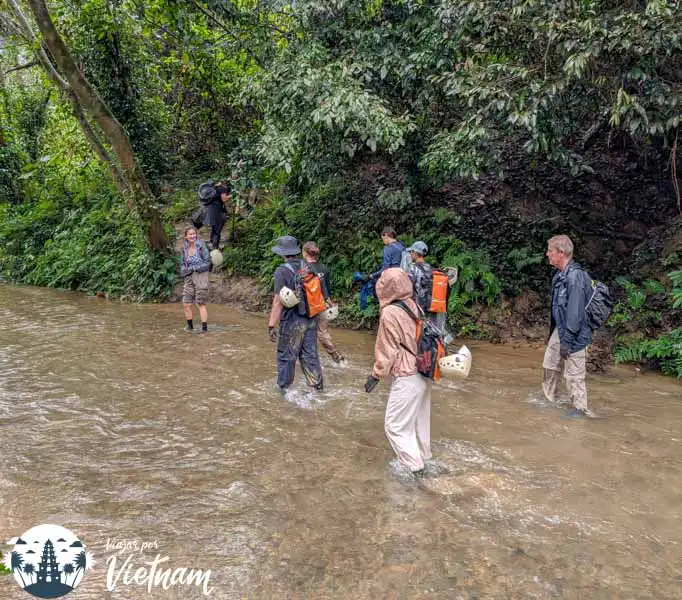
Things to do in Phong Nha beyond the caves
Although the caves are the main draw, Phong Nha offers other genuinely interesting activities to round out your visit.
Kayaking and paddleboarding on the Son River
The Son River winds through the Phong Nha valley, leaving a trail of thoroughly rural scenery in its wake.
One great activity here, beyond exploring caves, is this tour from Chay Lap Riverside — paddling downriver by kayak or paddleboard to near Phong Nha, past corn and peanut fields and a landscape bristling with karst mountains.
The excursion usually lasts about four hours and stops at small villages like Tram and Me for a glimpse of everyday life.
The price is around 700,000 VND (~US$27) per person for groups of at least four, and includes guide, boats, life jacket, water and snacks. Bring comfortable clothes, sunscreen, a cap and the will to enjoy yourself.
Hiking in the Botanic Garden
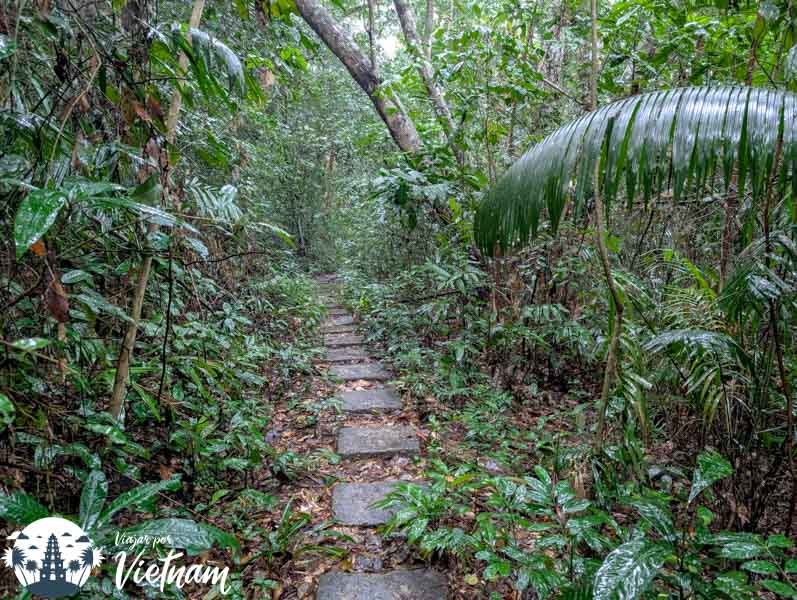
Just 10 km from Son Trach lies the Phong Nha Botanic Garden, a reserve of some 40 hectares of tropical forest. Entrance costs around 40,000 VND (~US$1.50), and inside you’ll find several signposted trails.
Walking one of its trails is without question one of the best activities in Phong Nha — and one that’s accessible to everyone.
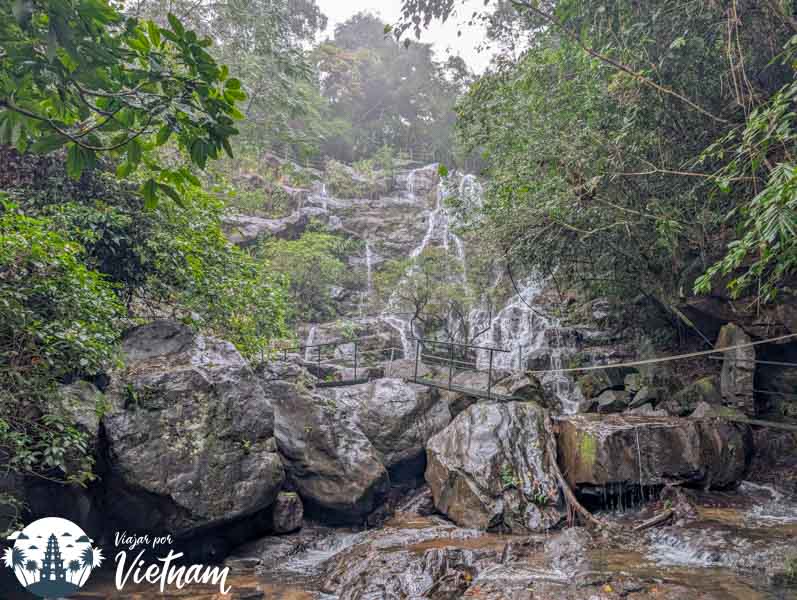
The shortest trail (Route 1) takes you to Gio waterfall in about 30–40 minutes; the intermediate one (Route 2) adds the Vang Anh lagoon and takes around an hour and a half; and the long one (Route 3) is a roughly three-hour loop through the jungle.
The trails feature viewpoints, a small wildlife rescue center and educational panels on the local flora and fauna.
Good footwear is a must, along with mosquito repellent and a swimsuit if you fancy a dip in one of its pools.
A perfect introduction to what awaits you on the bigger tours.
Ride a motorbike through the rice fields and local villages
One of the best ways to experience rural life in Phong Nha is to rent a motorbike and ride the Bong Lai Valley loop.
It’s a circuit of about 15 km mixing paved roads and dirt tracks, passing rice paddies, fruit plantations and sleepy villages.
It’s perfect for a free morning or afternoon.
Here are a few more routes to ride if two wheels are your thing.
Phong Nha itineraries based on the days you have
Phong Nha in 1 day
If you only have one day, focus on the essentials.
Spend the morning touring Phong Nha Cave by boat and, after lunch, visit Paradise Cave or the Botanic Garden.
End the day with a bicycle or motorbike ride around the village and a sunset by the Son River.
Phong Nha in 2 days (adventure + relaxation)
With two days you can strike a great balance between adventure and downtime.
On day one, visit Phong Nha Cave and Paradise Cave as in the previous itinerary.
On day two, book a tour into the more thrilling caves like Dark Cave, where you can fly down the zipline, kayak and wallow in the mud baths.
Multi-day expeditions
If you love adventure and have at least three days, consider an expedition to Son Doong, Hang En or another cave in the area.
These expeditions take time and money, since booking through an authorized agency is mandatory, along with solid physical preparation.
On the Hang En expedition you trek through jungle, cross rivers and spend the night in a gigantic underground chamber.
In Son Doong you pass through vast galleries, underground jungles and rivers on a route unlike anywhere else on Earth.
They’re costly but unforgettable experiences — and, for many, the main reason to travel to Phong Nha at all.
Where to stay in Phong Nha
The natural base is Phong Nha town: cave tours leave from there, and that’s where restaurants and services are concentrated. If you’d rather have more calm, the surroundings offer farmstays and villas among rice paddies and karst mountains.
Here are three options, one per budget:
The Ridge Haven
From 180,000 VND (~€6) / night
Budget, highly rated and at hostel prices: hard to ask for more in Phong Nha.
Check availability and prices →Karst Villas Phong Nha
From 1,000,000 VND (~€33) / night
Highly rated villas, the area’s best value for money.
Check availability and prices →Victory Road Villas
From 2,200,000 VND (~€73) / night
The most upscale option in Phong Nha: 4★ villas with excellent ratings.
Check availability and prices →Frequently asked questions about visiting Phong Nha
When is the best time to visit Phong Nha?
Spring (February–April): Mild weather and minimal rain make this period ideal for exploring the area.
Fall (September–November): Cooler temperatures and green landscapes make the experience even better.
Rainy season (May–October): Travel is still possible, but heavy rains can disrupt your plans.
Do I need caving experience to visit the caves?
No. Tourist caves like Phong Nha Cave and Paradise Cave are fitted with walkways and require no special skills. You just need comfortable footwear and a bit of care as you move around.
For adventure caves and expeditions, it depends on the tour you choose — at minimum, be aware of where you’re going and what it demands. Agencies generally provide a helmet, life vest and guide, but some expeditions call for real physical and mental fitness to complete.
Can I pay by card in Phong Nha?
Most guesthouses and restaurants accept cash only, so carry enough Vietnamese dong. There are a few ATMs, but they don’t always work; in Dong Hoi you’ll find banks and ATMs aplenty.
Is it safe to get around by motorbike?
Yes, as long as you have riding experience and follow the rules. The main roads are paved, but some secondary tracks are dirt. Wear a helmet, check the bike is in good condition and avoid riding at night.
How many days should I spend in Phong Nha?
Between one and three days is enough to see the highlights, if you’re not planning an expedition.
With one day you’ll see the main caves; with two, you can add adventure and excursions; with three or more, you can consider the longer expeditions.