
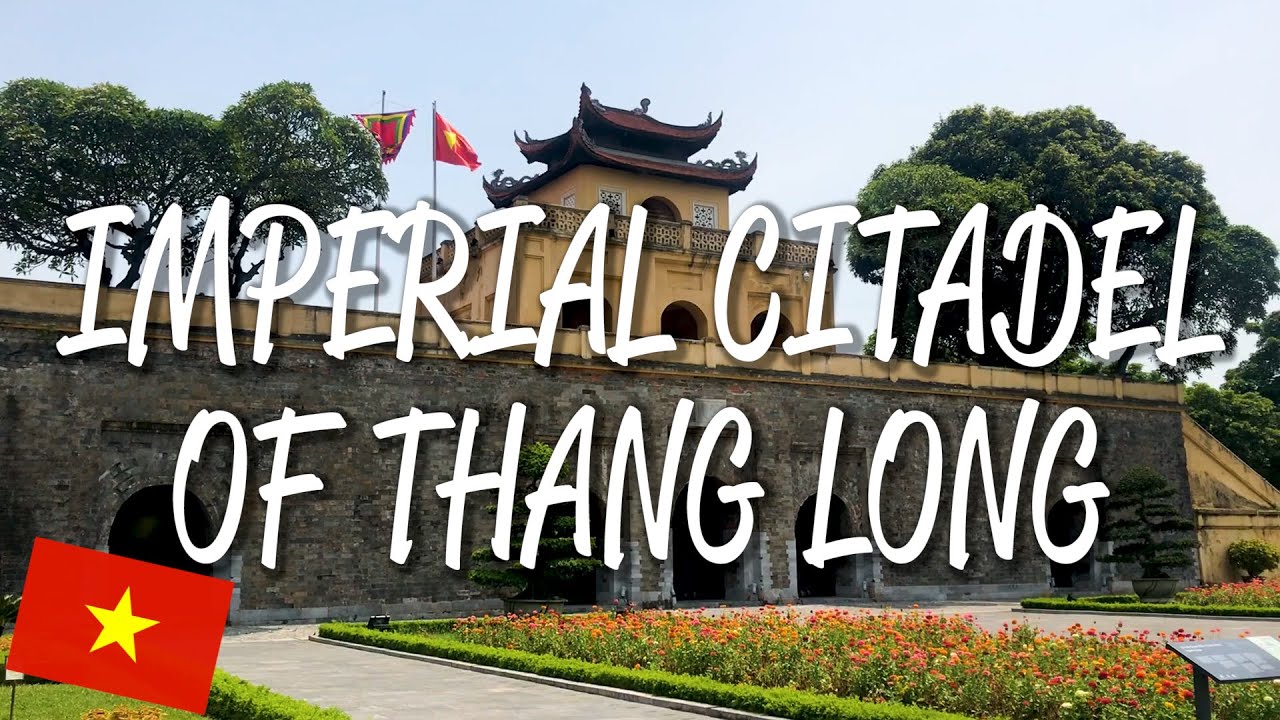
The Imperial Citadel of Thang Long is one of the essential places to visit if you’re vacationing in Hanoi.
For centuries it was the main residence of Vietnam’s old imperial court, making it the true political center of the country.
Sadly, much of the complex is deteriorated today — yet a walk among its remains is enough to sense the grandeur it once held. In its heyday, this citadel had little or nothing to envy of far more famous imperial complexes, such as Beijing’s celebrated Forbidden City.
In this post
History of the Imperial Citadel of Thang Long
It was built during the 11th century, when the Vietnamese emperor of the time decided to move the capital from Hoa Lu (in the neighboring province of Ninh Binh) to Hanoi.
The move proved so successful that the Vietnamese court resided here for nearly eight centuries, until the early 19th century, when emperor Gia Long definitively transferred the capital to Hue, in the center of the country.
With the French occupation of Vietnam, many of the royal buildings and palaces suffered serious damage. The final blow came in the 20th century, during the Japanese occupation in World War II, when the site was used to hold captured French soldiers.
In recent decades, the Imperial Citadel of Thang Long has been the subject of archaeological excavations, historical studies and restoration work, aimed at reviving what was once Vietnam’s most important palace complex.
Proof of that effort: UNESCO declared it a World Heritage Site in 2010.
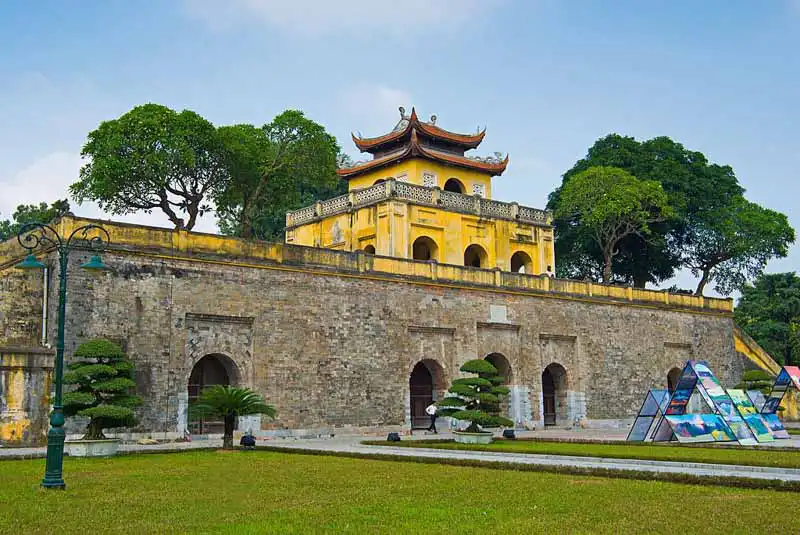
What to see at Hanoi’s Imperial Citadel
Although its state of preservation, as you’ll have gathered, isn’t ideal for a place of such historical weight, it’s well worth taking your time here and trying to picture the splendor the Imperial Citadel of Thang Long held in a not-so-distant past.
Built under strong influences from the Chinese Empire and the Kingdom of Champa — which occupied much of today’s southern Vietnam — its walls concentrated the core of imperial power for centuries. The citadel was the symbol of a refined and deeply hierarchical court life, reserved for the empire’s elite.
If you come to explore this historic corner of Hanoi, these are the different places you can visit inside the complex.
1. Kinh Thien Palace
Although it has reached our days in a badly deteriorated state, this palace was built in 1428 and played a central role within the citadel. For centuries it was the stage for official ceremonies and receptions where the empire’s main affairs were settled — which explains its privileged position at the very heart of the citadel.
Today, of all that splendor, only a few stretches of the original staircases and the emblematic stone dragon statues remain.
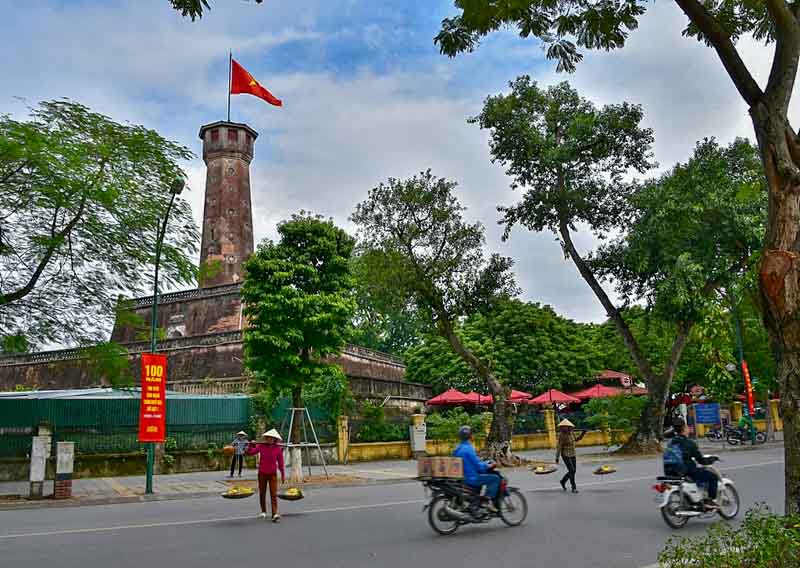
2. The Flag Tower (Ky Dai)
At nearly 40 meters tall, the Flag Tower is without doubt one of Hanoi’s most emblematic symbols — rare is the visit to the city that doesn’t include a photo here.
Although it’s more recent than other buildings in the citadel — dating from the 19th century, under the Nguyen Dynasty — it’s one of the structures that has best withstood the passage of time. In fact, it survived both the French period and the later conflicts in good condition, which explains its excellent preservation.
3. Bac Mon (the north gate)
The current Bắc Môn, or North Gate, was built in 1805 during the Nguyen Dynasty, on top of defensive structures from earlier dynasties. Its main role was that of a watchtower, from which imperial troops could monitor both the inside of the citadel and movements outside, especially against enemy threats.
Inside the tower, homage is paid to Nguyen Tri Phuong and Hoang Dieu, who led its defense during the French army’s assault in the 19th century. Both chose to sacrifice themselves rather than surrender the citadel, which is why they’re considered national heroes today. In their honor, two of the streets surrounding the old imperial grounds bear their names.
4. Doan Mon (the south gate)
This is the southern gate into the citadel. Its main peculiarity is that only members of the royal family and high dignitaries were allowed through it, while everyone else was strictly forbidden from entering here.
This access control wasn’t only about security — it also reinforced the social hierarchy and the sacred nature of imperial power, clearly separating the world of the court from that of the common people.
5. Hau Lau (the Princesses’ Palace)
As its name suggests, it was mainly used by the queen and princesses for their daily affairs.
During the Nguyen Dynasty, the building also served to house the concubines of the Bắc Hà king, reinforcing its role as one of the most intimate and private spaces of court life.
During the French colonial era, the site became known as the Pagode des Dames (Pagoda of the Ladies) and suffered severe damage, requiring a thorough reconstruction. The result is the building we can see today — a blend of modern rebuilding and imperial past.
6. The tunnels and House D67
During the Vietnam War, the citadel served as headquarters of the People’s Army of Vietnam.
The constant American aerial bombardments forced the construction of a fortified underground structure capable of withstanding direct hits. Thus was born the so-called House D67, a partially buried building that housed the military command center and kept operations running through the most critical moments of the conflict.
To guarantee a rapid evacuation in an emergency, a system of tunnels was also dug, connecting House D67 with other parts of the complex. Today you can walk through its interior and visit the various rooms, which display original objects from the war.
How to get to the Imperial Citadel of Thang Long
The Imperial Citadel of Thang Long sits right in central Hanoi, a few steps from other interesting sights like the Military History Museum of Vietnam.
The best way to get there is on foot if you’re in the old quarter — or, if long walks aren’t your thing, a taxi or Grab will drop you there easily.
Location: 9 Hoang Dieu, Dien Bien, Ba Dinh district, Hanoi
Imperial Citadel of Thang Long: prices and hours
- Opening hours: Tuesday to Sunday, 8:00 am to 5:00 pm. Closed Mondays.
- Entrance fee: 100,000 VND (~US$3.80)
Extra tips for visiting the Imperial Citadel of Thang Long
- Remember to dress appropriately or you won’t be let in — no shorts, miniskirts, sleeveless shirts or see-through clothing.
- Link to the official website
✔️ Information reviewed and last updated on January 7, 2026