
Thinking of visiting the Cu Chi Tunnels? Today we explain how to see one of the most interesting places in southern Vietnam.
In this post
What are the Cu Chi Tunnels? A brief history of southern Vietnam’s underground labyrinth
The Cu Chi Tunnels are an enormous network of underground passages, originally dug during the Indochina War (1945-1954) and later expanded during the Vietnam War (1955-1975) by the Viet Cong, serving as shelter and base for North Vietnamese fighters.
Built mainly in the Cu Chi district, though connected to a larger network spanning much of the country, they were used primarily as hiding places, launchpads for attacks, routes for moving troops and supplies, hospitals, and depots for food and weapons, among other things.
These tunnels allowed Vietnamese revolutionary troops to move about discreetly and avoid detection.
During the Vietnam War they served as an isolated stronghold for planning strategy and launching military campaigns such as the Tet Offensive of 1968.
Today, restored and repurposed for tourism, they symbolize for many the tenacity and ingenuity of the Vietnamese people.
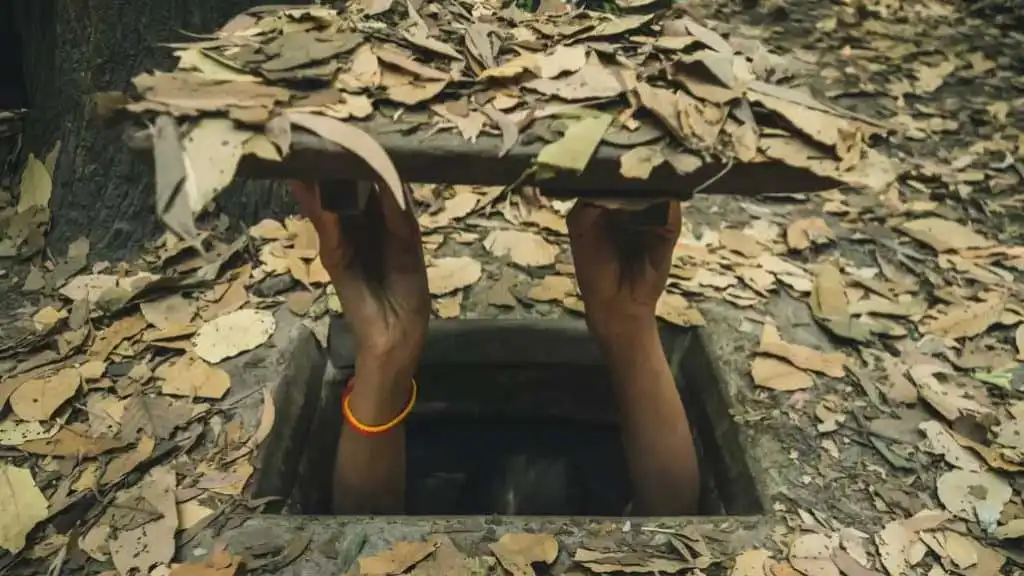
How to visit the Cu Chi Tunnels: hours, prices, information and tips
The Cu Chi Tunnels are today a popular tourist attraction among travelers exploring southern Vietnam.
On a day trip to the Cu Chi Tunnels you can explore sections of this intricate underground system, learn about the soldiers’ daily lives and get a close look at the inventive guerrilla warfare techniques used by the Vietnamese fighters.
Opening hours and price
- Open from 7:00 am to 5:00 pm (every day)
- Entrance fee: 125,000 VND (~US$4.80), English-speaking guide included
Where are the Cu Chi Tunnels?
The Cu Chi Tunnels (Địa đạo Củ Chi in Vietnamese) are located in the Cu Chi district, roughly 70 km from Ho Chi Minh City.
The tunnels are split between two main sites, about 13 km apart:
- Ben Dinh Tunnels: The most visited section, and where most excursions and tours will take you.
- Ben Duoc Tunnels: Considerably larger to explore and somewhat less crowded.
Cu Chi Tunnels: not an experience for the claustrophobic
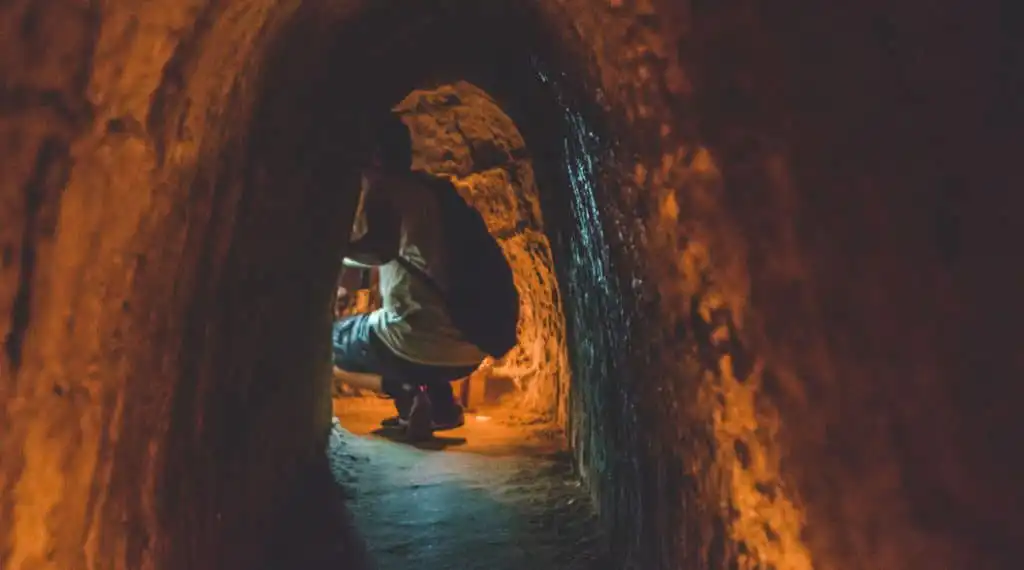
If tight or enclosed spaces make you anxious, bear in mind that the Cu Chi Tunnels were built to a size that allowed Vietnamese fighters through while making passage enormously difficult for Westerners (generally taller and broader).
So if you suffer from claustrophobia, we recommend skipping the underground section of the tunnels — you’ll find it deeply distressing. Simply enjoy the rest of the visit above ground.
What is the Cu Chi Tunnels excursion like?
Chances are you’ll visit the tunnels the way most people do: on a tour. So here’s a rundown of what the experience is like (at least as it was in our case).
Our Cu Chi Tunnels tour included:
- Pickup at hotels in Ho Chi Minh City’s District 1.
- Round-trip bus transport (a minibus, in our case)
- English-speaking guide: fascinating, and the reason the visit was so worthwhile
- Water and a snack, usually handed out on the bus.
- Entrance to the Cu Chi Tunnels
This can vary depending on the operator you choose, though, so check carefully what’s included in your case.
Although the tunnels are relatively close to Ho Chi Minh City, it took us almost two hours to reach them — shopping stop included, mind you, for a bathroom break and to browse or buy the handicrafts made by local people with disabilities.
On arrival at the complex, you’re shown a map of the area, and after some general explanations about the site, its uses and its scale, the walking tour begins.
Our guide spoke at length about Agent Orange and other chemicals used extensively by the Americans in this area during the Vietnam War.
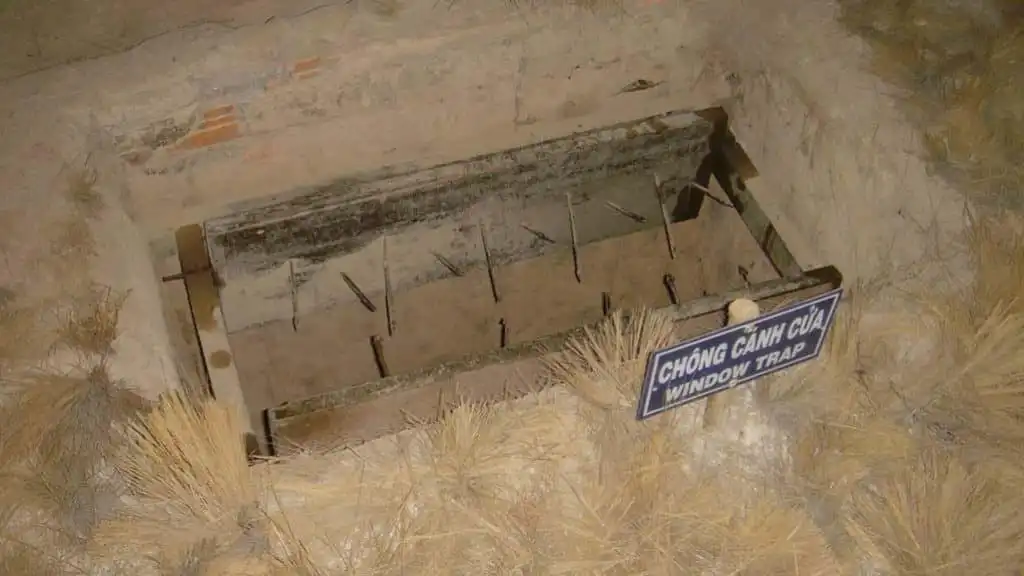
The first part of the visit runs through an open-air area where the guide shows you the various ingenious traps that were hidden in the jungle to inflict casualties on enemy soldiers.
In the final part you’ll get the chance to crawl (literally) through the underground tunnels. It’s a safe but somewhat agonizing experience that shows you firsthand the reality and harshness of life in these places.
Lastly, as an extra (paid separately), there’s a shooting range within the tunnels area where you can fire different types of weapons, including the classic AK-47 and the M16.
Is a guide included at the Cu Chi Tunnels?
Having visited the tunnels, we can say that the guide and their explanations are a huge part of this place’s appeal, making the visit friendlier and far more interesting.
An English-speaking guide is always included, both on tours and in the standalone entrance fee. And if you’d rather enjoy the visit with a dedicated guide and transport just for your group, here’s a private tour of the site.
Are the Cu Chi Tunnels worth visiting?
The short answer is yes. The Cu Chi Tunnels are a unique historic site and an interesting visit in Vietnam.
That said, bear in mind that — like other major attractions in the country such as Halong Bay or the Mekong Delta — they tend to be somewhat crowded, so if you don’t like crowds, know that you won’t be alone there.
That said, we should also stress how important the guide and their explanations are on this tour — they’re a big part of the charm, and they’ll give you a much deeper understanding of the war in these areas and its implications down to the present day.
And if you were the kind of kid who loved tinkering and building things, the ingenious Vietnamese traps will capture your imagination from the very first moment.
Mekong Delta or Cu Chi Tunnels: which to choose?
The Cu Chi Tunnels and the Mekong Delta are two of southern Vietnam’s most emblematic places, and both make perfect day trips from Ho Chi Minh City.
If you’re wondering which of the two is more worthwhile, the answer is: it depends — on the kind of traveler you are and on the time and interest you have.
If you’re an average tourist who enjoys iconic sites and doesn’t mind sharing the experience with others, both are worth it, and we recommend doing both if your schedule and budget allow.
If you only have one day, things get tight, so we recommend this tour covering both places in a single day — the full experience in the least time.
If you have two days or more, split the experiences and give each of them at least a full day.
Both are tourist experiences — meaning that if you’re a backpacker in search of one-of-a-kind adventures, look elsewhere, because you won’t find them here. Our recommendation for you: rent a motorbike and lose yourself in the delta or other nearby regions at your own pace.
How to get to the Cu Chi Tunnels from Ho Chi Minh
There are several ways to get from Saigon to the Cu Chi Tunnels — here’s a summary.
On a tour from Ho Chi Minh
This is the simplest and most recommended way, especially considering that the tours are relatively cheap for how long they last.
They include round-trip transport from the city — the most convenient part — plus the guide, who makes the experience all the richer.
Here are some of the most recommended ones you can book online, though you can also arrange them at any agency or most accommodations once you’re in Ho Chi Minh City.
If the bus doesn’t appeal to you, there’s also this boat tour to the tunnels, where you can enjoy the river scenery along the way.
And if you prefer a guide and transport all to yourselves, here’s a private tour to enjoy with your family and friends.
By private transport
A little further down (how to visit the tunnels independently) we explain how to arrive on your own by public bus or motorbike.
The other, pricier and simpler option, though, is just negotiating with a taxi in Ho Chi Minh to take you there.
You can use Grab or negotiate directly with the city’s taxi drivers.
Our recommendation, if you’d rather skip the haggling, is to book private transport online to take you there — you can check prices here.
How to visit the Cu Chi Tunnels on your own
If you’d rather skip the organized tour and visit the tunnels independently, the easiest way by far is renting a motorbike in Ho Chi Minh City and riding to the entrance.
That said, although a bit more tedious, you can also reach the tunnels by public bus.
Here are the steps to follow:
- Head to the 23/9 Park bus station:
- On Google Maps: “Bến Xe Buýt Sài Gòn – Lê Lai – Phường Phạm Ngũ Lão”
- Take Bus 13:
- Look for the bus with the sign reading “Cu Chi“.
- The fare is 20,000 VND.
- The ride takes roughly an hour and a half to the end of the route, where you get off.
- Transfer to Bus 79:
- At the last stop, get off and switch to Bus 79.
- Say “Ben Duoc Cu Chi” to the driver.
- The fare is 7,000 VND
- This leg takes about 30 minutes
Same again for the return, but in reverse.