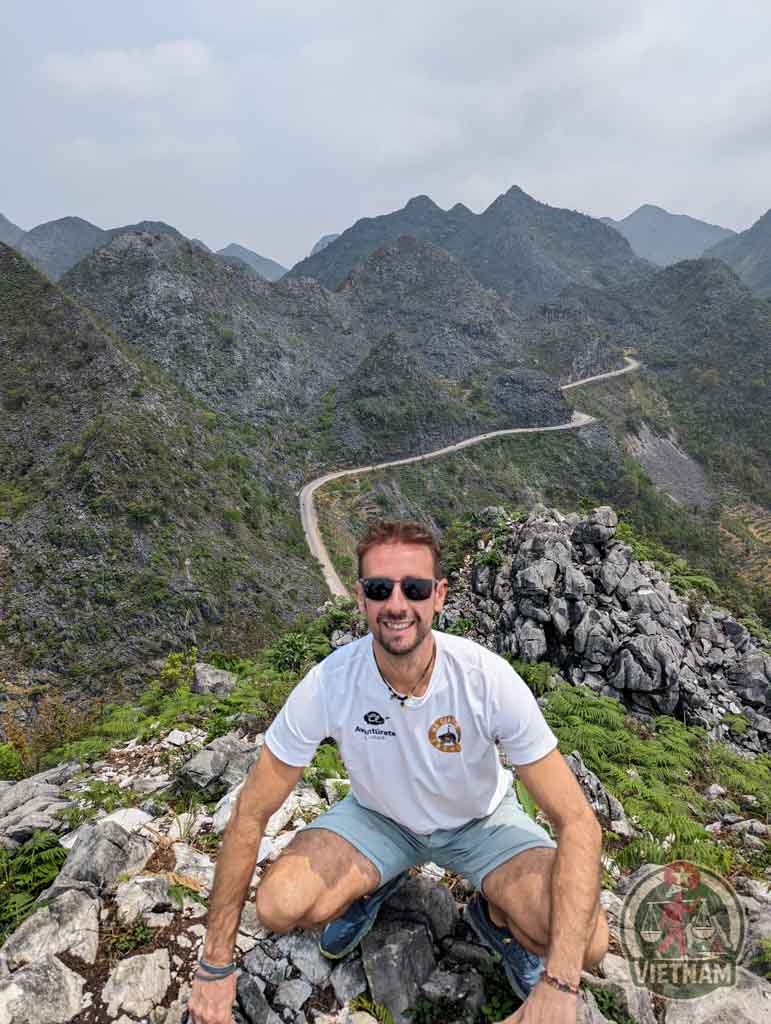
Can Gio and Monkey Island appear in almost no Vietnam itinerary. And that, honestly, is what we like most about them.
Just an hour and a half from Ho Chi Minh City, this UNESCO-declared biosphere reserve holds jaw-dropping mangroves, a wartime history that won’t leave you unmoved, and monkeys that — as we discovered on our last visit — have no qualms whatsoever about stealing whatever takes their fancy. But more on that below.
If you’re after a day trip out of the city as an alternative to the Cu Chi Tunnels (which are fine, but far too crowded), Can Gio is exactly what you need. More nature, more history, more calm — and practically no Western tourists.
You just need to know how to get there and what to do once you arrive — and that’s exactly what we cover here.
In this post
What are Can Gio and Monkey Island, and why are they worth it?
Can Gio is a district of Ho Chi Minh City — though that’s hard to believe once you’re there.
Here everything is green, humid and silent. The mangrove forest covering the area was declared a UNESCO Biosphere Reserve in 2000, and it’s one of the largest and best-preserved mangrove ecosystems in all of Southeast Asia.
But Can Gio isn’t only nature. During the Vietnam War, this area was a Viet Cong stronghold. US forces devastated the mangroves with Agent Orange, and what you see today is the result of decades of reforestation.
Monkey Island (Đảo Khỉ): Can Gio’s main event
The official name is Đảo Khỉ, but everyone calls it Monkey Island. And yes, there are monkeys. Lots of them. And they’re clever. Very clever.
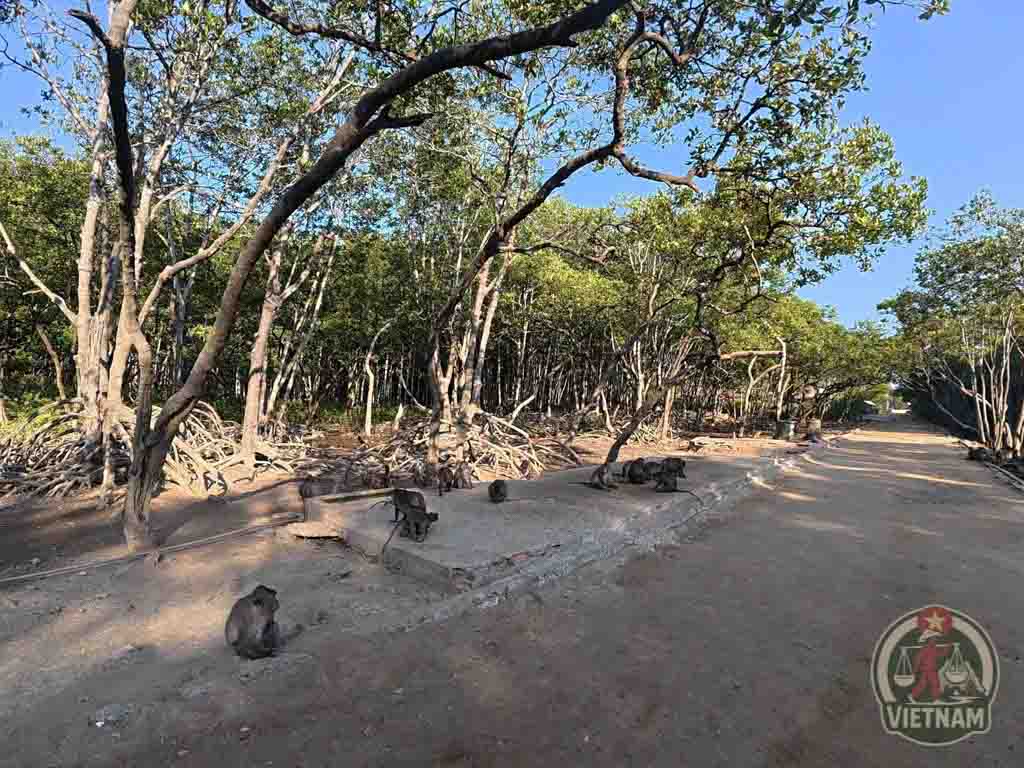
The island is a reserve where hundreds of macaques live freely. You can walk the trails through the mangroves, spot them waiting along the paths or leaping from branch to branch — and, with luck (or bad luck, depending on how you look at it), interact with them up close.
From the ticket booth to the entrance proper there’s a stretch of about 800 m, which you can cover on foot or aboard a kind of electric golf cart (paid) that runs the route.
When we reached the entrance, one of the monkeys approached with suspicious calm, and in under two seconds it had snatched Ngan’s glasses right off her face. The monkey climbed halfway up a tree and sat there gnawing on them like it was nothing. Luckily we were close to the entrance, and the security guard — clearly not dealing with this for the first time — pulled out a bag of food and tossed it to the monkey, who happily traded the glasses for the snack.
We tipped him 20,000 VND. He’d more than earned it.
The moral: don’t carry anything loose. Glasses, phones, caps, snacks… it’s all potential loot for these macaques.
The mangroves
The part that surprised us most, by far, was how striking the mangroves are. Despite the intense heat, the sheer tranquility of the place makes the visit worthwhile on its own.
Once inside, you can either walk the trail for about 30 minutes to the open-air museum area, or hire a small shared boat to take you if you’d rather not walk. If you’re solo or a couple, you can wait at the pier for the boat to fill up and save money.
The old Rung Sac military base
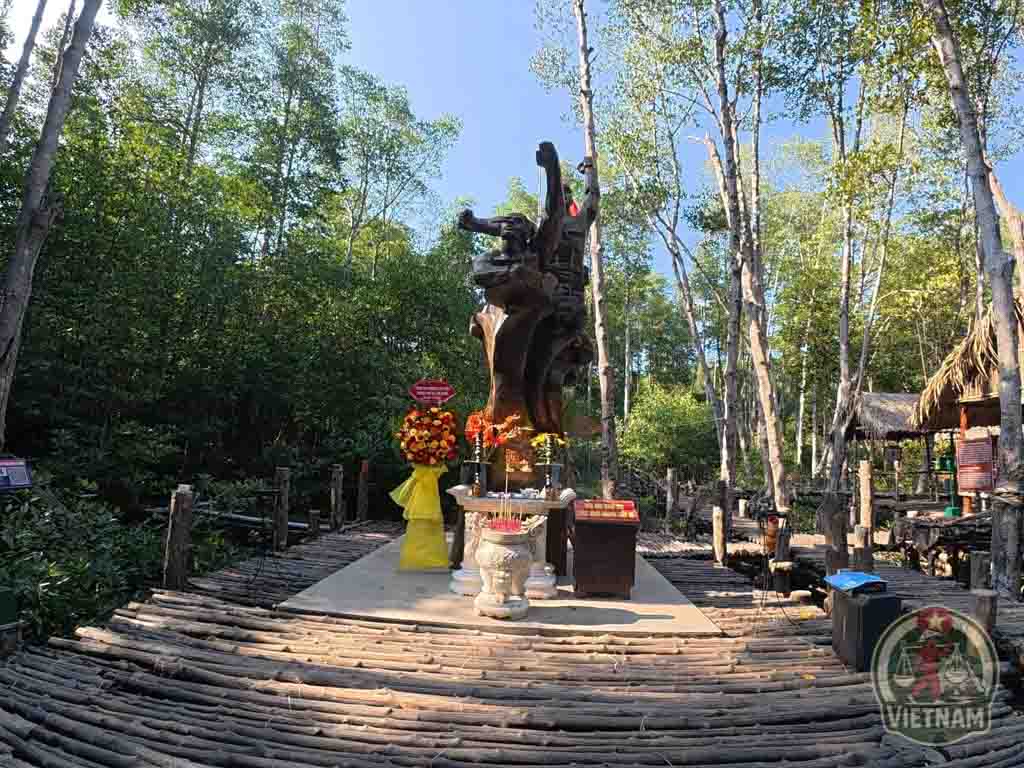
At the end of the route you reach what was once the old Rung Sac base. There’s an area with a monument to the fallen, along with open-air-museum-style recreations of the Viet Cong resistance during the war.
Here they explain some of the history of the place, and you can see wartime equipment and panels on how the guerrillas used the mangroves as shelter and escape routes. It’s a curious spot and well worth the visit.
Prices and hours:
- Entrance for foreigners: 100,000 VND (~US$3.80)
- Entrance for Vietnamese: 35,000 VND
- Hours: roughly 7:00 am to 5:00 pm.
- Electric cart (round trip): 25,000 VND
- Mangrove boat: 900,000 VND (per boat)
How to get to Can Gio and Monkey Island from Ho Chi Minh City
By motorbike (our choice)
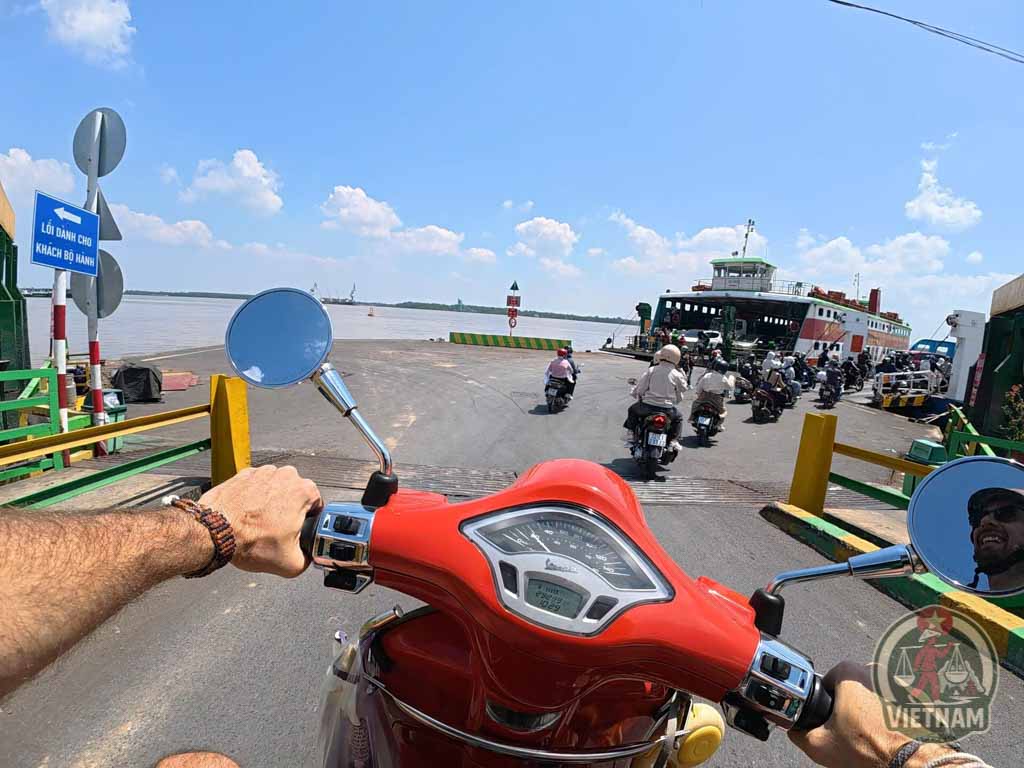
This is, without doubt, the freest way to get there. We set out from central Ho Chi Minh City; the ride takes about an hour and a half, and the journey itself is part of the experience.
You’ll leave the city heading south until you reach the Binh Khanh ferry; once across, a two-lane road with almost no traffic carries you easily southward.
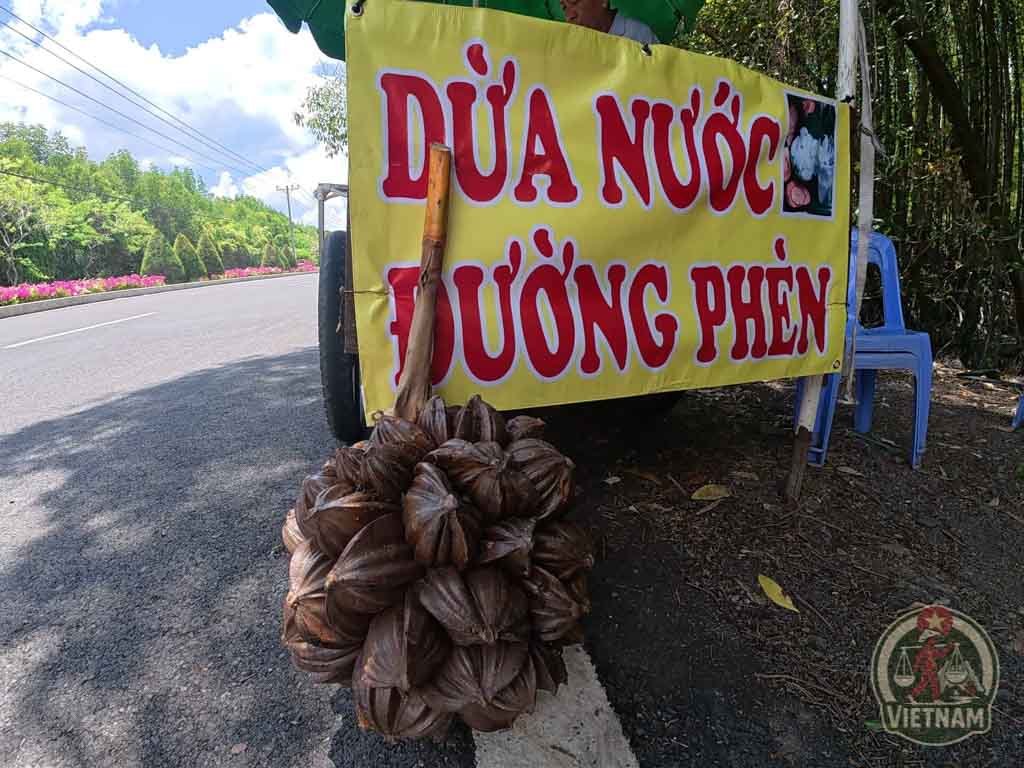
Along the way you’ll pass plenty of roadside vendors selling water coconut — harvested from a palm typical of these southern Vietnamese lands, its pulp mixed with ice. Perfect for cooling off halfway.
Tips if you’re going by motorbike:
- Leave early, before 8:00 am, to dodge the midday heat.
- Bring water, sunscreen and something to eat, just in case.
- The Binh Khanh ferry runs continuously — no schedules to worry about.
- Google Maps works perfectly for the route, though we always recommend Maps.me too.
On an organized tour from Ho Chi Minh City
If you don’t ride, or you’d rather have everything organized, the best option is booking a tour from the city. It’s a comfortable alternative that also includes a guide — which adds real value to the historical stops.
Tours usually include transport, the ferry, entrance to Monkey Island and lunch.
Here’s the top-rated day tour of them all
Can Gio vs the Cu Chi Tunnels: which to choose?
It depends on what you’re after. The Cu Chi Tunnels are more visually spectacular and better set up for tourism: the guided visits are very well organized, the historical context is easy to grasp, and the infrastructure is better.
Can Gio is more authentic, more natural and less crowded. The history is there, but you have to seek it out. In exchange, you get the mangroves, the monkeys and the feeling of having discovered something most tourists skip. If you have time for both, do both. If you can only pick one and nature matters more to you than war history, go to Can Gio without hesitation.
Our verdict on Can Gio
Can Gio struck us as one of those places you don’t see coming — and it surprised us for the better. It’s been there for years, an hour and a half from one of Southeast Asia’s biggest cities, and hardly anyone knows about it.
The mangroves are genuinely spectacular — not the kind of thing you say just to say it. The war history pulls you in if you come curious. And the monkeys… well, monkeys will be monkeys. Entertaining, charismatic and utterly unscrupulous.
If you’re in Ho Chi Minh City and looking for a different kind of escape, put it on the list. You won’t regret it. Just… hold on to your glasses.
Frequently asked questions about Can Gio and Monkey Island
Here are some of the most common questions about visiting this corner of southern Vietnam.
One day is enough for the main sights, but if you would rather take it slow, staying the night is a great option. We stayed at LATA Camping, which has dome-style tents for 600,000 VND (~US$23) a night.
If you are after something cheaper, they also have more basic options for less.
November to April, in the dry season. From May to October it rains frequently and the heat bites harder. We went in the dry season and the day was perfect.
The boat is shared between several travelers: the price is 900,000 VND per boat, which holds up to 9 people. If you arrive solo or as a couple, you can wait at the pier for the group to fill up. It works out at about 100,000 VND (~US$3.80) per person if the boat goes full.
Can Gio sits right on the sea, so the seafood is fresh and cheap. In the main town and near the beach you will find several local restaurants where you can eat very well for under 150,000 VND per dish.
We had dinner at one of the street seafood spots next to the main roundabout. They have no English menu, but the fresh seafood is on display at the stall, so pointing and smiling gets the job done.
Rough per-person estimate by motorbike:
Round-trip ferry (with motorbike): ~16,000 VND
Monkey Island entrance (foreigner): 100,000 VND
Electric cart to the entrance: 25,000 VND (round trip)
Optional shared mangrove boat: ~100,000 VND
Food: 150,000-200,000 VND
Fuel: 80,000 VND
If you want to stay the night, LATA Camping (dome tent): 600,000 VND per tent.
Estimated total per person (with a night included): around 400,000-700,000 VND.
On a guided tour from Ho Chi Minh: from 850,000 VND
Yes, no problem at all. The route has no technical difficulty, the roads are in good condition, and once you cross on the ferry the traffic all but disappears. The only slightly chaotic stretch is getting out of the city. Google Maps works perfectly for the whole route.
✔️ Information reviewed and last updated in April 2026.