The My Son Sanctuary, in central Vietnam, is a key site for understanding the country’s history. This complex of Hindu temples, a UNESCO World Heritage Site, stands as testament to the rich history and complex culture that inhabited this part of Vietnam for centuries.
My Son was the religious and political center of the Kingdom of Champa, a civilization that flourished in Southeast Asia from the 2nd to the 15th century. This set of architectural ruins is comparable in importance to better-known sites such as Angkor Wat in neighboring Cambodia or Bagan in Myanmar.
Despite the destruction it faced during the region’s many conflicts, many structures still stand today and can be visited along the route.
In this article we’ll explore the My Son Sanctuary, an ideal spot for a day or half-day trip from Hoi An or Da Nang and a way into this region’s historical past.
In this post
The history of the My Son ruins
This sanctuary is part of the remains of the Champa culture, one of the best-known and most extensive kingdoms in the area, rooted in Indian Hinduism, which held power and influence along Vietnam’s central coast up to the 13th century.
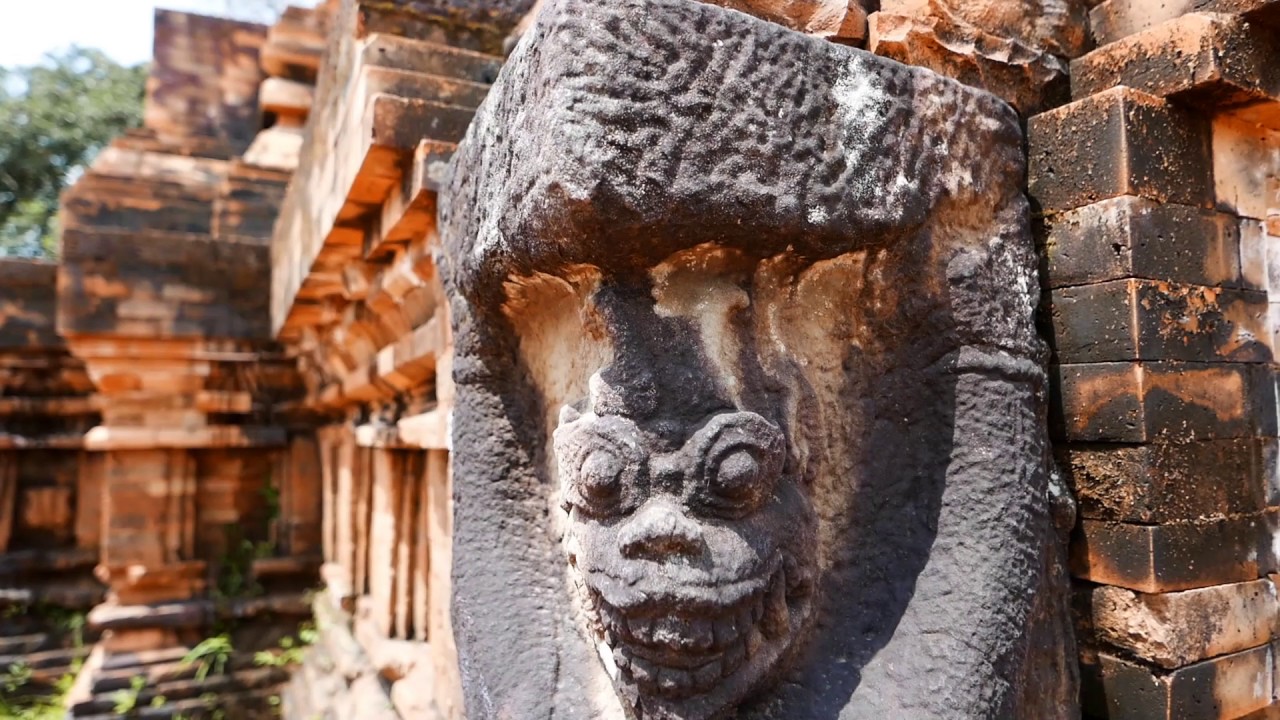
The sanctuary is made up of temples built between the 4th and 14th centuries AD, begun under King Bhadravarman, mainly using fired brick, sandstone bas-reliefs and stone pillars — with most of its structures dating from between the 7th and 13th centuries.
The temples were dedicated mainly to Hindu deities, especially Shiva, reflecting India’s influence in the region.
My Son’s decline began with the fall of the Kingdom of Champa in the 15th century, brought on by wars with the neighboring Dai Viet and the Khmer. That decline, along with the abandonment of the site, left My Son swallowed by the jungle for centuries, until its rediscovery in the 19th century by French colonizers.
Sadly, the Vietnam War damaged the ruins enormously, as the area was bombed continuously by the US military, leaving only a few temples standing and most of them severely damaged. Even today you can still see the enormous bomb craters in the ground.
My Son Sanctuary was declared a UNESCO World Heritage Site in 1999, driving international efforts toward its restoration and conservation.
Visiting the My Son Sanctuary
As soon as you arrive, near the entrance, you’ll find a small museum with an exhibition on the site and the Champa civilization, where you can get a sense of its importance and place it in historical context.
Once you’ve seen it, there’s a marked route through the sanctuary. If you’d rather not walk too much, you’ll find free electric buses that drop you right at the ruins, saving you the stretch out to the temples.
If you’ve come to the sanctuary independently and you’re someone who enjoys history, you can hire a guide at the entrance for a better understanding of the site.
It’s recommended that you don’t stray from the marked path, since the area reportedly hasn’t been fully cleared of mines — so wandering off aimlessly is not the best idea you could have in this place.
My Son Sanctuary entrance fee
To enter the My Son Sanctuary you’ll need to pay an entrance fee of 150,000 VND (~US$5.80).
The ticket gives you access to the temple complex and to the museum dedicated to the site.
If you’ve come on your own and want to dig a little deeper into the place, you can hire a guide at the entrance for 100,000 VND.
My Son Sanctuary opening hours
- My Son Sanctuary welcomes visitors every day of the year, from 6:30 am to 5:30 pm.
- For anyone after something special, we recommend taking a sunrise tour and arriving at the sanctuary right at opening.
How to get from Hoi An to the My Son Sanctuary
The My Son ruins sit roughly an hour’s drive from the bustling tourist town of Hoi An. Located in the village of Duy Phu, the complex stretches two kilometers into a valley and is ringed by mountains.
There are basically three options for getting to My Son from Hoi An:
- Motorbike
- Taxi
- Organized tour
In this post we walk through the differences between them in detail and give you some extra tips.
Is the My Son Sanctuary worth visiting?
The My Son ruins are without doubt worth a visit, especially if you’re in the Da Nang or Hoi An area.
That said, it’s worth bearing in mind that, due to the destruction of many of its temples, My Son isn’t as impressive as Angkor Wat in Cambodia or Bagan in Myanmar.
How much time do I need to visit My Son?
As a rule you’ll need a full morning or afternoon to visit the My Son Sanctuary, which makes it ideal as a complement to your time in Hoi An or Da Nang.