If there’s one activity you can’t miss on your visit to Sapa, it’s trekking through the surrounding countryside.
This experience has become the favorite of most travelers who visit this part of northern Vietnam, and it’s no coincidence: the beauty of its fields and valleys, especially during the rice harvest season, makes Sapa’s landscape a genuine natural spectacle.
In this post
Trekking with a tour or a local guide
As one of the destinations that draws the most tourists in Vietnam, the pressure to book a trek in Sapa is obvious the moment you arrive in town. It’s not unusual for dozens of locals to approach you offering excursions, in many cases even including accommodation at significant discounts.
These days, a significant share of the local population lives off tourism, and many ethnic communities have adapted to it as their main source of income. Trekking with a local guide can be an interesting option for anyone looking to better understand the culture and traditions of the villages they visit, as well as taking the logistics and route planning off your plate.
Hiring a local guide gives you the chance to get to know the culture and traditions of Sapa’s villages and ethnic groups in far greater depth, contribute more directly to the local economy, and skip having to plan the route yourself.
You can arrange the tour by negotiating directly with the women in Sapa, through one of the many agencies you’ll find in Hanoi — or, if you prefer having everything locked in beforehand, here’s the one we did ourselves (2 days) on one of our visits and here’s a one-day trek with excellent traveler reviews.
Things to keep in mind when booking a trekking tour in Sapa
- If you’re going to book your trek directly in Sapa, bear in mind that some of the women offering them can be very insistent in selling the excursions. Be patient and respectful, but above all be clear about what’s included and what isn’t.
- Tours generally include the guide, lunch at one of the tourist-packed restaurants they have deals with, and a car back to Sapa at the end.
- Normally, after lunch you’ll walk for less than an hour before your car is waiting to take you back — so if you want to stay longer and explore on your own, you’ll have to give up your ride and pay for a separate one, or walk back.
- That’s why we recommend keeping this in mind when booking an excursion, weighing whether it’s right for you, and negotiating a different pickup time if needed.
Trekking in Sapa on your own
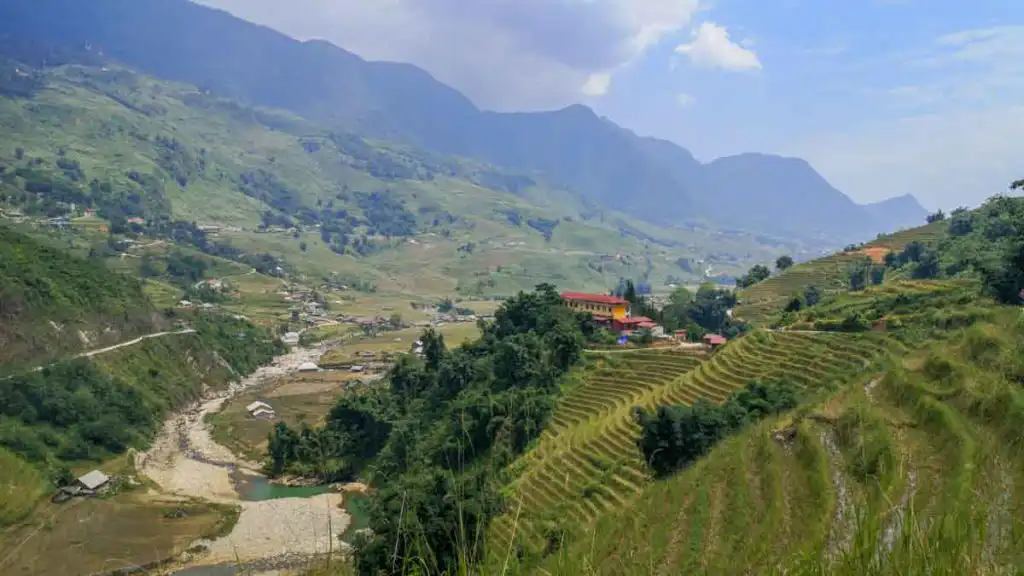
Sapa’s valleys and their breathtaking rice terraces are an ideal destination for walking. If you’d rather not book any tour and prefer hiking on your own, we can tell you it’s perfectly doable.
All you need is to prepare your route well. Get hold of a map of the area or use an app like Maps.me, which makes the planning enormously easier.
The advantages, as you can imagine: you’ll walk practically alone, with no need to join any group, enjoying greater freedom — no fixed schedules, and the ability to improvise at any moment.
The downside is that you may miss out on a deeper understanding of the ethnic culture and ways of life that define the whole area — something any local guide can help you appreciate far better.
The classic Sapa trekking route
Most travelers who set out to hike around Sapa, whether independently or on a tour, follow the classic route between the villages close to town.
It’s one of many itineraries you could do, but without doubt the best known and most widely offered.
You can complete it in a single day, and the itinerary is:
Sapa – Cat Cat – Lao Chai – Ta Van
The easiest way to do it is to ask at your accommodation and keep Maps.me handy — you can navigate the paths and trails with ease. From Ta Van you can walk back to Sapa or take a taxi (around 200,000 VND, ~US$7.70).
Bear in mind that if you enter Cat Cat you’ll have to pay the entrance fee.
Another option is the ascent of Fansipan, the highest peak in all of Vietnam.
Prices and tips for trekking in Sapa
- The women can be very insistent when selling you a trek — always try to be respectful with them, as this is how they make their living.
- Always make sure of what your tour includes (meals, village entrance fees…) and negotiate the time of your return transport if you want to stay longer.
✔️ Information reviewed and last updated on January 7, 2026