
One of the main places you can visit in Hoi An‘s old town is the Fujian Assembly Hall. Its beautiful architecture and decoration reflect the prosperous past of the city and of many of its inhabitants.
The importance of the Chinese community in this part of Vietnam became clear through the significant number of migrants from different regions of China who arrived in Hoi An in search of a new life as merchants.
In this post
The history of the Fujian Assembly Hall in Hoi An
Known in Vietnamese as Phuc Kien, the assembly hall of Fujian (a province in mainland China) was created as a place where Hoi An’s Chinese residents from Fujian would have a space of their own to meet and socialize. It’s the largest and most important of the five halls of this kind still preserved in Hoi An.
Built around 1690, the Fujian hall was originally conceived as a Vietnamese pagoda dedicated to Buddha, which was later sold to the Chinese merchants living in Hoi An.
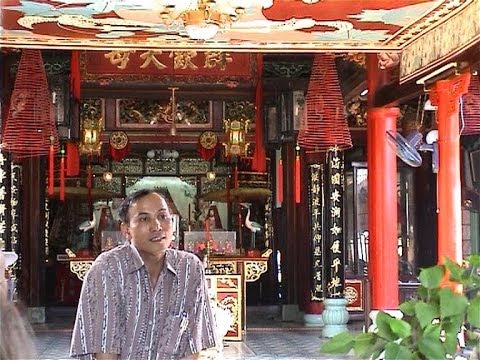
They set about restoring the pagoda in a Chinese style typical of the era that has endured to this day, turning it into an architectural icon of Hoi An’s old town — a UNESCO World Heritage Site and today one of the most visited places in the city.
Inside the Fujian Assembly Hall
The interior of the Fujian Assembly Hall is packed with all kinds of statues, mostly decorative elements rich in animals, including mythical creatures such as the unicorn (a symbol of wisdom) and the phoenix (representing nobility). Add to that a temple dedicated to Thien Hau, goddess of the sea and protector of sailors.
Inside you’ll also find sculptures of the heads of the six families from Fujian who built the Assembly Hall, having fled China after the fall of the Ming dynasty.
How to get to the Fujian Assembly Hall in Hoi An
It’s located in the center of Hoi An’s old town, so you can easily reach it on foot or by bicycle.
The Fujian Assembly Hall is open daily from 8:00 am to 5:00 pm.
Entry is included with the Hoi An Old Quarter Ticket