
Built in the 15th century during the reign of Le Thai To, this pagoda was carved directly into the limestone rock, blending so perfectly into its surroundings that it would go completely unnoticed if it weren’t for its striking entrance gate.
Bich Dong pagoda is without doubt one of the most special and mystical places you can visit around Tam Coc.
The temple is divided and built across different levels — the lower, middle and upper pagodas — reached by staircases that climb the mountainside and pass through part of a cave, until you reach the top, with its beautiful views over the surrounding landscape.
In this post
The entrance gate to Bich Dong
The most striking feature of this pagoda is undoubtedly its entrance gate. Surrounded by a pond brimming with lotus flowers and crossed by a single bridge, it’s an eye-catching spot — perfect for a bit of Instagramming.
Depending on the season, the place fills with visitors — and although it’s rarely as crowded as other spots in Ninh Binh like Mua Cave, it may take a while to get a photo without people in it.
The three levels of Bich Dong pagoda
Bich Dong pagoda is built on three levels up the mountain — lower, middle and upper — separated by steps carved into the rock. Each represents a small stage of the journey, both physical and spiritual, toward a calmer, more contemplative space.
The lower level (Chùa Hạ) is the first you’ll reach at the foot of the mountain. Built in the 18th century, it houses the Buddhas of the Three Times, along with statues representing Chi Kien, Chi The and Chi Tam, the three great masters who contributed to the building of Bich Dong Pagoda.
To reach the middle level (Chùa Trung) you’ll climb a fair number of steps to a pagoda partially built inside the cave — in fact, originally (in the 15th century) it was known simply as “Chùa Động”, the cave pagoda, as it was no more than a small shrine within.
Venturing into the cave, you’ll find an enormous bronze bell and several altars with statues. Symbolically, ascending to the middle pagoda means entering the “heart of the mountain” — deepening one’s faith by leaving the mundane behind.
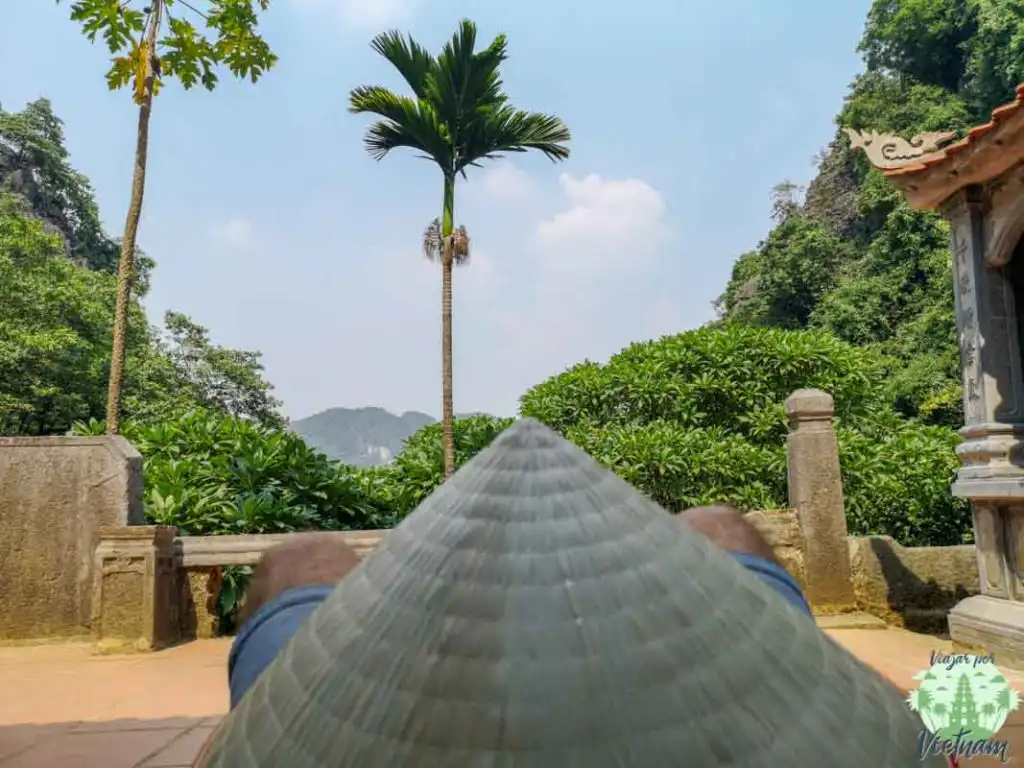
One final climb, back in the open air, brings you to the upper level (Chùa Thượng) — the original temple founded in the 15th century and, for us, the most interesting part. Here you’ll find a small viewpoint and two shrines, one on each side: the right one dedicated to the God of the Earth, the left to the God of the Mountain. But what’s truly special about this place is its soothing atmosphere, which invites you to pause for a moment of calm.
If you have time and there aren’t many people around, sit down and simply watch in silence for a while — the feeling is wonderfully peaceful.
The little-known back side of Bich Dong pagoda
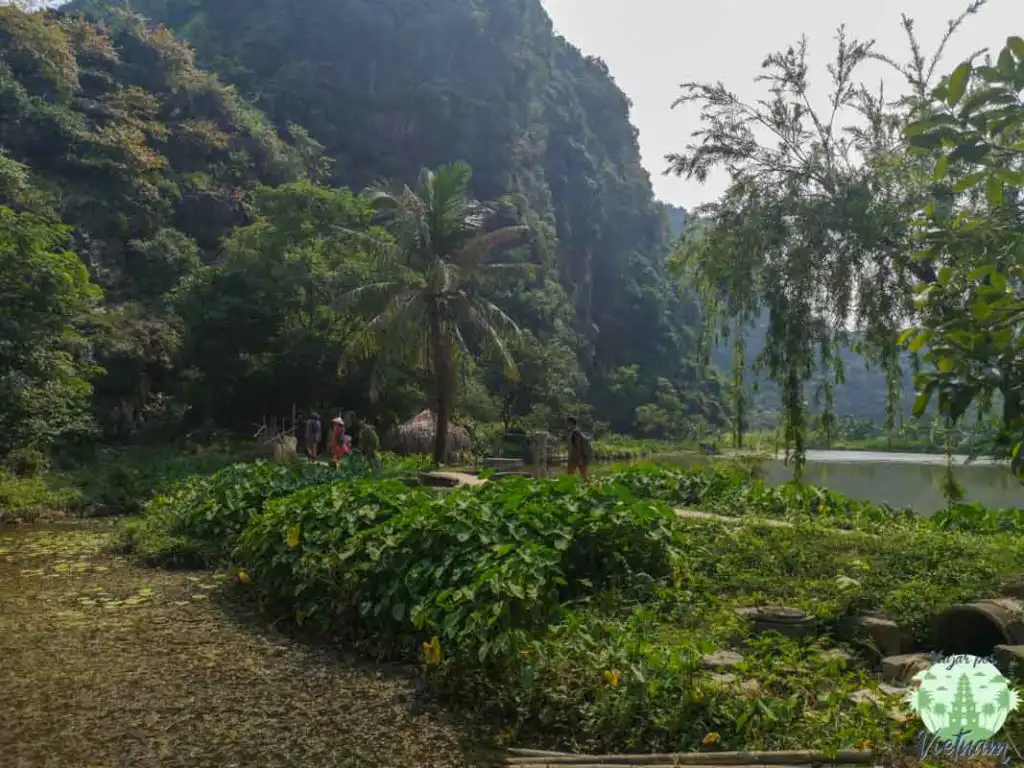
After spending some time exploring and enjoying the peace of the grounds, head out and take the path that leads to the back of the pagoda.
The cave back there can be visited for a fee of 15,000–20,000 VND (negotiable), paid to the young man who keeps the key and shows it to you — he lives in a ramshackle hut at the edge of the lake.
No need to knock: he usually comes out when he hears people. The tour is delivered in flawless Vietnamese, but the cave is packed with stalactites and stalagmites and is well worth the small tip.
Bich Dong pagoda: prices and hours
- Open daily from 7:30 am to 4:30 pm
- Free entry
- Remember that temples require appropriate dress.
How to get to Bich Dong pagoda
The pagoda sits about 2 km from Tam Coc and about 7 km from Ninh Binh. If you’re in Tam Coc, simply rent a bicycle or motorbike and ride over. You can also walk it in about 40 minutes, take an electric cart if you book the Discovery tour offered with the Tam Coc boat ride, or join a tour like this one by 4×4.
Whether you arrive by motorbike or bicycle, you’ll need to park at one of the lots and pay the fee — about 10,000 VND for a motorbike, 5,000 VND for a bicycle.
If you’re coming from Hanoi or elsewhere nearby and are short on time, the best plan is a tour that covers the pagoda along with the area’s other highlights — or a taxi on your own, though that will cost you more.
✔️ Information reviewed and last updated on January 17, 2026